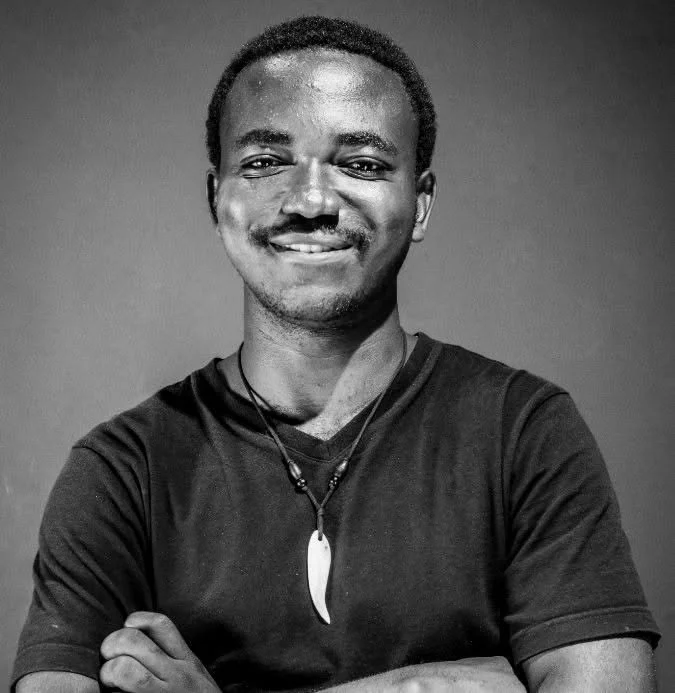
From 28 to 30 October 2026, Cotonou will host the inaugural edition of the International Sculpture Festival of Cotonou (FISCO). Among the 23 selected artists, four sculptors from the Democratic Republic of the Congo — Adriel Bwami, Cedrick Sungo, Gabriel Kengele and Marius Kabemba — will participate in the event, held under the theme “Return to the Roots.” From colonial memory and ancestral spirituality to the ecological crisis and technological transformation, their practices demonstrate sculpture's capacity to engage with the pressing questions of our time.
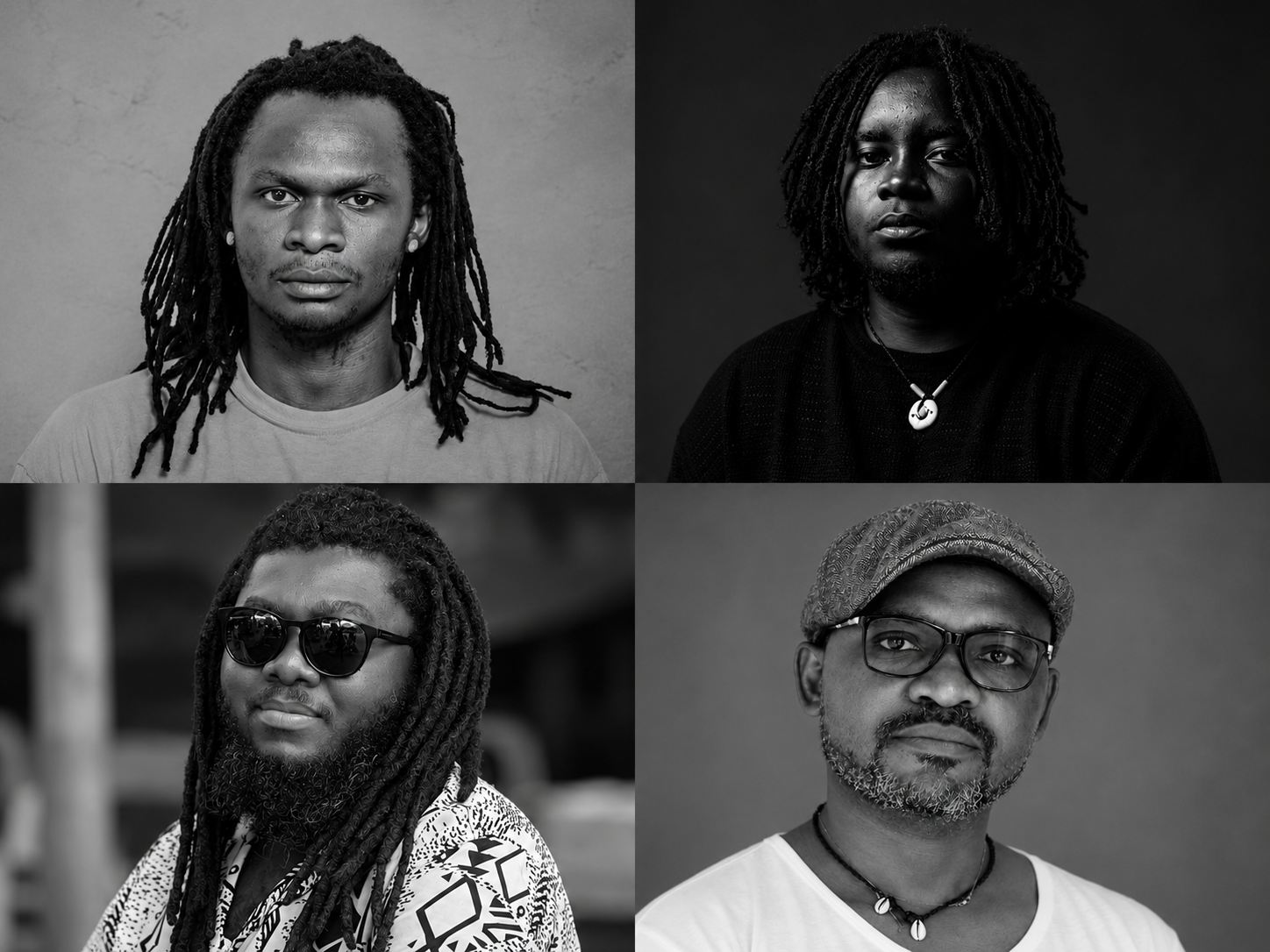
Marius Kabemba, Adriel Bwami, Cedrick Sungo, Gabriel Kengele sélectionnés pour la première édition du FISCO
From 28 to 30 October 2026, Cotonou, Benin's economic capital, will host the first edition of the International Sculpture Festival of Cotonou (FISCO). Bringing together 23 artists from 12 countries across three continents — Africa, the Americas and Europe — this new event aims to establish sculpture as a space for artistic creation, transmission and critical reflection.
In an artistic landscape marked by the proliferation of biennials and contemporary art fairs, FISCO distinguishes itself through a programme devoted entirely to sculpture. Over three days, workshops, panel discussions and an international exhibition will explore the possibilities of the discipline, both materially and conceptually. Held under the theme “Return to the Roots,” the inaugural edition will feature four artists from the Democratic Republic of the Congo: Adriel Bwami, Cedrick Sungo, Gabriel Kengele and Marius Kabemba.
Their participation highlights a generation of sculptors for whom engaging with ancestral forms and knowledge is far from an exercise in nostalgia. Instead, it offers a means of questioning the political, social and environmental realities of the present.
From the Colonial Wound to Political Fetish
Through his project Corps en mouvement (Bodies in Motion), Adriel Bwami examines objects that circulated during the colonial period and the narratives they continue to carry. His work draws on research into what he calls “mother works” — objects whose historical trajectories remain inseparable from the violence and upheavals of colonialism. Rather than reproducing these historical forms, the artist seeks to reveal the memorial, political and visual dimensions embedded within them.
“This series is about reflecting through these objects, thinking around them and considering the possibilities they offer us for understanding the present. (...) Participating in a festival that addresses these mother works, objects that belonged to a context of tragedy and carry histories and experiences that cannot leave us indifferent, and revisiting them through a contemporary language, is very important to me,” Bwami explains to MAYÌ ARTS.
This desire to draw upon the legacies of the past to illuminate contemporary issues finds a parallel in the practice of Cedrick Sungo.
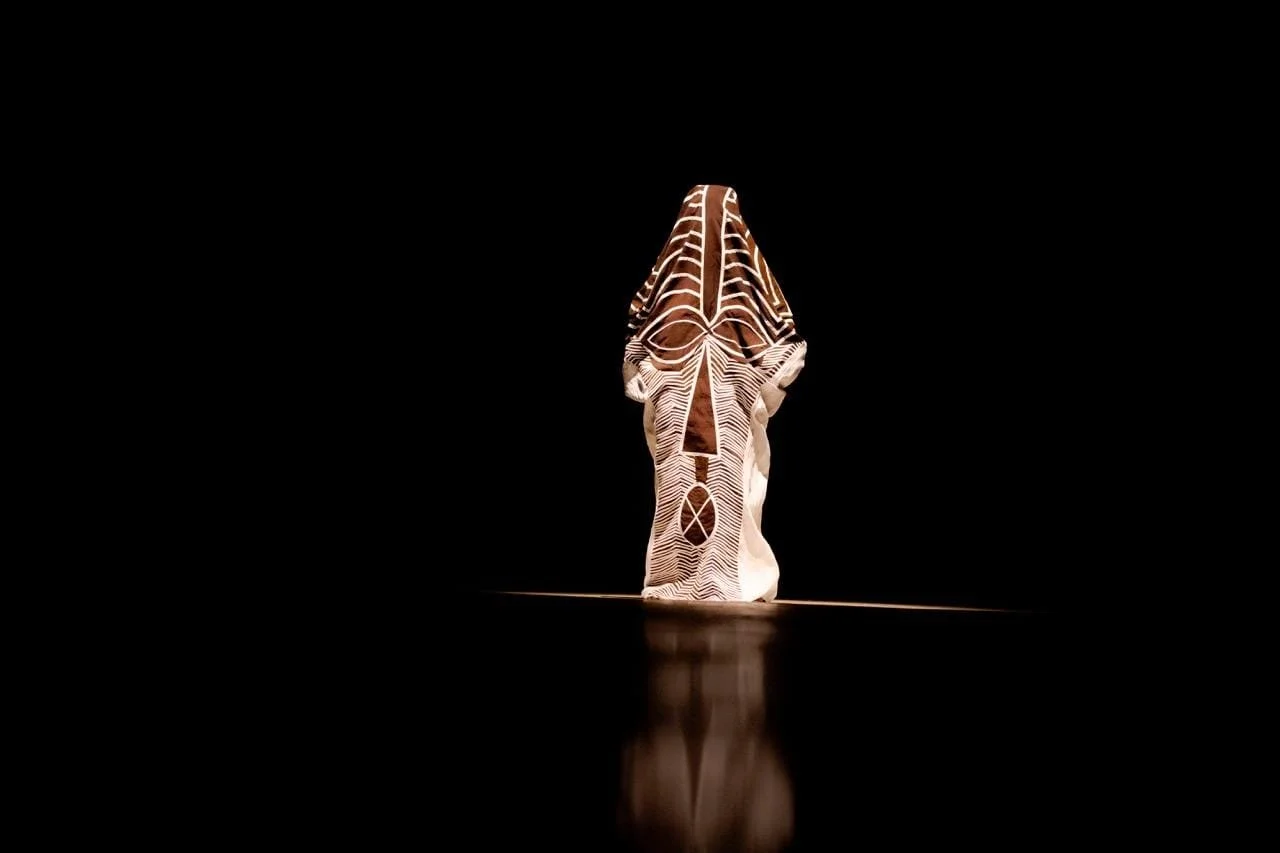
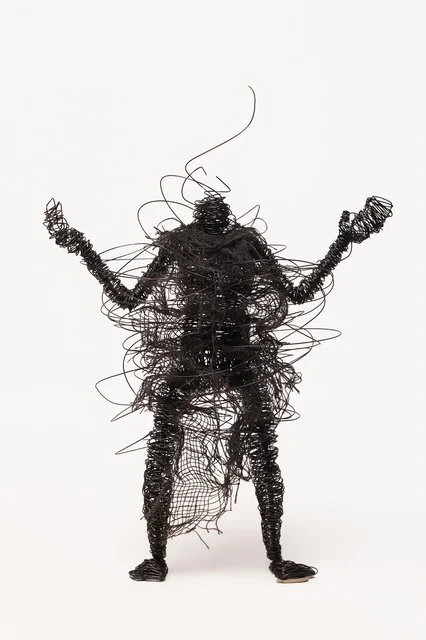
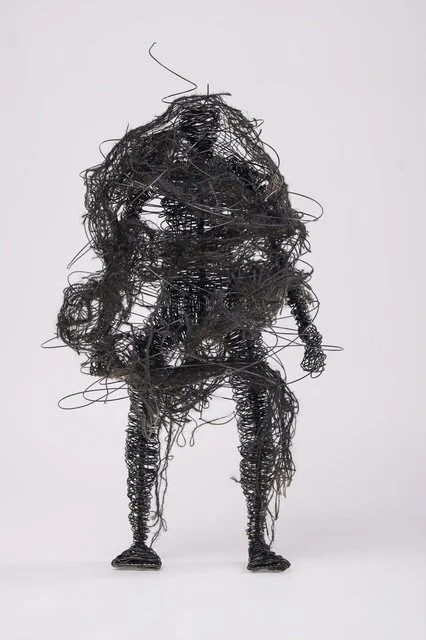
Through RESILIO, a series of five works entitled Nganga nkisi na nganga nzambe, The Power and the Glory, Dimension d'éternité, Noir Fétiche and Noir Fétiche II, the artist explores the relationships between spirituality, the environment and the human condition.
His sculptures, constructed from cut metal and iron wire, take the form of humanoid figures whose silhouettes evoke power objects and spiritual traditions from the Congo Basin.
“My works also carry a kind of reminiscence, recalling certain physical aspects of ancestral African sculptures known as Nkondi Nkisi. It is a call for humanity in general, and Black people in particular, to reconnect with nature,” explains Cedrick Sungo.
By drawing on the visual and symbolic language of the Nkisi Nkondi, Sungo does more than revive a traditional aesthetic. He reclaims their symbolic power to question the rupture between humanity and its environment.
Sculpture thus becomes a critical language through which to confront the ecological crisis while reaffirming the contemporary relevance of ancestral understandings of the relationship between human beings and the natural world.
The Bridge of Memory: Reinterpreting to Better Resist
This common thread between ancient forms and contemporary language deeply unites the two artists. Adriel Bwami insists that his work is not a repetition or a simple aesthetic copy of the past, but a revelation of invisible layers.
“I don't particularly like talking about reinterpretation because it is not necessarily about producing a perspective that does not belong to the object, but rather about approaching the object through certain aspects that have not always been revealed, or that, at least, have not yet been made visible in plastic terms,” he stated. What Bwami seeks to make visually apparent in history, Gabriel Kengele chooses to defend sociologically against the threats of the future.
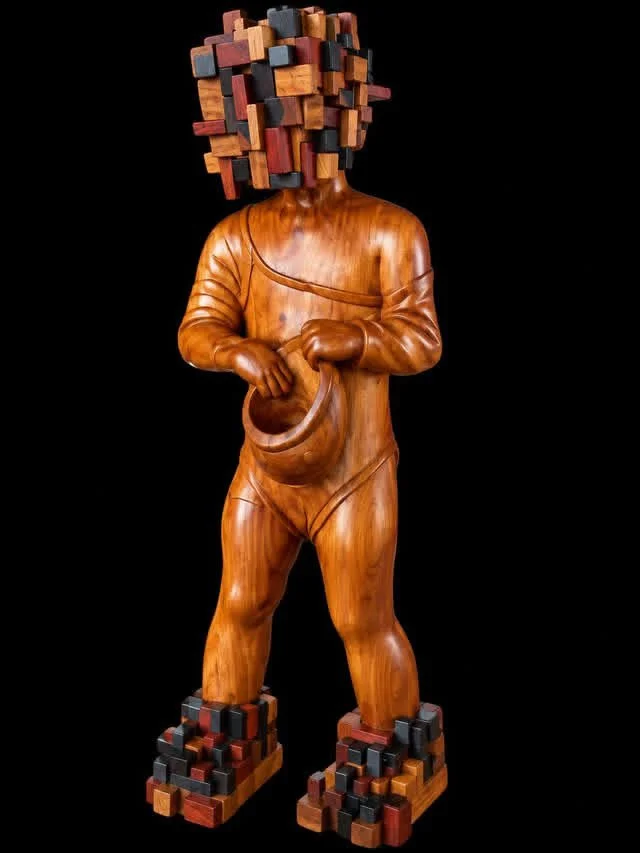
By choosing wood — an organic material par excellence — to shape his two works that will be exhibited, namely The Future Children’s and L’Innocence, Kengele connects memory to confront the global technological shock.
He reminds us that the true “Return to the Roots” is a struggle to preserve humanity in the face of the matrix of algorithms.
“I call on our leaders not to let Africa suffer the consequences of the evolution or development of technology. Ubuntu is a word that speaks to African sociology, so a child’s education involves an entire village contributing to their development, but with the advent of artificial intelligence, I fear that we Africans may only suffer the consequences,” he insists.
A Conceptual Alliance to Think About the World
By confronting Western artificial intelligence with the structures of Ubuntu, Kengele echoes Sungo's warning against the destruction of ecosystems by misguided interests. All three use sculpture as a mirror held up to the fractures of the century.
For Kengele, this communion of ideas in Cotonou must serve precisely to universalise African discourse.
“During these three days at FISCO, I dare to believe that our collaboration will live up to expectations, not only to speak about this continent, but above all to speak about the world, because the artist remains an eyewitness and has no borders,” he stated.
And Adriel Bwami recalls the fundamental mission of their presence in Benin: “For Congolese sculpture, once again, it is an affirmation, an affirmation of what Congolese sculptors bring to the African scene, to the global scene, with themes, with narratives that allow us to think about our world, to think about our society and to respond to and participate in the general reflection on the issues of our time.”
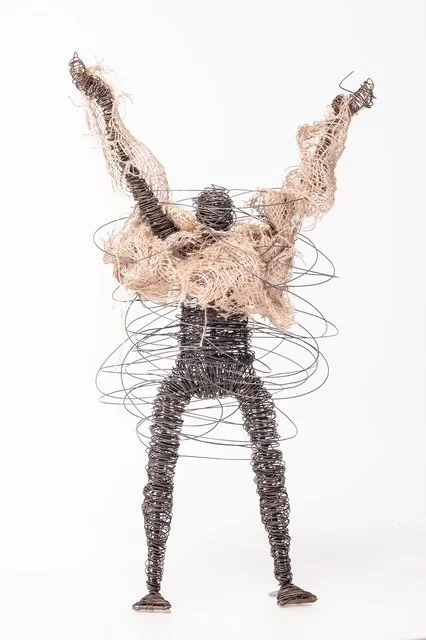
The power and The glory, Cédrick SUNGO
In a globalised art market often fond of smooth surfaces and colourful canvases that are easily subject to speculation, this first edition of FISCO, entirely dedicated to volume, stands as a political manifesto. In Cotonou, the Congolese sculptors will prove that their discipline remains one of the most powerful tools for dissecting the major issues of our time.