

MAYÌ ARTS CURATED X Filafriques introduce
SACRED LANGUAGES :
THE METAMORPHOSES
A solo exhibition by
MARTIN ABEGA
15 SEPTEMBER - 31 OCTOBER 2026
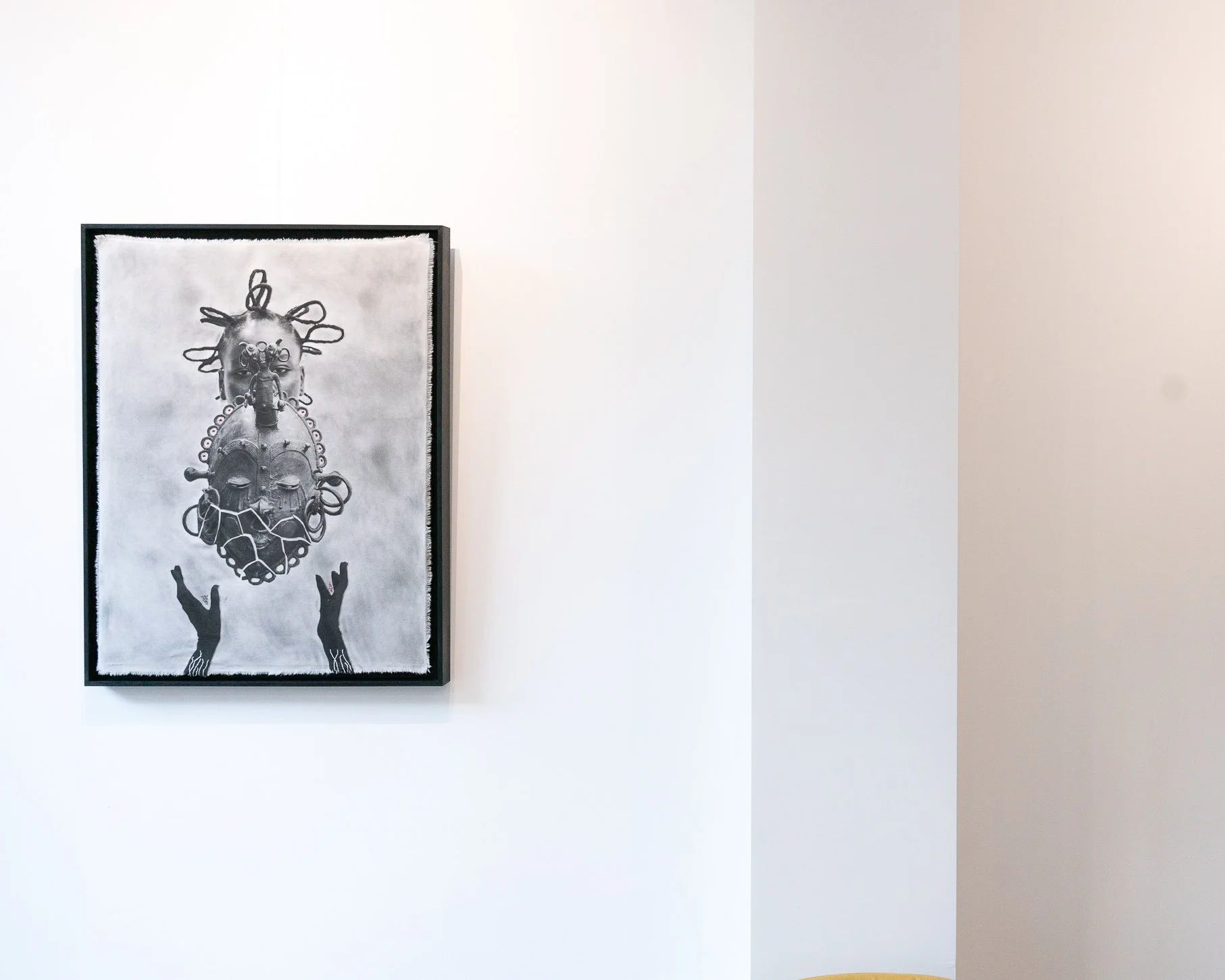
PARIS/GENEVA, August 2026 - MAYÌ ARTS and Filafriques are pleased to announce Sacred Languages: The Metamorphoses, the first solo exhibition in Geneva by Cameroonian photographer and visual artist Martin ABEGA.
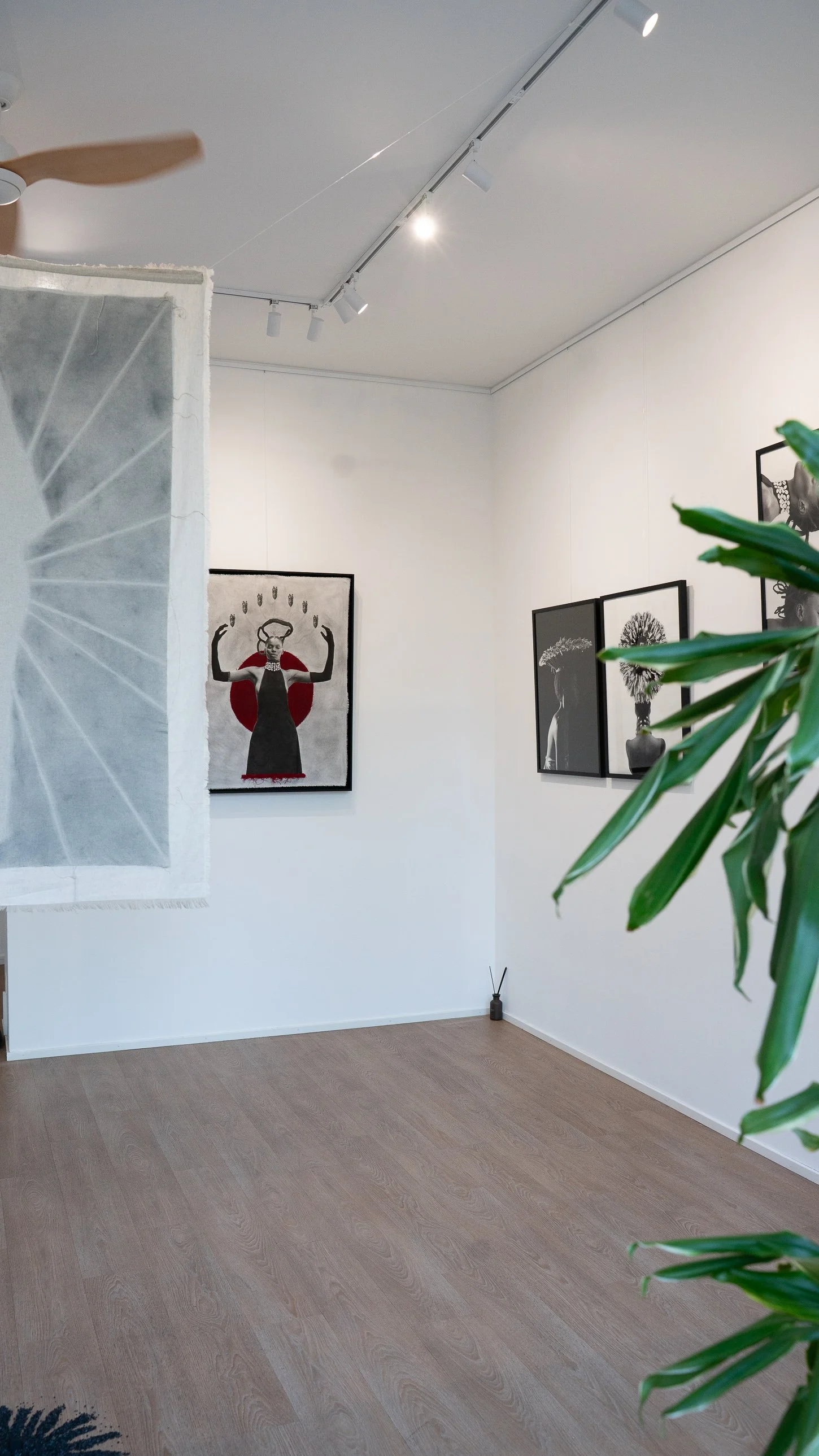
Bringing together a selection of photographic works and pieces in which the image encounters textile, embroidery, cowrie shells and charcoal, The Metamorphoses explores processes of transformation that unfold through both body and mind: ordeal, fragility, trace, transmission and regeneration, metaphorically embodied through the female figure.
FROM IMAGE TO MATTER
Martin ABEGA’s world brings together body, memory and beauty. An artist who “writes with light” and came to photography as one seeks refuge, he first approaches image as a space for breathing and questioning.
In the eye of ABEGA, photography becomes a way of returning to the essence of things, of observing the human condition and making visible what moves through us, within a predominantly black-and-white universe, punctuated at times by colour.
For Martin ABEGA, photography is never an end in itself. It is a doorway, a sacred portal into other interconnected realms of thought, where personal memories intertwine with deeper questions of the mind. His practice favours inquiry over assertion.
“Photography is the original language of my practice: I write with light. But when certain questions extend beyond the frame of the image, the image continues to live through matter.”
From photography to textile, from embroidery to charcoal, the image extends, fragments, absorbs and takes form anew. Inner metamorphoses thus become visual metamorphoses.
FROM IMAGE TO MATTER
Martin ABEGA’s world brings together body, memory and beauty. An artist who “writes with light” and came to photography as one seeks refuge, he first approaches image as a space for breathing and questioning.
In the eye of ABEGA, photography becomes a way of returning to the essence of things, of observing the human condition and making visible what moves through us, within a predominantly black-and-white universe, punctuated at times by colour.
For Martin ABEGA, photography is never an end in itself. It is a doorway, a sacred portal into other interconnected realms of thought, where personal memories intertwine with deeper questions of the mind. His practice favours inquiry over assertion.
“Photography is the original language of my practice: I write with light. But when certain questions extend beyond the frame of the image, the image continues to live through matter.”
From photography to textile, from embroidery to charcoal, the image extends, fragments, absorbs and takes form anew. Inner metamorphoses thus become visual metamorphoses.
THE THREE LANGUAGES OF THE METAMORPHOSIS
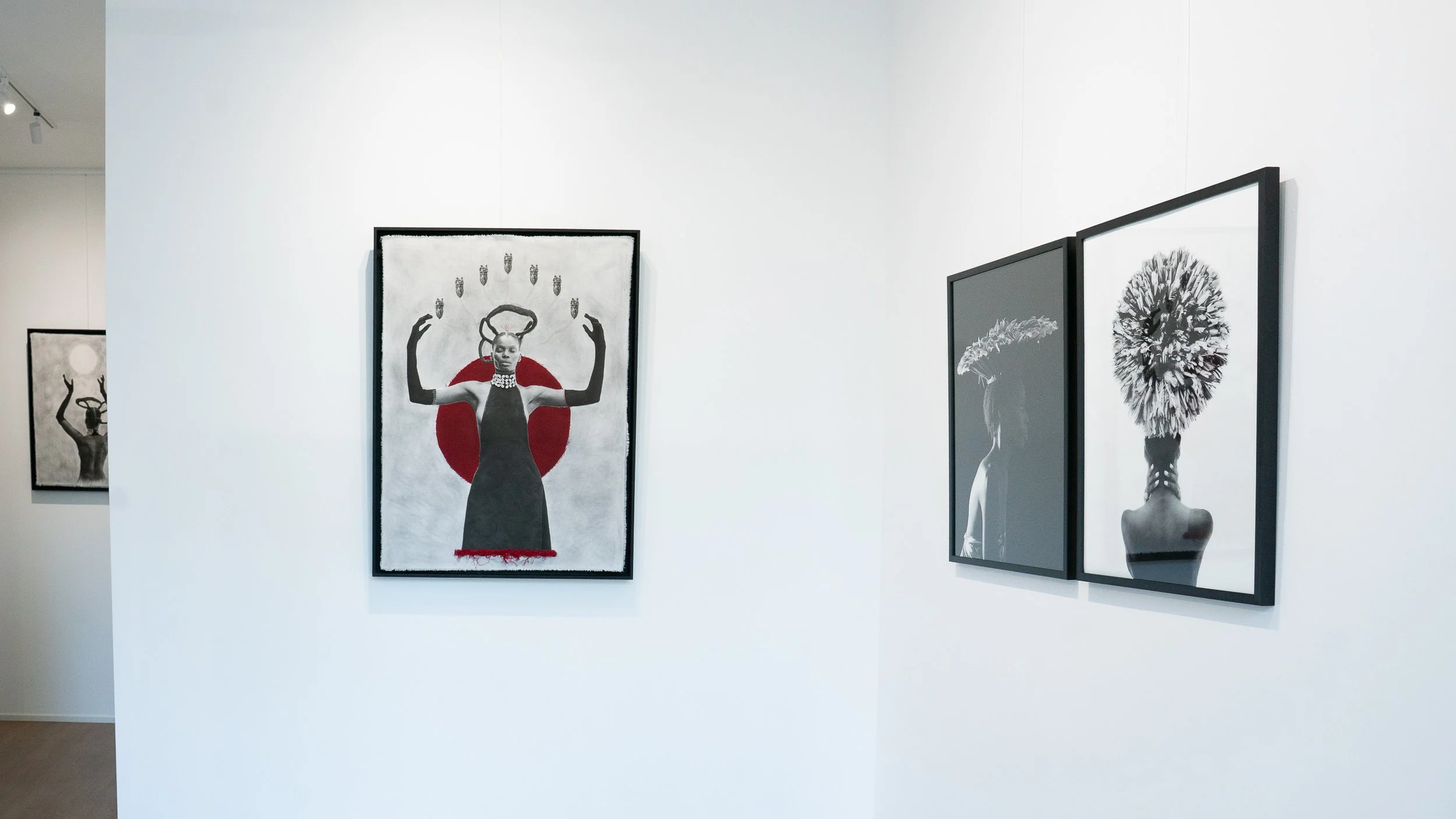
Conceived as a journey unfolding through several movements, Sacred Languages: The Metamorphoses explores transformation through a series of symbols and ritual objects drawn from ancestral traditions and reinterpreted through a contemporary, at times even futuristic, lens. Three recurring elements inhabit the curation: the headdress, the mask and charcoal.
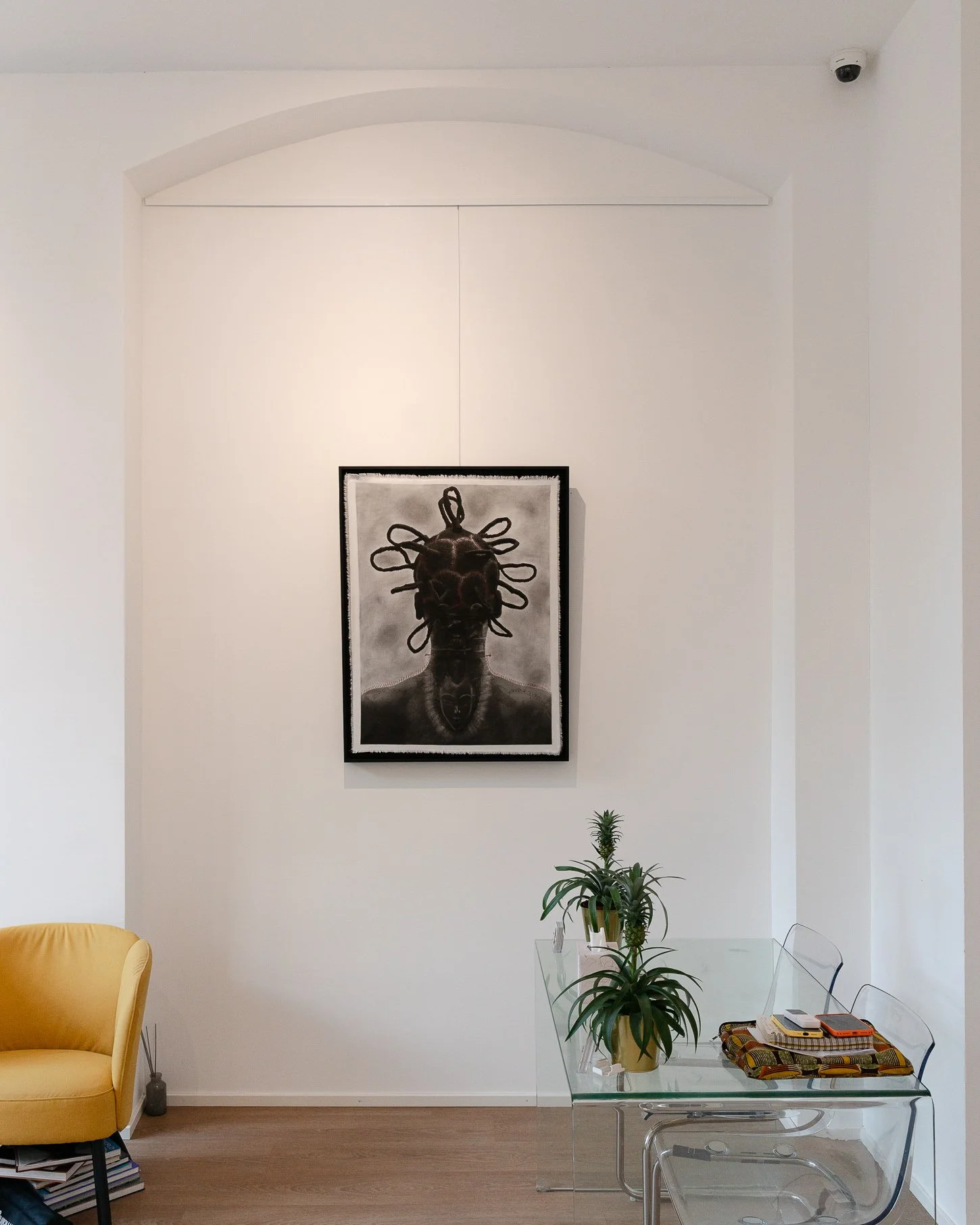
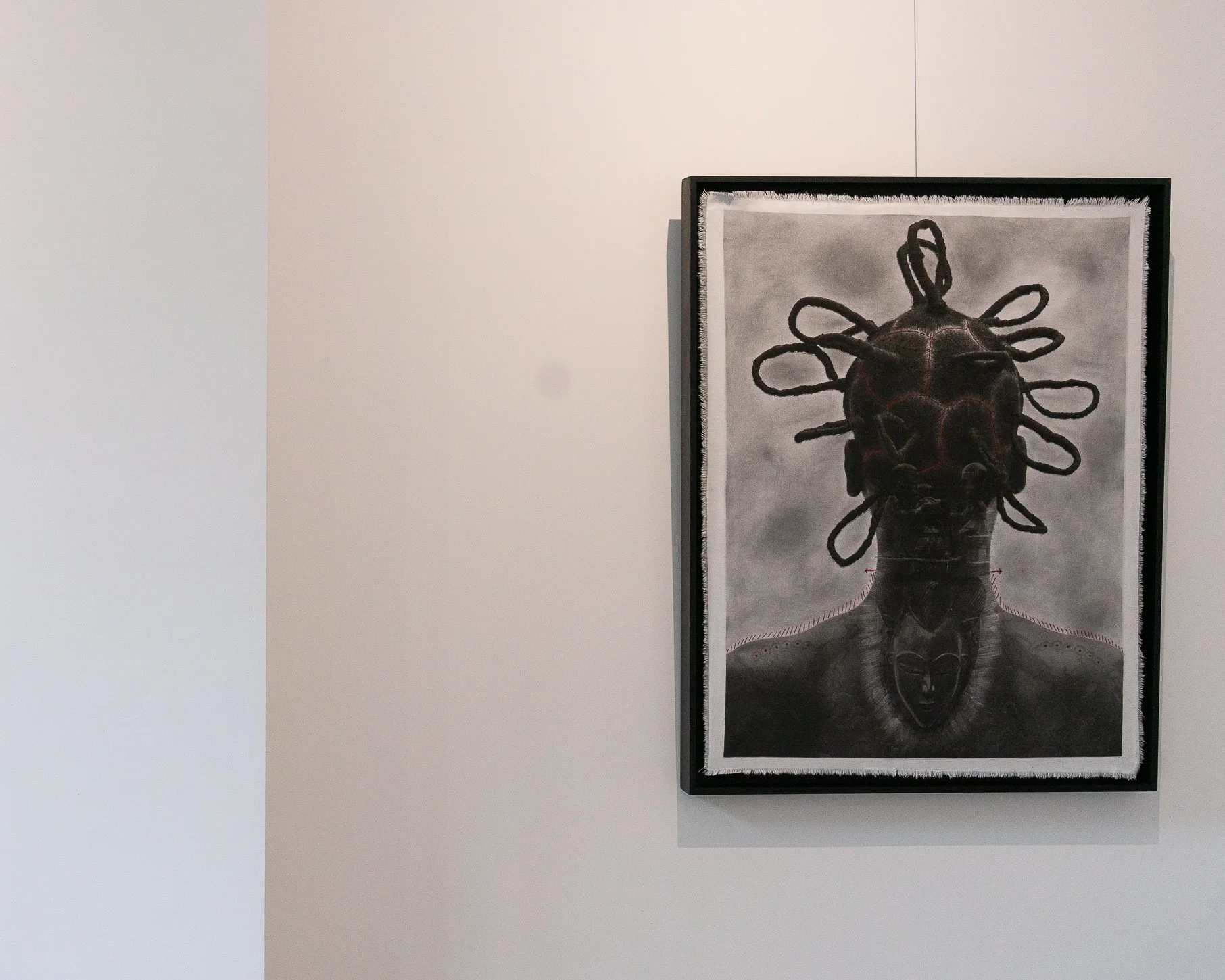
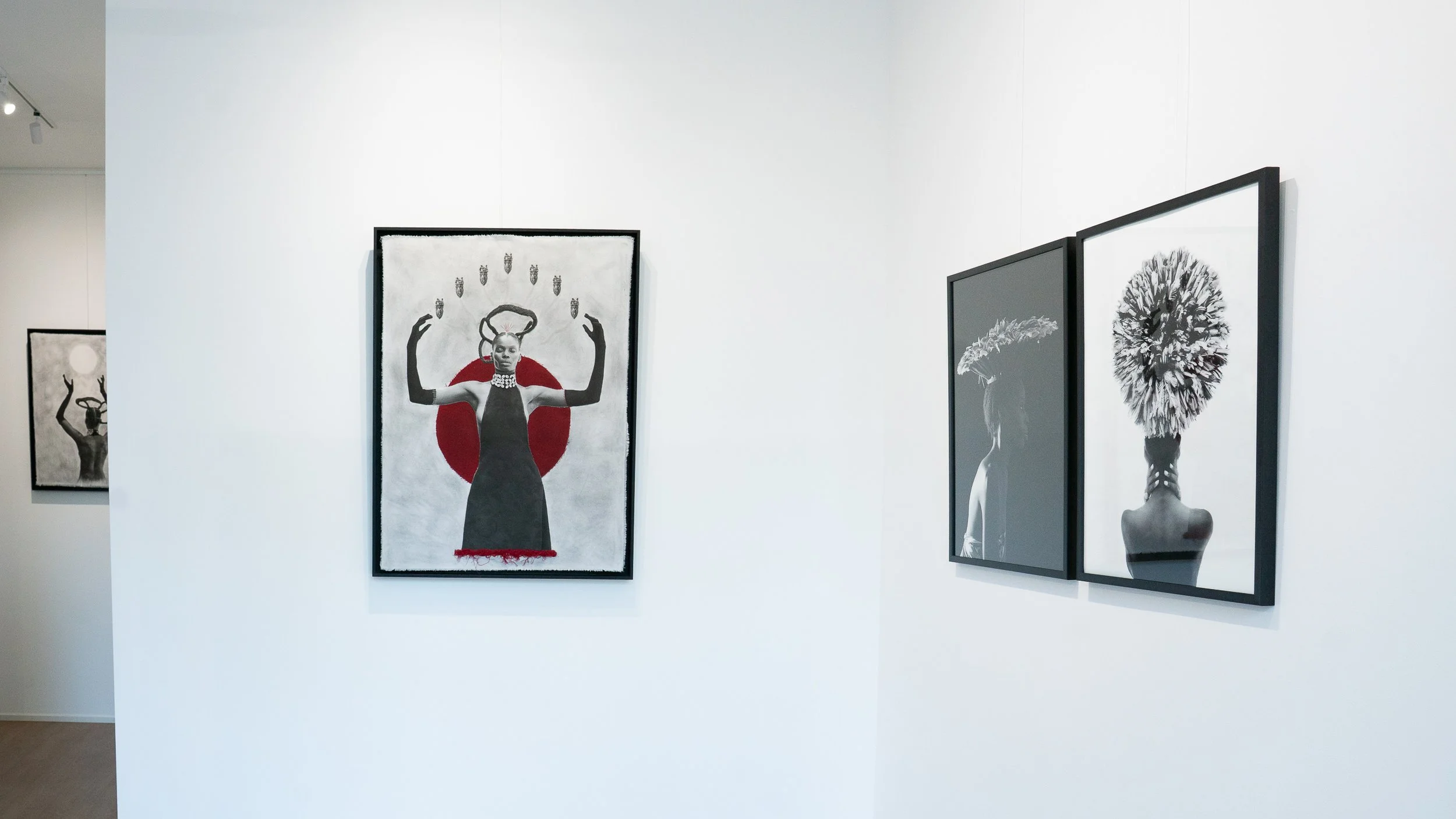
The headdress opens a first territory centred on the body, beauty and transmission. Through the presence of hair, adornment and forms inspired, in particular, by the Juju headdress, ornament becomes language and the body a space of memory.
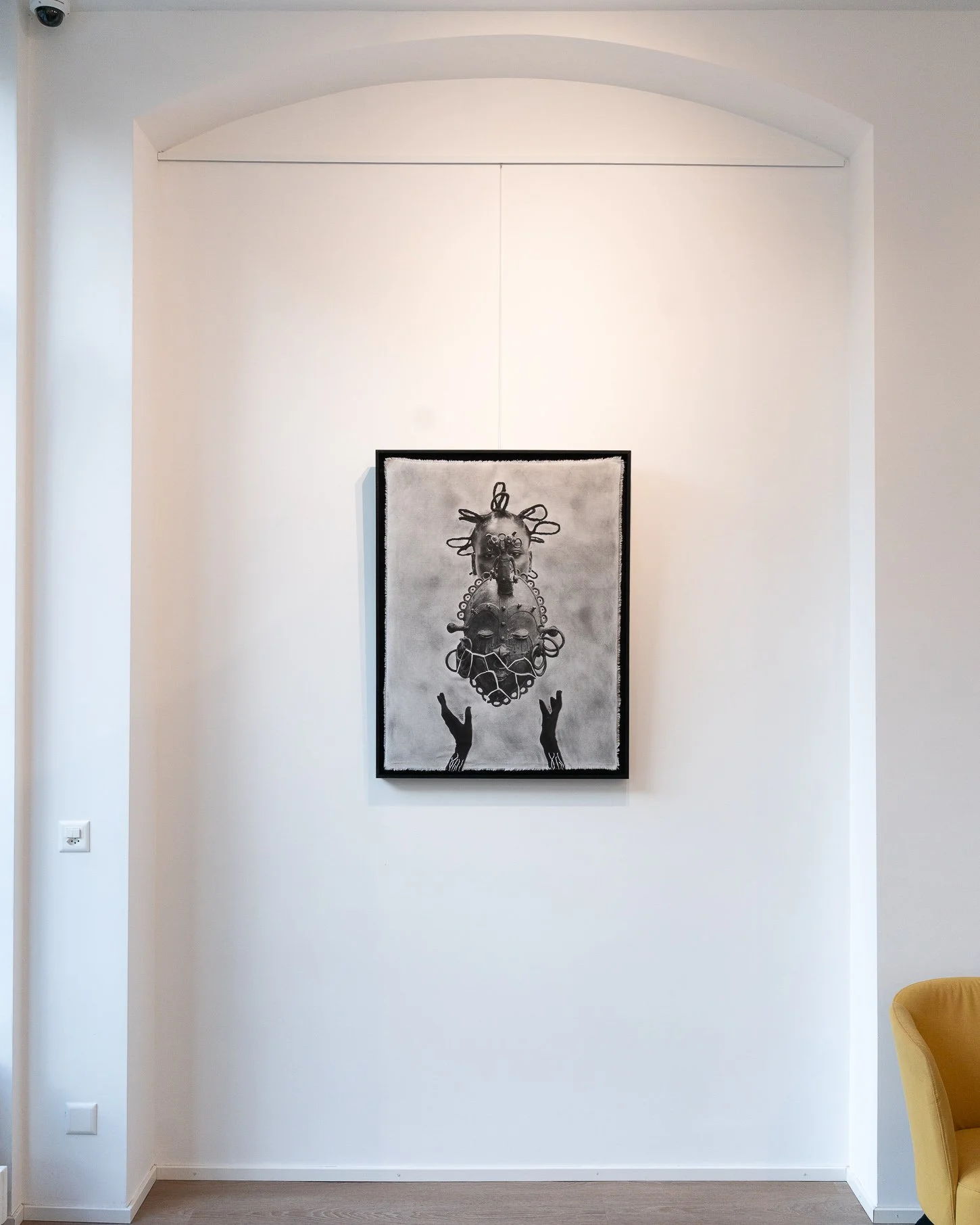
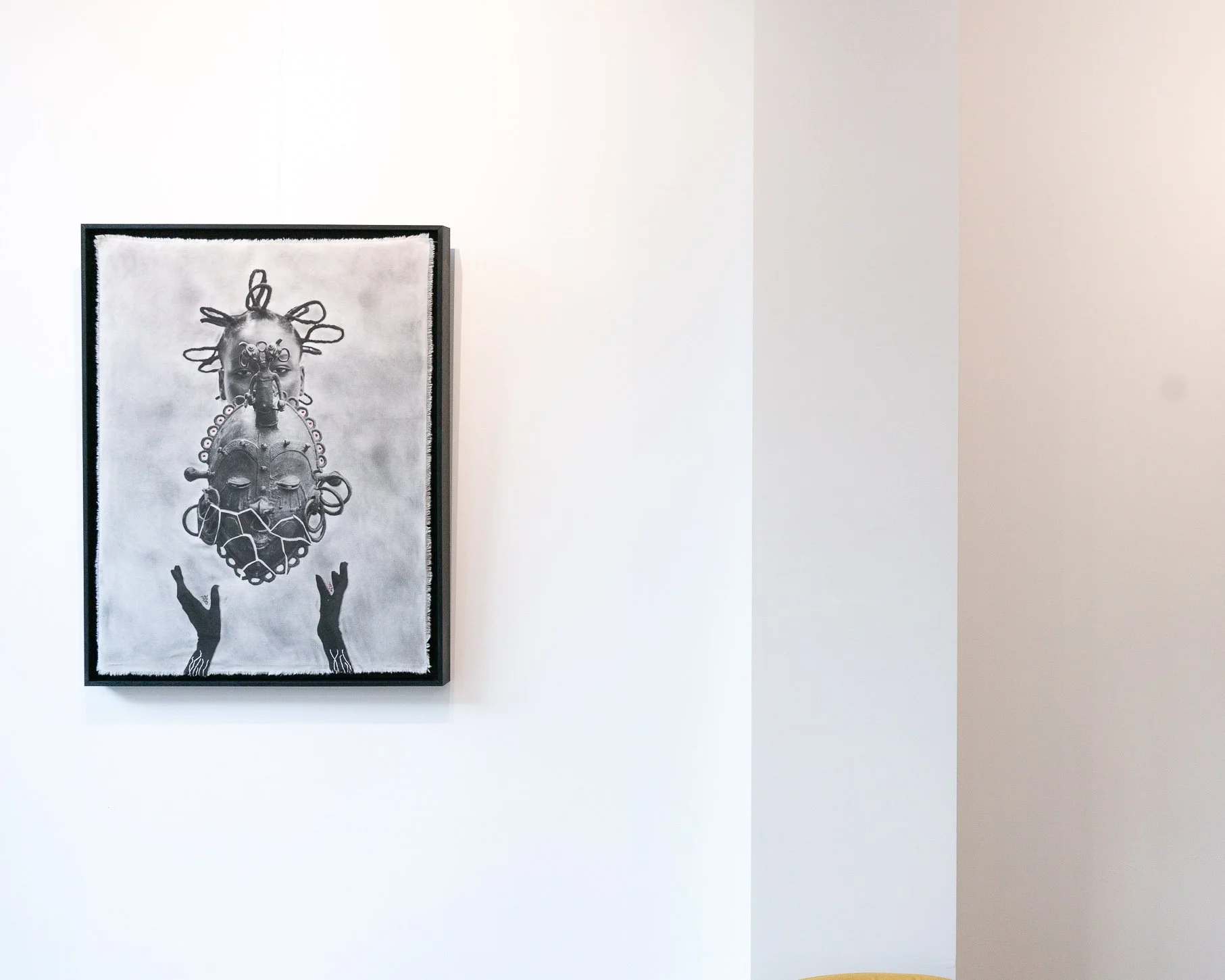
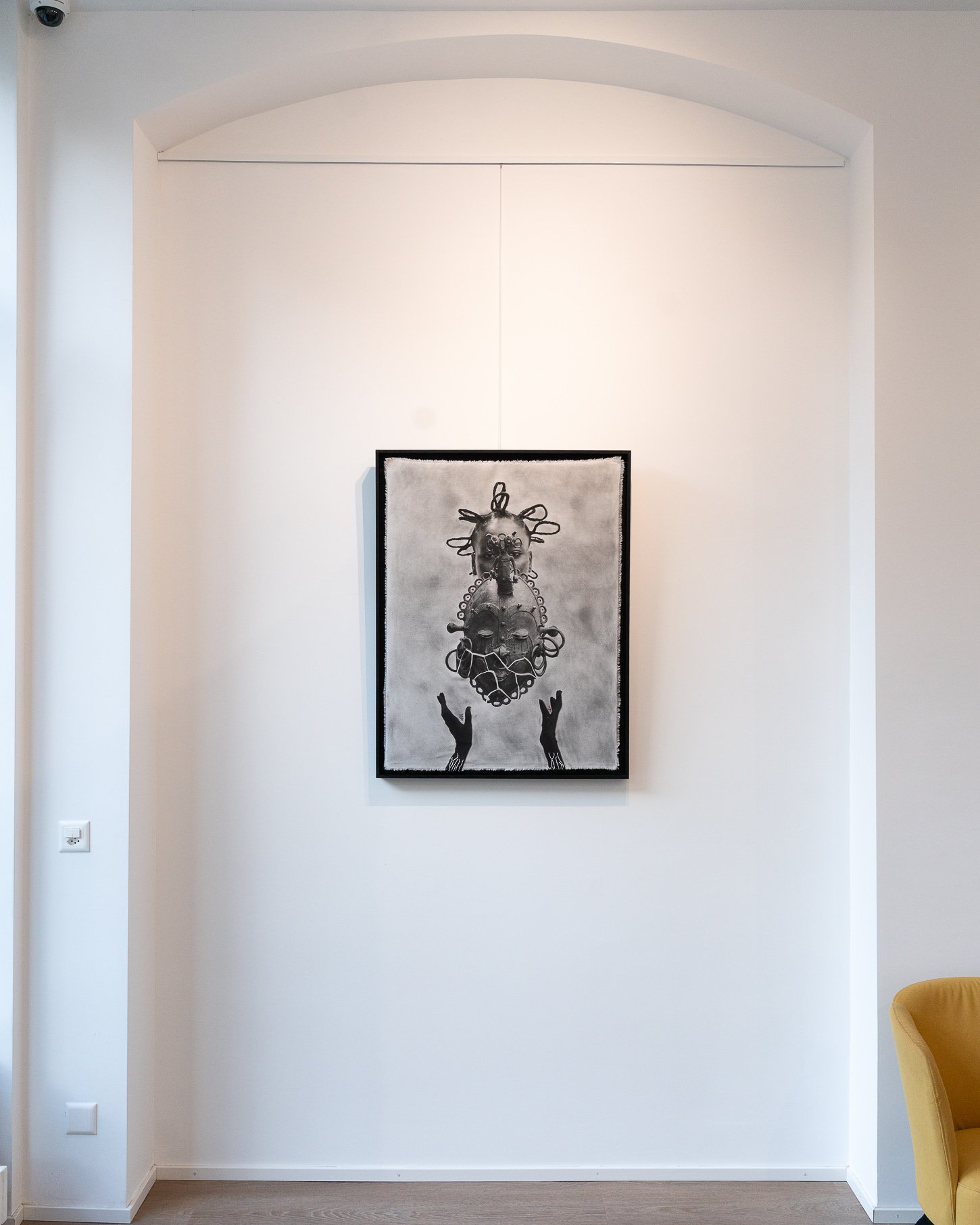
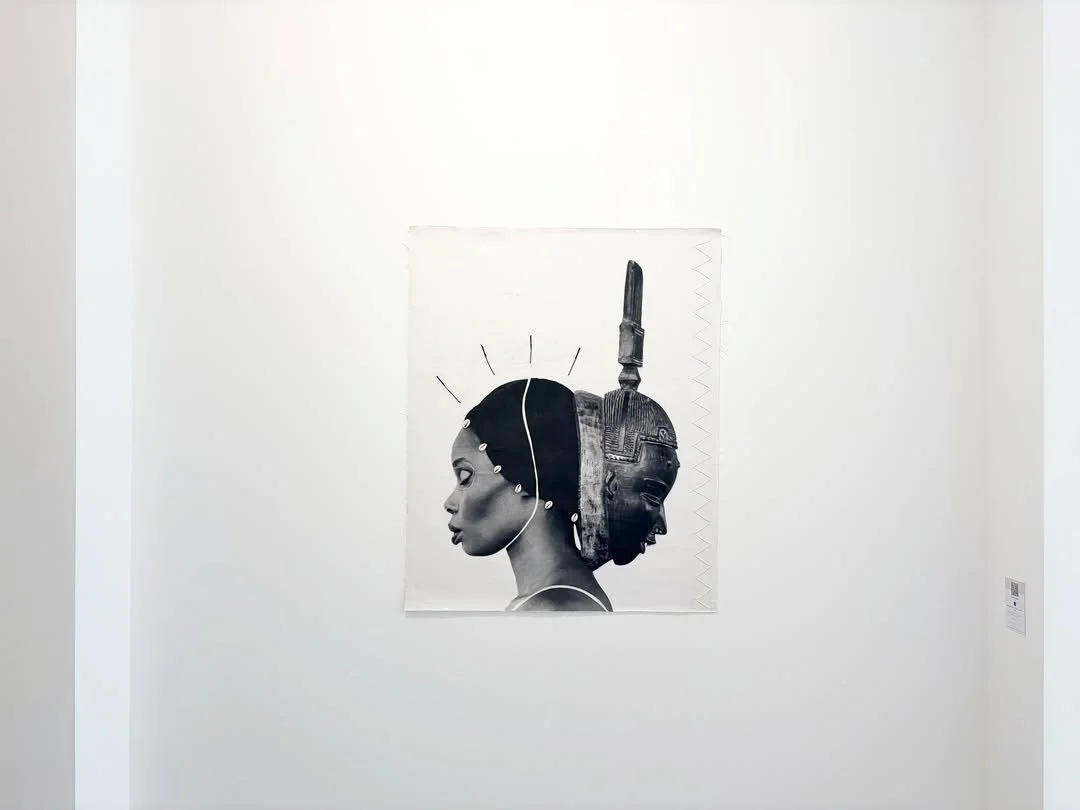
The mask introduces a reflection on embodiment and on what remains behind the identities we present to the world. Drawing from Martin ABEGA’s encounter with African masks and their symbolic power, their presence is shifted towards a profoundly contemporary question:
“When our masks fall, who are we, truly?”
The mask thus becomes less an answer than a space for inquiry: what do we reveal when appearances, roles and the identities we construct fall away?
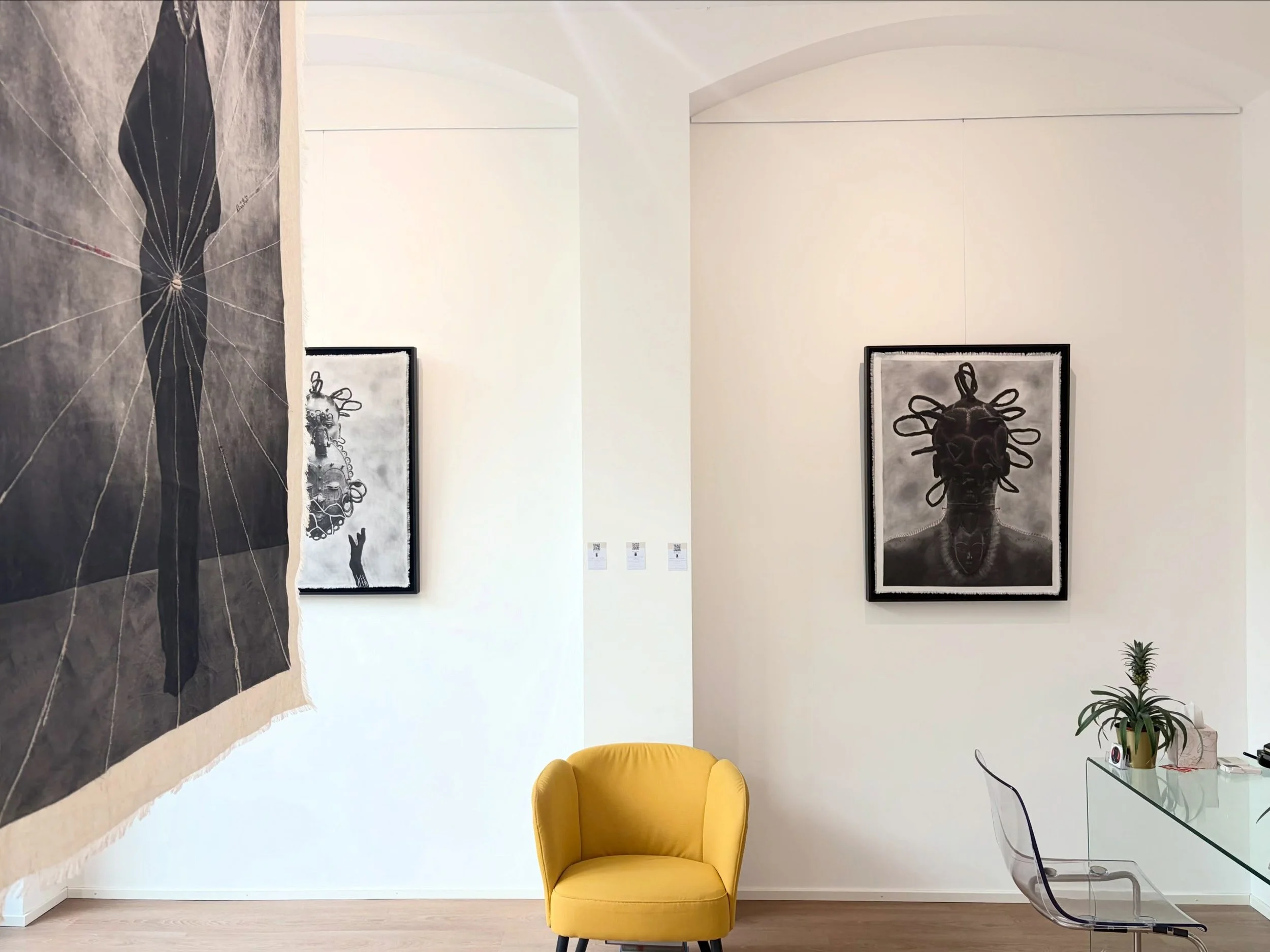
Charcoal, finally, represents one of the artist’s most recent fields of exploration. A material born of combustion and connected to his childhood in Cameroon, it carries within it a paradox: transformed by fire, yet rather than erasing, it leaves a trace.
Applied to photography and textile, charcoal absorbs the image, renders it fragile, at times causing it to disappear before revealing it anew.
“What interests me today is not only what this material represents, but what it does. It absorbs, it leaves a trace, it transforms the surface on which it settles. [...] Charcoal, then, does not speak of disappearance. On the contrary, it reveals what remains after transformation.”
THE BODY AS A TERRITORY OF TRANSFORMATION
These different languages converge around a recurring presence that serves as a guiding thread throughout Martin ABEGA’s work: the female figure.
A body of transmission, memory and transformation, she moves through the exhibition as a central presence. Haunting sometimes fully incarnated. Informed in part by the artist’s personal history, having grown up surrounded by his mother and sisters, this representation pays tribute to femininity, strength, beauty and transmission.
In Sacred Feminine, gestures, materials and elements converge towards the womb,
evoking the body as a site of life and passage.
The Metamorphoses does not seek to impose a definitive reading of the sacred. Instead, the exhibition opens a space for contemplation and inquiry.
Martin ABEGA’s practice is shaped less by assertion than by experience: observing, listening, experimenting, embracing the unexpected, and allowing matter to transform the image just as it transforms the artist’s gaze.
Through Sacred Languages: The Metamorphoses, the sacred thus becomes less a definition than a question: what remains of us after transformation?
INSTALLATIONS VIEW
About Martin ABEGA
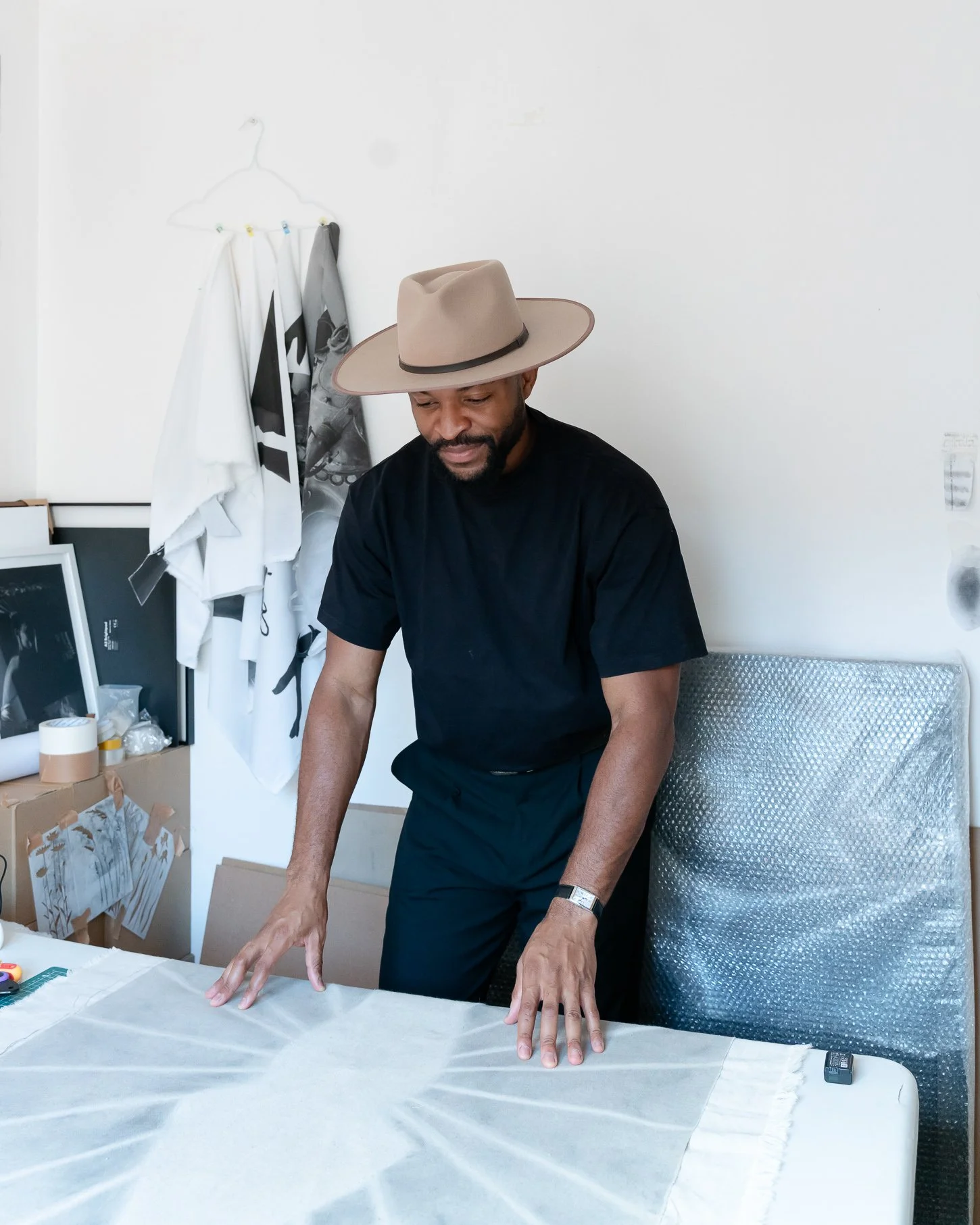
Martin ABEGA is a Cameroonian visual artist based in France. Photography is the starting point of his practice. With a longstanding interest in fashion, portraiture and beauty photography, he approaches the image as a way of writing with light and engaging with the world around him.
Over time, his practice has expanded to embrace textile, embroidery, painting, charcoal and direct interventions onto the image. These different mediums extend his relationship with photography, allowing the image to take on new forms and exist beyond its original frame.
His work explores questions of identity, spirituality and the forces that shape us at our core. He develops an ever-evolving practice, driven by experimentation and a desire to remain closely connected to what moves and inspires him.
His work has been presented in Ivory Coast, France and Belgium. In 2026, he published Ancestral & Contemporary, a book conceived as an extension of this ongoing exploration.
Publications :
PRACTICAL INFORMATION
Sacred Languages: The Metamorphoses
Martin ABEGA
Opening Reception: 15 September 2026
Exhibition Dates: 15 September — 31 October 2026
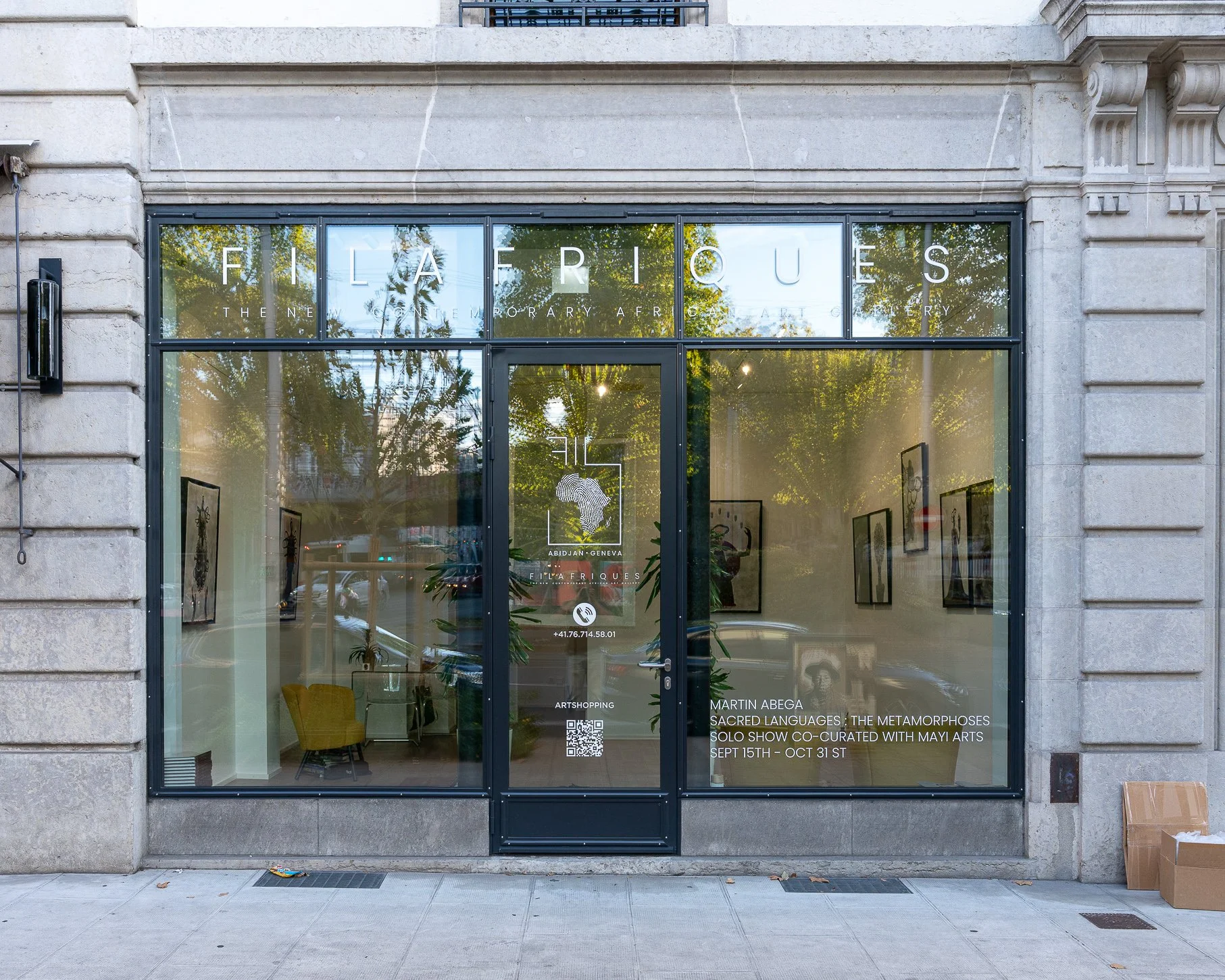
Gallery Filafriques
Bd James-Fazy 18
1201 Geneva, Switzerland Tel. +41 76 714 58 01
An exhibition presented by MAYÌ ARTS Curated × Filafriques
CONTACT
Appointements, Catalogue and Press inquiries :
carine@filafriques.com . www.filafriques.gallery ngalula@mayiarts.com . www.mayiarts.com