Luma NASCIMENTO: Weaving Afro-Brazilian Memory Through Matter and Symbolism - Volta Art Fair
Being introduced to Luma NASCIMENTO's work means entering a ceremonial landscape where memory is carried through matter. Presented at Volta Art Fair as part of Untranslated, the exhibition curated by The Southern Art Hub in collaboration with Janet Rady Fine Art, Nascimento's sculptural installations unfold like a sacred space where one can reconnect and meditate, where every element holds a story and every material carries an ancestral memory.
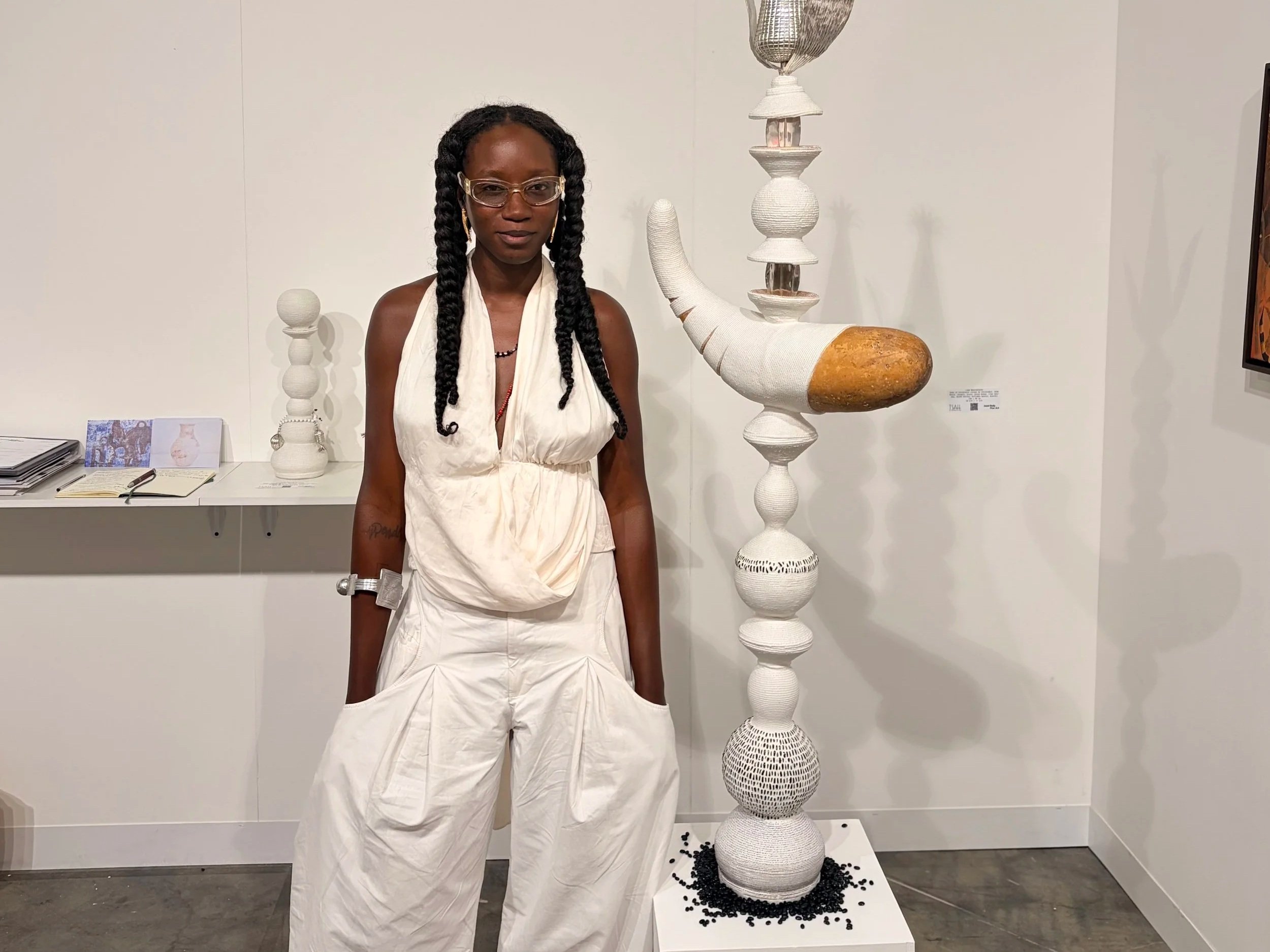
Luma NASCIMENTO presenting group show Untranslated by The Southern Art Hub and Janet Rady Fine Art at Volta Art Fair
Alongside works by Bisila NOHA, Pantea MAHROU and Sabrina DA SILVA DE MEDEIROS, Nascimento's practice explores the cultural and spiritual legacies of Brazil through a visual language deeply rooted by Afro-Brazilian traditions whose roots can be traced back to the Yorùbá people.
As we strolled around the aisles of Volta Art Fair 2026, we could not help but be drawn by Untranslated the latest curated show by the Southern Art Hub as the nomadic gallery expands its curation and artist programs to Afro-Latin narratives and beyond.
Within the curation, Luma Nascimento presented a series of small sculptural objects which at first glance, appeared delicate yet laden with mystery : white ceramics, glass beads, calabashes, silver elements and organic forms carefully assembled into altar-like compositions. Yet each material has been intentionally selected, not simply for its aesthetic qualities and purpose but for the histories it embodies. When walking us through her work, Nascimento insisted on the intentionality of every element that composes her sculptures starting with corn which holds strong symbolism in Brazil.
‘Corn is very important to me and in Brazil. You use it for food, obviously, but it is also used in rituals for cleansing and protection. Corn holds that spiritual significance. My inspiration comes from the Orixás (Orishas, are deities and spirits worshiped in Yorùbá traditions), though I don't speak about them directly in this work. I use colours, numbers and cosmology from Afro-Brazilian Yorùbá traditions to reference them.’ Corn is only one of the recurring motifs as the artist draws from Yorùbá cosmology and Afro-Brazilian spiritual traditions through a rich symbolic vocabulary various symbolism.

Body of Conversion (Corpo de Conversão), 2026 Gourd, ceramic, brass, glass beads, clay (Durban, South Africa; Santa Rita Quilombo Area, Maranhão, Brazil), Luma Nascimento
Rather than illustrating belief systems, Nascimento translates their visual grammar into sculptures, assembling elements and symbols into sculptural compositions that evoke the cultural, spiritual and historical foundations of Brazil while speaking to broader diasporic histories.
‘I'm from Brazil, and at first I thought these references were only connected to Brazil. But over time I understood that they are much broader. They connect Brazil to Africa, especially Yorùbá culture and what we might call the Global South. I work with calabash, clay, ceramics, glass beads, and metal elements. The ceramic pieces are inspired by objects we use in Brazil. Some of the forms have Yorùbá origins.’
Nascimento makes subtle use of elements, matter and colors to erect her sculptures. The predominance of white for example, recalls ceremonial practices associated with certain Orixás, particularly Omolu (Babalu Aye) and Nanã as the work is not literally about the Orixás, but they influence [my] choices of colours, structure, and symbolism while silver, mother-of-pearl and glass beads suggest protection, spirituality and remembrance.
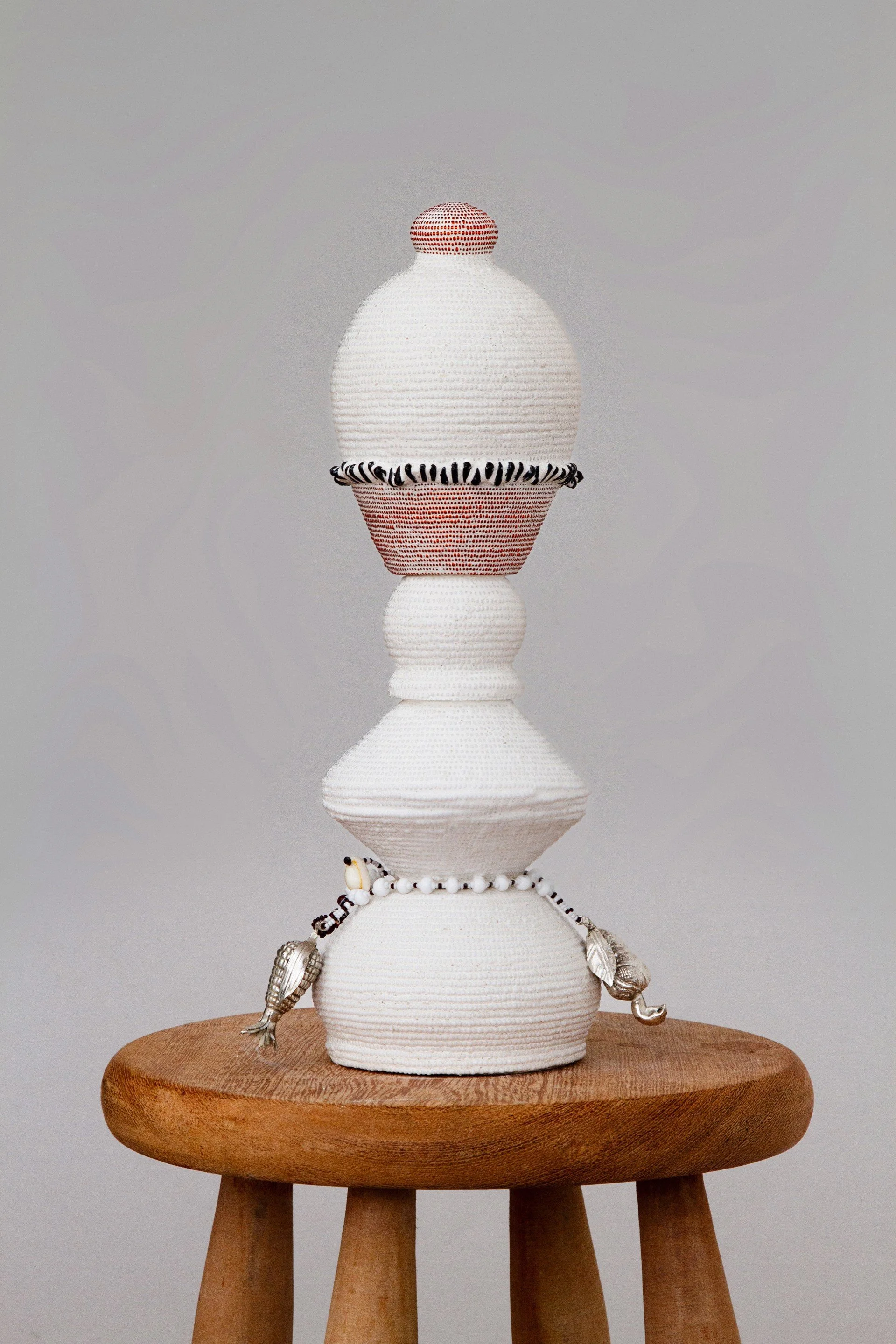
Pedaço da Penca II, 2026 Glass beads, gourd, ceramic, brass, silver-plated balangandã elements, clay (Durban, South Africa; Santa Rita Quilombo Area, Maranhão, Brazil) 35 x 10 cm (13.78 x 3.94 in), Luma Nascimento
“Heritage is very important to me. I’m here because of the women who came before me. Their knowledge, labour, and creativity made my presence possible. Heritage is about legacy and transmission between generations”
Glass beads occupy a particularly significant place in her practice. Having researched bead traditions both in Brazil and during a six-month stay in South Africa, the artist understands them as carriers of cultural knowledge rather than decorative objects.
‘My research began with beads. I'm from Bahia, and beads have always been part of my cultural environment. Different colours carry different meanings. I also became interested in glass itself. I learned about glass-blowing and the properties of glass. For me, glass has protective qualities. I use it as a form of energetic insulation and protection. I don't think I make objects. I think I create conditions. The materials carry memories, energies, and relationships.’
Layering elements to recall historical memory, Luma Nascimento also references adornment and silver as a connecting thread through her pieces. One sculptural element references adornment worn by Afro Brazilian women during the colonial period. Beyond adornment, these objects functioned as repositories of wealth at a time when Black communities were denied access to conventional financial systems.
“Black women used silver or gold to carry their money. Historically, these objects were used to carry wealth and valuables for Afro people. They became symbols of protection, survival, and freedom altogether. For me, these objects carry memory. They tell stories that continue to return through generations.”
By revisiting these forms, Nascimento transforms jewelry into an archive of resilience, recalling how everyday objects became tools of survival, autonomy and resistance.
One subtle note within Luma Nascimento’s work is the connection to family memory which quietly inhabits the work as well. Fruits, foods and domestic rituals appear throughout the installation, recalling the artist's childhood and the women who transmitted these practices. For Nascimento, personal histories are inseparable from broader narratives of migration, colonialism and cultural continuity. Asked how these forms move from imagination into material reality, she explains:
‘I often dream about the forms before they take shape. For example, one sculpture was inspired by a dream connected to food from my region in Brazil—beans, rice, palm oil, cassava, tapioca. These foods are essential to our lives and our histories. Food is memory. Food is identity. Food connects us to family. For example, there is a form inspired by carambola (starfruit). That fruit was very present in my family because my grandfather planted it. When I see it, I think about him.’

Luma Nascimento
Her sculptures ultimately resist being understood as static objects. Instead, they operate as living spaces where ritual, memory and ancestry coexist. Through ceramics, calabashes, beads and symbols inherited across generations, Luma Nascimento offers a meditation on the ways material culture continues to preserve histories that official archives often overlook.
Luma Nascimento's work invites multiple modes of reading. Some viewers may first be captivated by the harmony of her compositions, while others will recognise the symbolic language embedded within each material. For the artist herself, however, the work remains rooted above all in questions of heritage, transmission and cultural preservation.
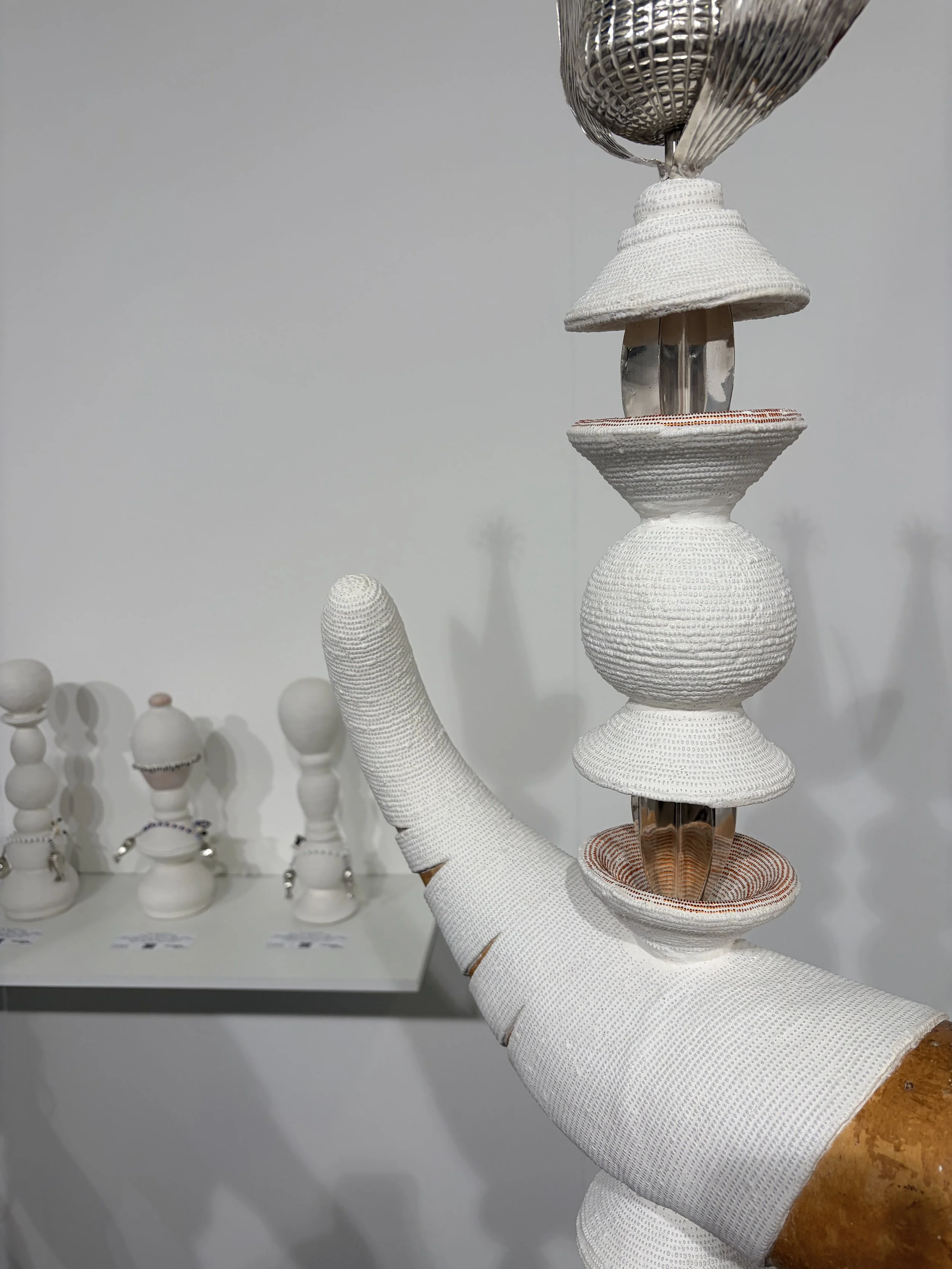
Luma Nascimento, at Volta Art Fair
‘Heritage is very important to me. I'm here because of the women who came before me. Their knowledge, labour, and creativity made my presence possible. Heritage is about legacy and transmission between generations.’
In Untranslated, her work reminds us that objects do more than occupy space, they carry worlds.
Find Luma Nascimento’s work at The Southern Art Hub and on her personal spaces.