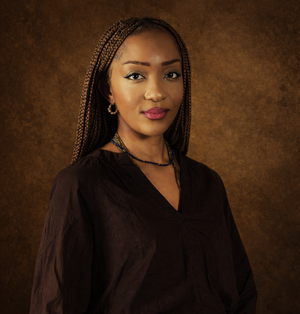
What happens once the soil has been eaten, damaged by years of extractivism? With Eating the Soil, its ninth edition, the Lubumbashi Biennale asks what it takes to keep living and creating in parts of Katanga transformed by mining. Organised by Picha and curated by Sorana Munsya, this edition continues an endeavour begun eighteen years ago by artists who decided to create their own biennale. In this interview with MAYÌ ARTS, Munsya discusses the ideas behind Eating the Soil and what the Biennale has helped build in Lubumbashi, from spaces opened by artists to the network of people who make each edition possible, even in moments of crisis. In doing so, she brings out the different realities that can coexist in a single place.
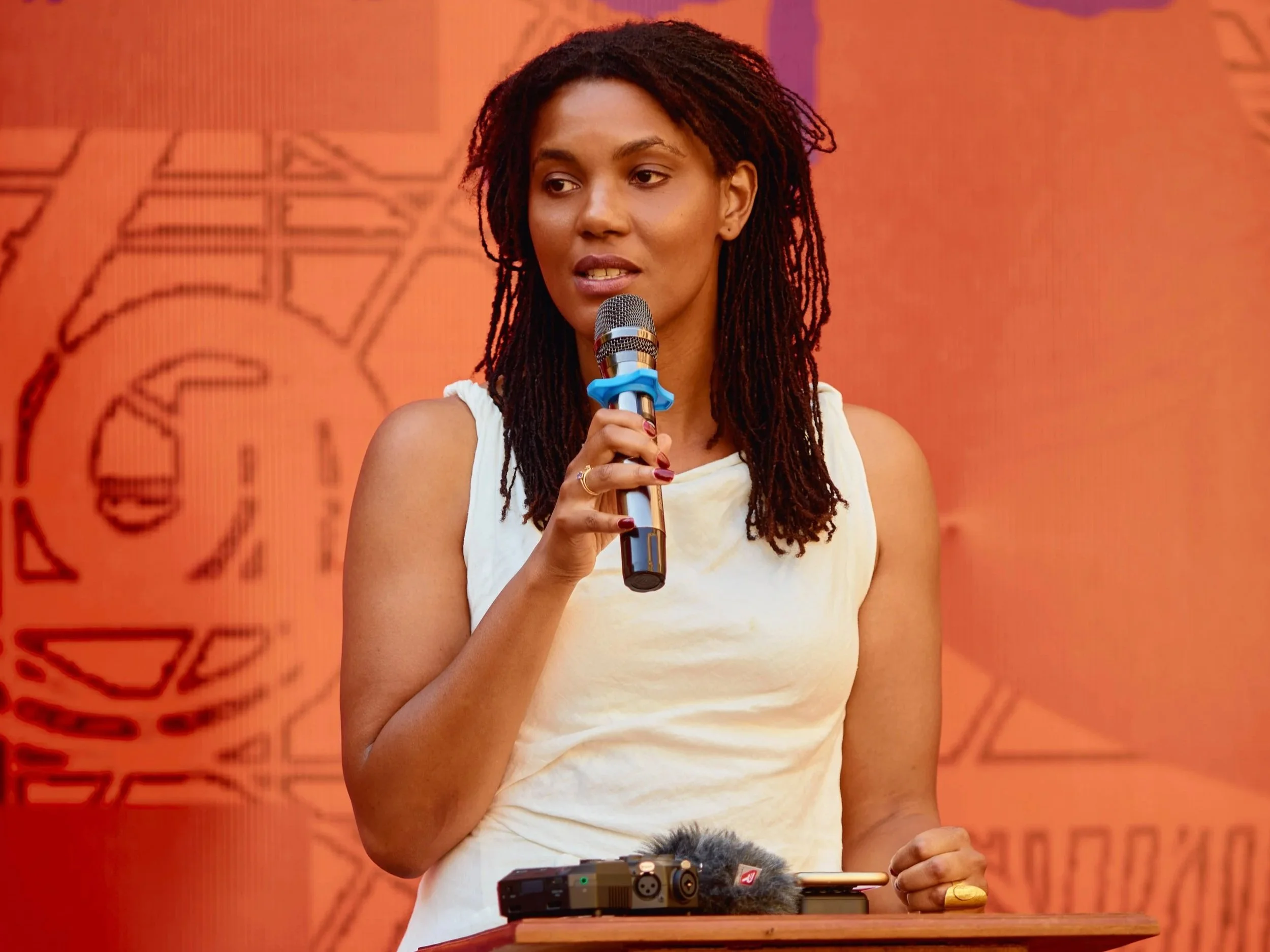
Sorana MUNSYA
MAYÌ-ARTS : This edition of the Lubumbashi Biennale has a striking title, Eating the Soil. How did it come about?
Sorana MUNSYA : The title Eating the Soil (Kukuria bulongo) came from several sources, both personal and historical. In 2017, I worked at the Lubumbashi Biennale as an assistant to Toma Muteba Luntumbue, a Brussels-based curator, artist and art professor who curated the 2015 and 2017 editions. The theme that year was Éblouissements. I found it particularly powerful because it questioned the effects of the modern capitalist world on the Global South, and on Africa in particular. More precisely, it asked what happens when modernity is understood through a Western-centred lens. The starting point was Joseph Tonda’s book L’Impérialisme postcolonial. Critique de la société des éblouissements, in which he explores this idea in depth. That was the edition through which I discovered the Lubumbashi Biennale.
The question of éblouissements continued to run through subsequent editions. The Biennale also devoted considerable attention to toxicity, especially after Covid. It sought to understand the forms of violence and degradation that capital, with a capital C, corporations and extractive industries inflict on the land and on our African societies. What do these forces do to Congo? And, more specifically, what do they do to Katanga?
I felt it was essential to carry that inquiry forward and take this history seriously. I also wanted to take a step sideways and shift the focus slightly, while keeping the realities of extractivism in view. As I often say, the post-extractivist era has yet to arrive. We are still a long way from it, and it will probably be a long time before we can speak of a genuine transition. For as long as Katanga remains subject to these outside powers and extractive forces, the question will continue to run through the Biennale.
I also wanted to focus on how people continue to live amid and beyond those realities. Once we have made the diagnosis, once we have recognised that the soil has been eaten and our territories are riddled with holes, how do we go on living there? What is left to eat once the soil has been eaten? Clearly, something remains, because people go on living, creating, producing knowledge and inventing ways of being. The toxicity, violence and consequences of extraction affect their lives, and those lives are also full of things that exceed that experience. They carry on, change and take new forms.
Another inspiration was the history of the copper eaters in Katanga. That story also led me to the title Eating the Soil. According to some local accounts, the copper eaters were among the first to extract copper in the region, well before the colonial period. What interested me was the relationship to the land that this story reveals. Taking a material from the ground was part of a wider set of relationships, knowledge and practices. It also involved a form of reciprocity with the land, the idea of giving something back to it. A whole epistemology, a whole way of understanding and inhabiting a place, takes shape around the act of taking copper from that particular soil. The story interested me because it opens up other ways of thinking about the relationships between bodies, materials, territory and forms of knowledge.
“Ultimately, all these reflections bring us back to one question. What is left to eat once our soil has been eaten? What do we do with a territory full of holes?”
There was also a more personal, almost anecdotal source of inspiration that helped shape the title. I have always been fascinated by practices of geophagy, particularly the practice of eating clay among some African women. Since coming to Katanga, I have started eating it myself. I find the gesture particularly powerful because it is so literal. There is something unsettling about it. What is supposed to nourish us, what should feed us, is taken away from us. At the same time, there is this practice of eating clay, of eating the very soil we walk on. The gesture becomes almost a way of taking the land into your body, of becoming one with it.
Ultimately, all these reflections bring us back to one question. What is left to eat once our soil has been eaten? What do we do with a territory full of holes? In the curatorial text, I speak of an “epistemology of the hole”. By that I mean a system of knowledge and narratives about Africa built primarily around what is missing, what has been extracted, destroyed or taken from us. The hole becomes both a material reality and a way of looking at and thinking about the territory.
Once we have made that diagnosis, what stories can we still tell? What escapes that account? What grows around these holes, what develops inside them, what continues to circulate and generate life despite everything? That is precisely where the curatorial thinking for this Biennale begins. We need to face the hole and what it reveals while refusing to make it the sole horizon of our thinking. I wanted us to look at what persists, what changes, what nourishes us and what still makes other ways of imagining and living possible.
MAYÌ-ARTS : This Biennale and its theme bring a Congolese paradox into focus. Congo is at the centre of the world and feeds it, both literally and figuratively. Listening to you, I get the sense that one question runs through what you are saying. What do we do next, once we have named that paradox?
Sorana MUNSYA : I think contemporary African societies are full of paradoxes. I am in Kinshasa at the moment. I left Lubumbashi about ten days ago, although the Biennale is still running. Here, barely a day goes by without hearing that someone has died. There is always a matanga somewhere, a mourning ceremony, a family going through a loss.
We live in societies marked by forms of violence that would probably be considered unbearable elsewhere. And yet we have developed very particular ways of living with them. Grief is, of course, an ordeal. There is sadness, pain and a sense of loss, depending on how close you were to the person who died. Alongside that, people gather, talk, share meals and sometimes even experience moments of joy. Emotions that seem contradictory coexist. I am very interested in this capacity to hold together realities that appear unrelated, or even opposed. The ways we live do not always fit neatly into consistent categories or binary oppositions.
For me, indiscipline is closely tied to that reality. I use the word to describe a refusal to be confined by categories we have been taught or that have been imposed on us. That refusal takes thought and rigour. Our societies experience violence from many directions. We did not choose all the conditions in which we have to live. So what do we do? I think we develop ways of living that escape the very frameworks meant to explain them.
For me, indiscipline means recovering a certain fluidity in how we see and think about the world. It means recognising that the boundaries between disciplines, categories and forms of knowledge are more porous than we tend to admit. It also means allowing ourselves to think from our own experience, without constantly trying to fit it into theories developed elsewhere.
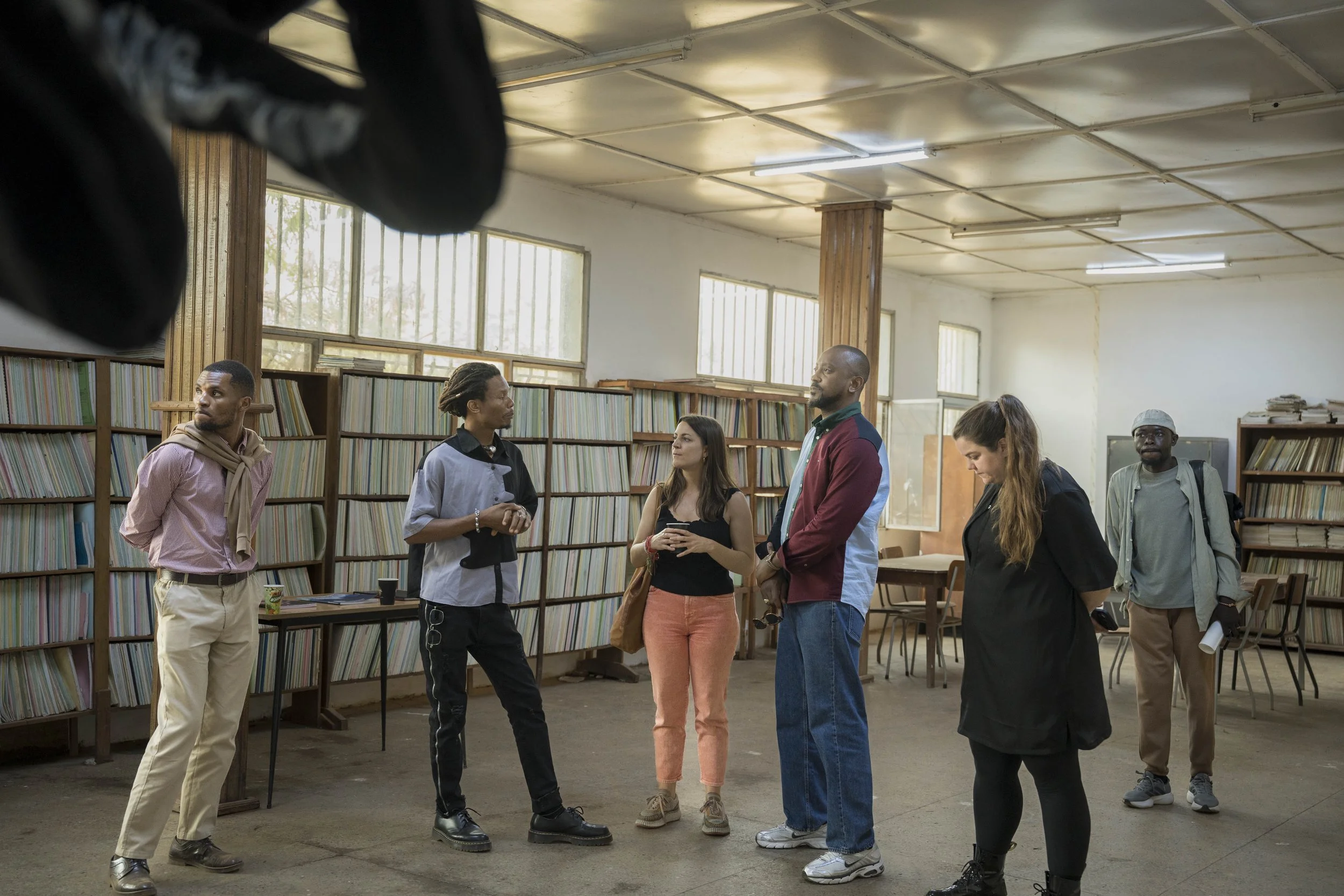
This resonates with the work of Valentin-Yves Mudimbe, who has an important place in this edition of the Biennale, as he did in 2024. Shortly before his death, Mudimbe donated his personal library to the University of Lubumbashi. I find that gesture particularly powerful. The library has become a place for research, encounters and the circulation of knowledge, drawing artists, researchers and intellectuals.
In The Invention of Africa, Mudimbe shows how Africa was constituted as an object of knowledge through discourses, representations and categories produced by Western thought. He asks how certain disciplines and ways of organising knowledge helped construct that object, and how they made Africa legible within systems of thought shaped in part by colonial power. This means questioning representations of Africa and the very conditions under which those representations and forms of knowledge came into being.
Art is an especially fertile place to work through these questions. It has a close relationship with thought and can move across disciplines and fields of knowledge. That, too, is what I mean by indiscipline. It gives us a way to think differently and to bring into view relationships that rigid disciplinary boundaries can obscure.
“For me, indiscipline means recovering a certain fluidity in how we see and think about the world. It means recognising that the boundaries between disciplines, categories and forms of knowledge are more porous than we tend to admit.”
MAYÌ-ARTS : The Biennale brings together artists from different parts of Congo and beyond, working across a range of practices. How did you choose them, and how did that selection give shape to the theme?
Sorana MUNSYA : I always find this question a little difficult to answer, because I cannot quite say which came first, the artists or the theme. I think they developed together. There were encounters, conversations, intuitions, research and affinities between certain artistic practices and the questions I wanted to raise. All of that gradually took shape and began to make sense. When it came to putting the programme together, I found it helpful to identify four main strands that could anchor the curatorial thinking.
The first centres on Valentin-Yves Mudimbe. He occupies an important place in Lubumbashi’s intellectual and artistic life today, and his legacy matters a great deal to Picha, the organisation behind the Biennale. We wanted to consider how his thinking could be revisited, debated and brought into conversation with contemporary artistic practices.
One particularly important example is Chimurenga’s Pan African Space Station (PASS). For several days, Chimurenga worked out of the Bibliothèque Prisme in Lubumbashi, researching the city’s intellectual, literary and artistic life in the 1970s, when Mudimbe taught at the University of Lubumbashi. What made this approach interesting was its attention to the world around him. Who was he in conversation with? Who did he disagree with? What publications, music, networks and forms of intellectual production existed at the time in Lubumbashi, across the Copperbelt and in southern Africa? The project sought to recover a collective history and bring to light an intellectual and cultural milieu that remains relatively poorly documented. PASS made Mudimbe’s library a place to preserve knowledge and also to revisit it through research and encounters.
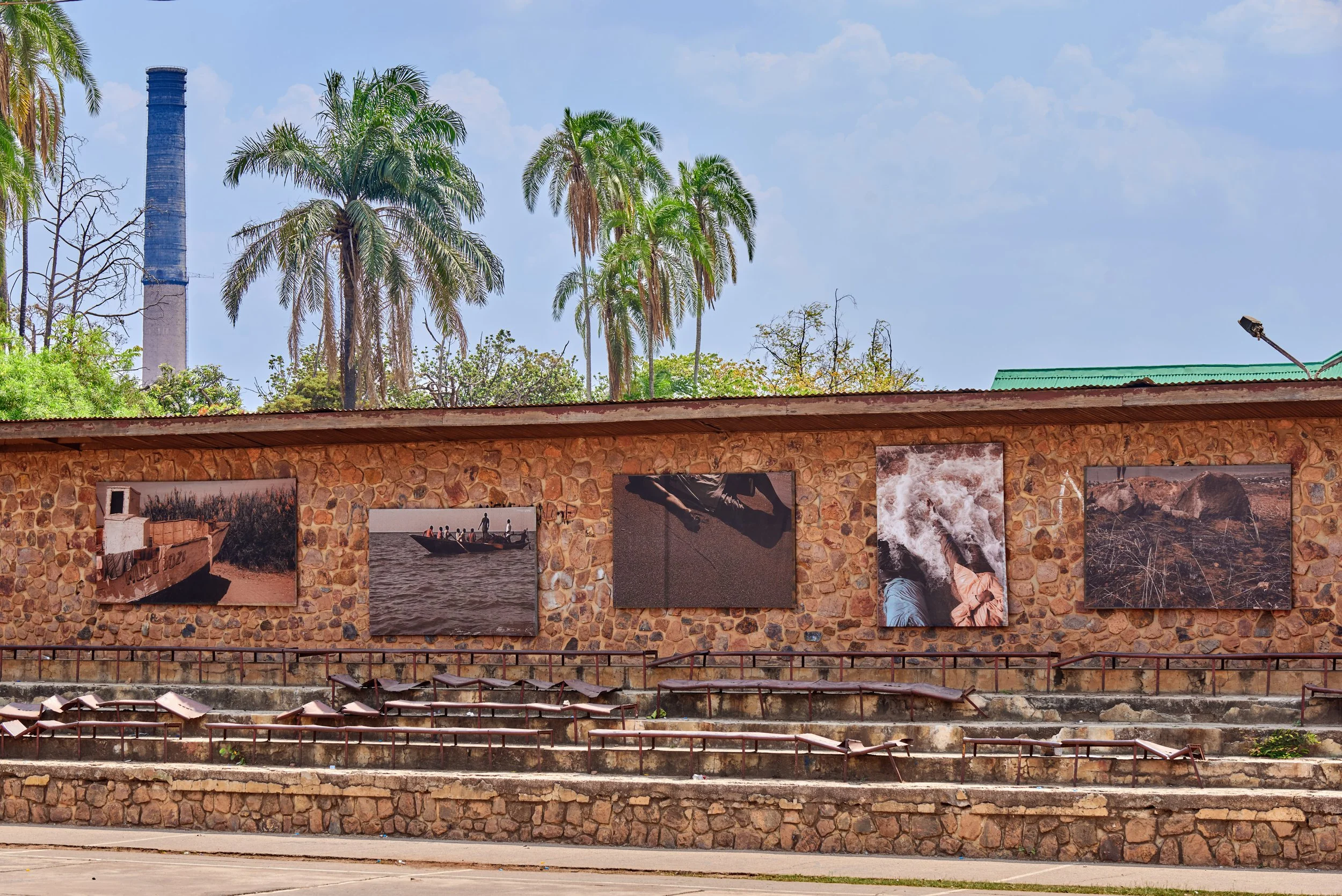
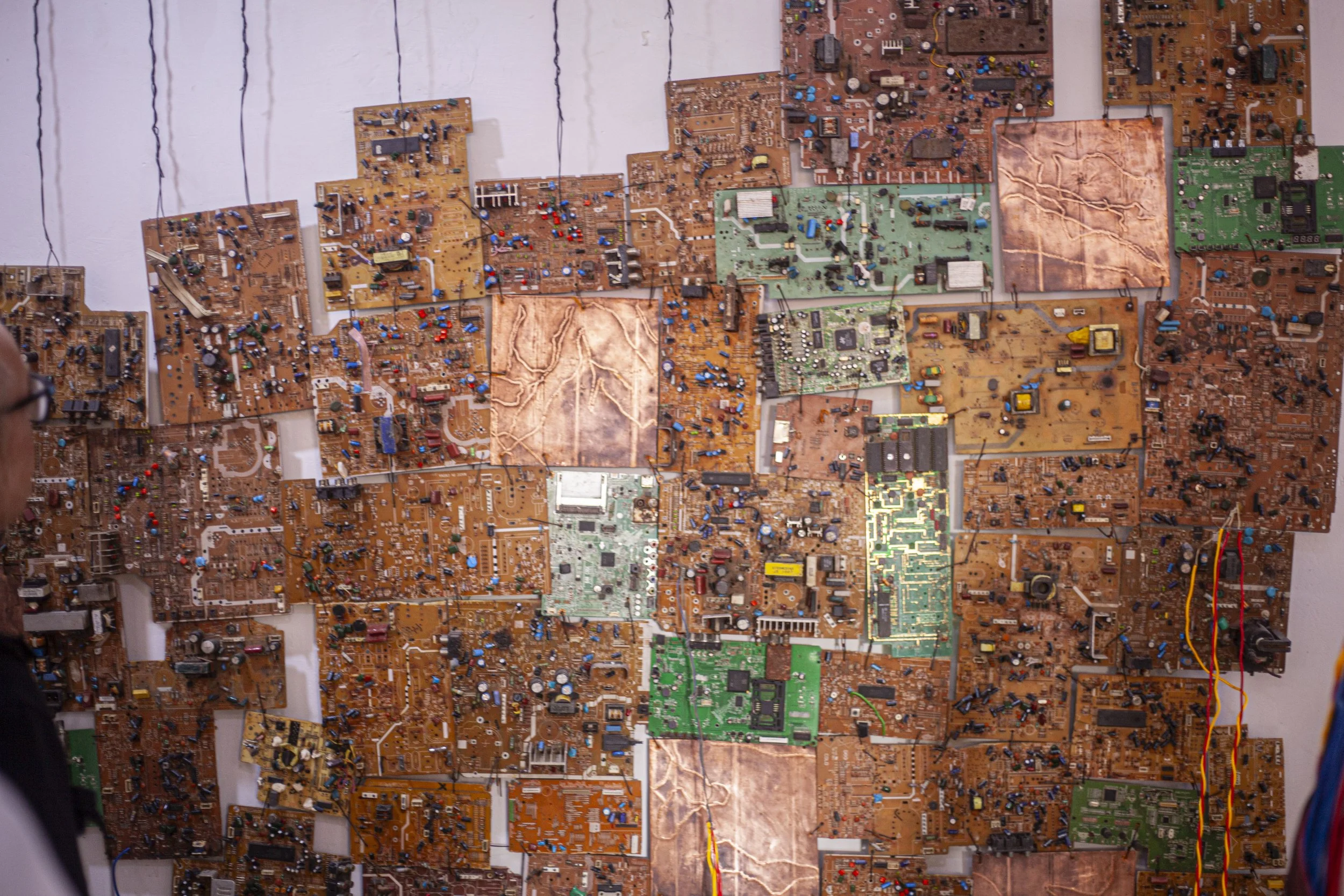
The second strand deals with toxicity, or more precisely, poison. How do you eat poisoned soil? How do you go on living in an environment where the soil, water and bodies bear the traces of extraction? Artists including Félix Shumba, Soñ Gweha and Kris Verdonck explored those questions through their work.
The third strand is returning to the land. It revisits ways of knowing, traditions and practices that reflect other kinds of relationships with the land, some of which long predate the extractivist era. The history of the copper eaters is one example. This return also concerns diasporas, those who have left and live elsewhere but still have a relationship with this land and remain part of it.
The fourth strand looks at restitution under the title Reprendre, or Taking Back. The word comes from Valentin-Yves Mudimbe and his reflections on the need to revisit, question and reclaim the conditions in which we produce knowledge about ourselves. We wanted to start there and broaden the meaning of restitution. It usually refers to the return of objects and artworks displaced or confiscated during the colonial period. With Reprendre, we wanted to open up a wider question. How do we take things back? What does it mean to reclaim our history, our stories, our knowledge, our resources and our capacity to think for ourselves?
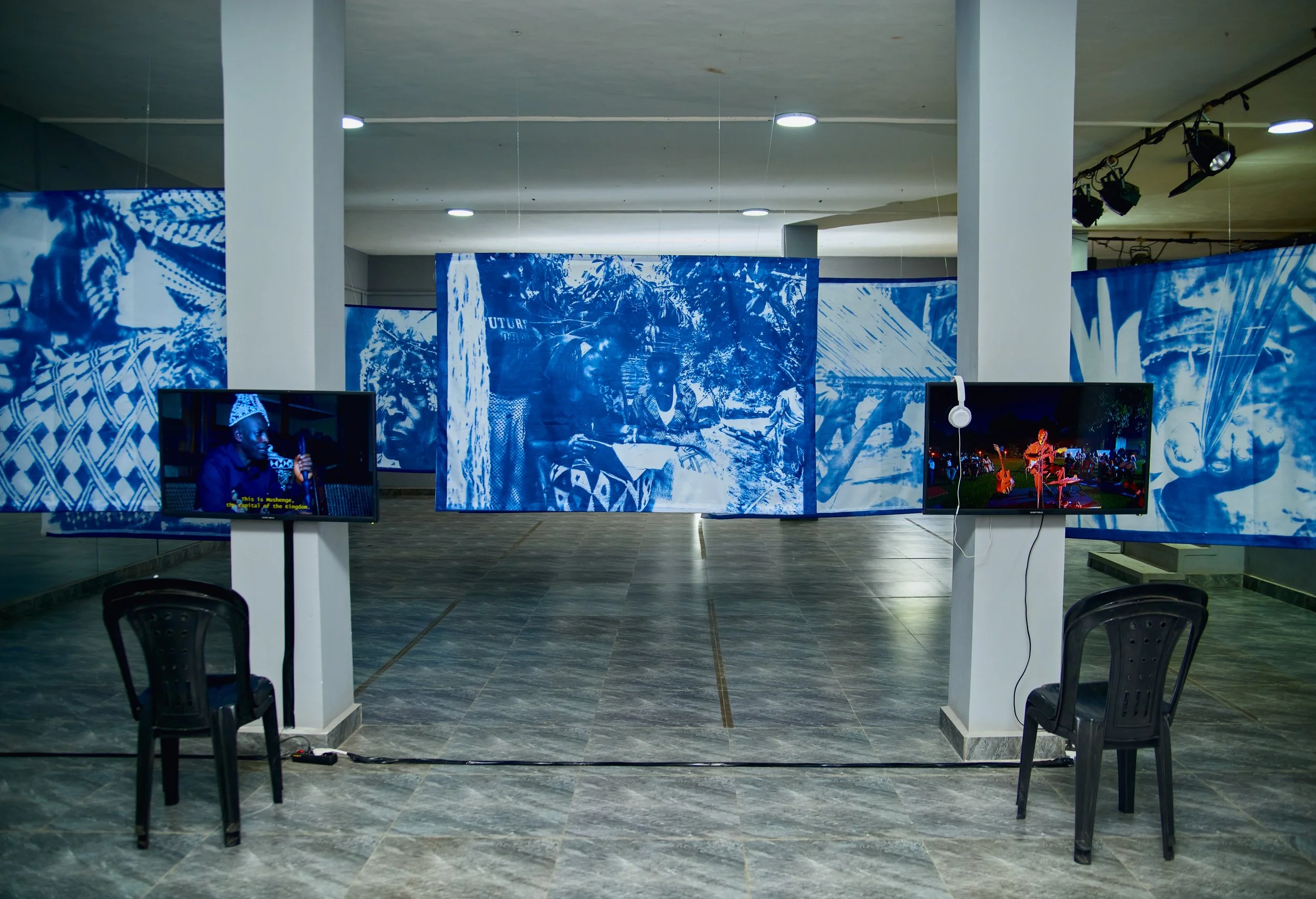
Melisa Kayowa’s Woven Territories: Royal Kuba Art Between Tradition and Technological (R)evolution speaks directly to this. Drawing on ancestral Kuba weaving techniques and using artificial intelligence, she traces the journeys of objects from Congo’s cultural heritage that were displaced and are now held in ethnographic museums or private collections in the West.
These four strands gave us a map for thinking about the selection, with room for artists to move between and beyond them. One of our priorities was to make space for artists living in Lubumbashi and, more broadly, in the Democratic Republic of the Congo. Lubumbashi has an art school that teaches pupils from primary through secondary level, but it has no academy for higher education in the arts. Many young artists want to continue their practice after finishing school and find there is little institutional support available to them. Art centres such as Picha help fill that gap and play an important role in training artists, supporting them and helping them develop their practices.
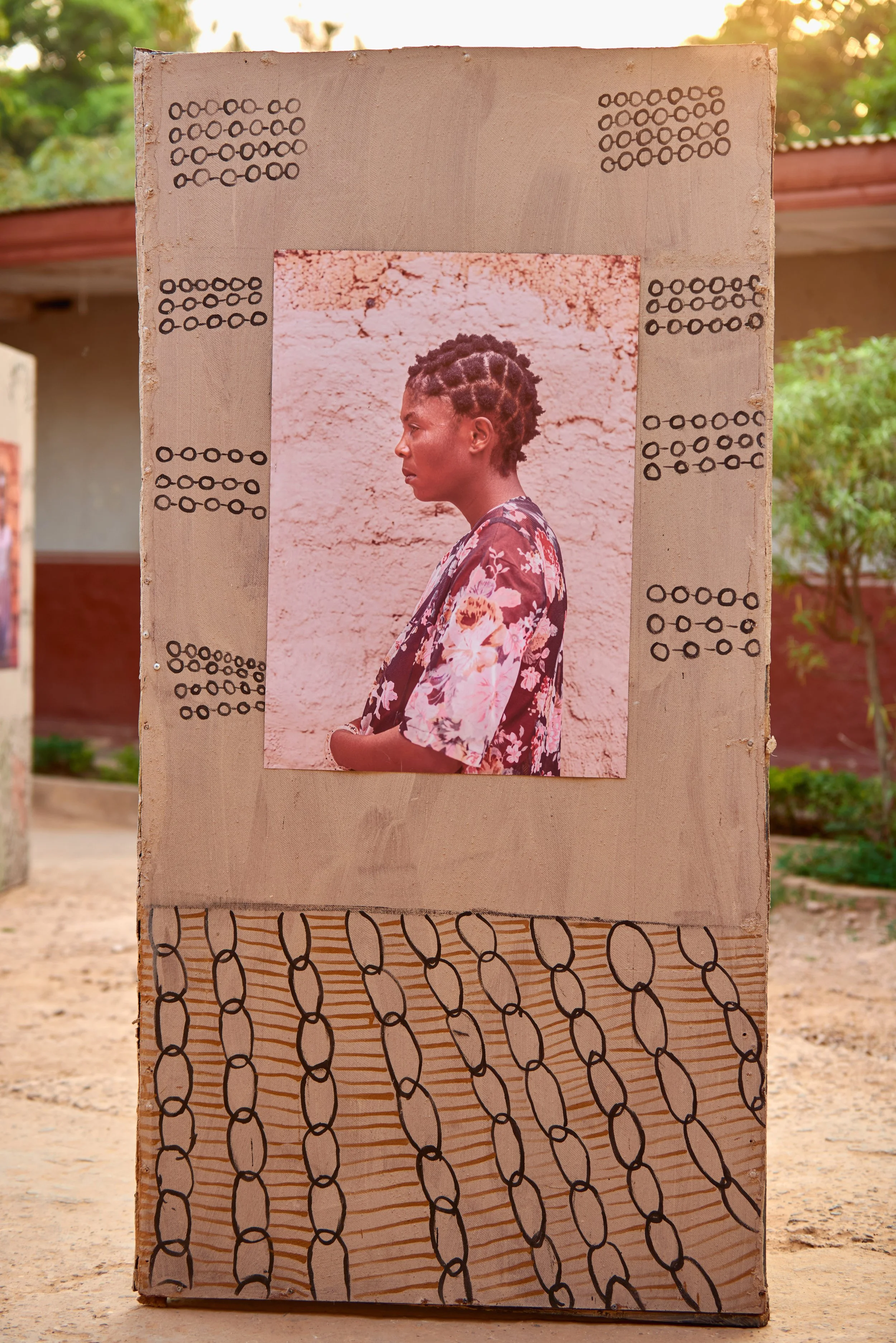
It felt essential to give visibility to the artists Picha supports and to those who contribute to the life of the wider arts ecosystem. Some remain little known, and others may not have what you would call professional artist status. Their practices, research and contributions to the local art scene are equally important. I wanted the Biennale to make room for people who are often overlooked.
We also invited international artists who approach the questions raised by Eating the Soil from their own contexts. Noor Abed and Sahil Naik are two examples. Their work may have little direct connection to Katanga, and they may be unfamiliar with the particular realities of the region, yet they encounter questions in their own territories that resonate with ours. What interested me was bringing out affinities, solidarities and points of contact between experiences and struggles whose differences remain, and which can still speak to one another across territories.
MAYÌ-ARTS : Did this dialogue between Congo and other parts of the world bring anything into perspective that you had not anticipated?
Sorana MUNSYA : Absolutely. That is part of what makes this kind of encounter interesting. You prepare an exhibition, imagine connections and develop a curatorial proposition. There is always an element of uncertainty about what will happen when the artists arrive, the works take shape and audiences begin encountering them.
Given the production conditions and resources available in Lubumbashi, many of the works were made on site. A large number were new works that took shape through conversations between artists, technicians and the people working with them locally. That inevitably leads to moments of surprise.
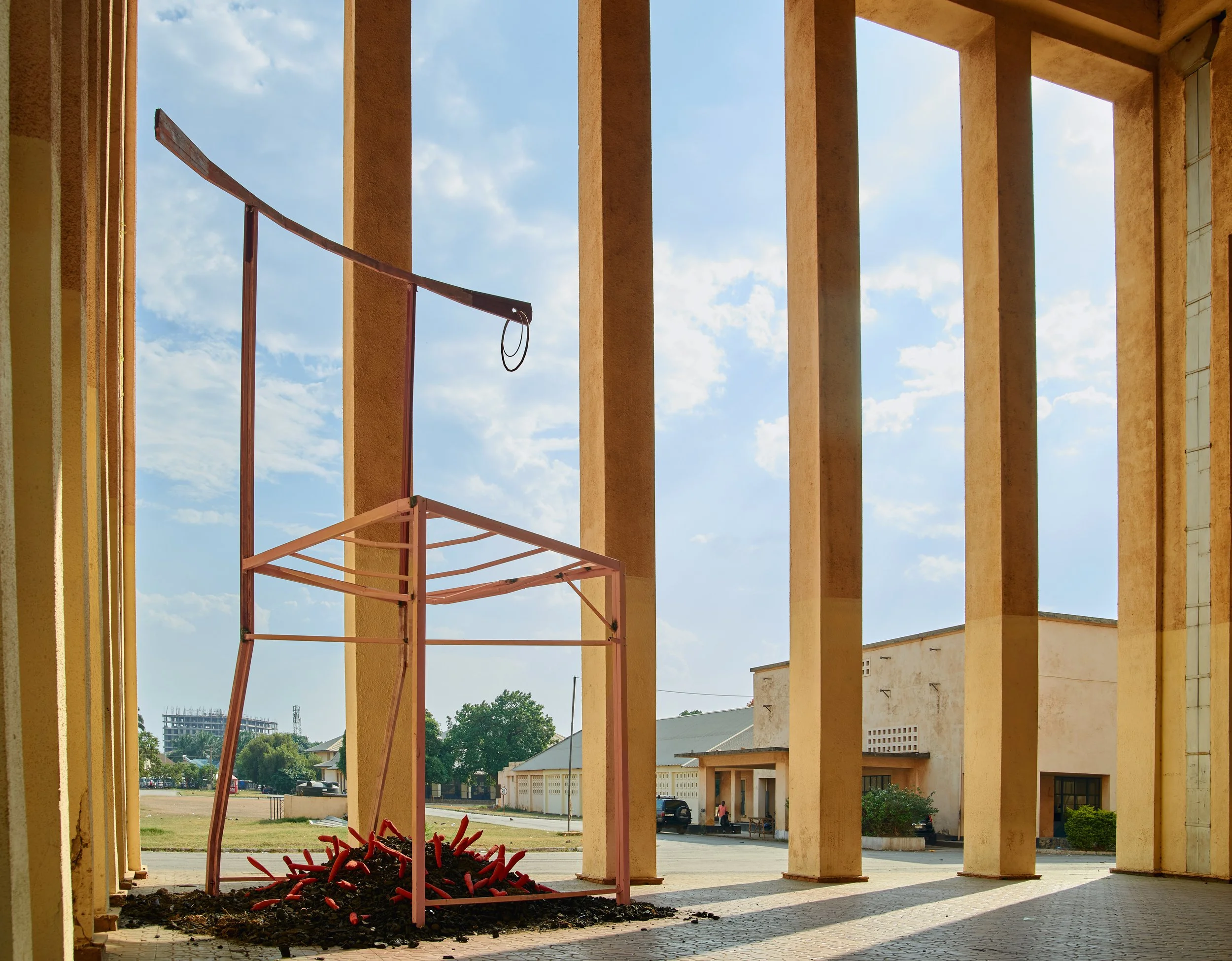
I think of Beau Disundi, who made a monumental metal sculpture six metres tall. It was an ambitious undertaking that demanded a great deal from everyone involved, from Beau himself to the production teams, technicians and others who helped make the work. What stayed with me was the trust we had to build together to see it through. Beau and the whole team were determined, almost to the point of stubbornness. There were moments when we could have given up or scaled back our ambitions, but we saw it through. Watching the sculpture take shape was a powerful experience. It reminded me how much producing an artwork depends on putting the people, skills and working relationships in place that allow an artistic idea to exist.
There are also artistic encounters you cannot anticipate. That was the case with Sahil Naik, an Indian artist I met through the artistic director of the Kochi Biennale. I was immediately drawn to his work. Using visual archives and historical depictions of landscapes in India and the Caribbean, he looks at how Europeans saw, represented and imagined those territories during colonisation. These images can make landscapes appear untouched, lush or exotic, but they already carry the gaze of those who made them.
Sahil re-examines those images. He looks for what European artists and mapmakers projected onto those landscapes and makes room for what was erased or overlooked. He invites us to ask what those landscapes might have been and what colonial images still prevent us from seeing.
What particularly interested me was how his work echoed questions raised by the Biennale from a geographical context very different from Katanga. The questions he raised about representation, knowledge and the appropriation of territory resonated deeply with our thinking about the land. His work sparked many conversations during the Biennale and found echoes in other artists’ projects.
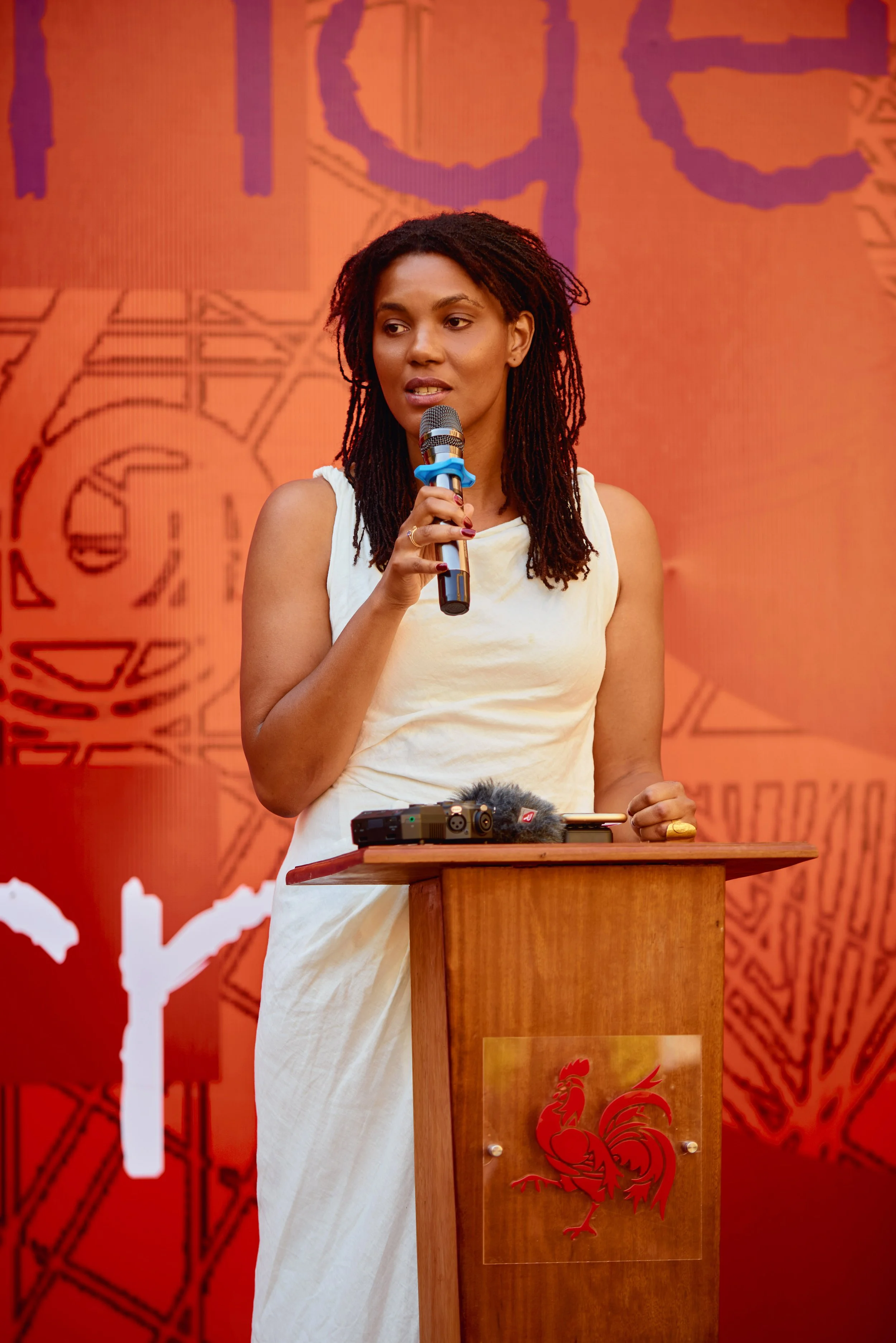
MAYÌ-ARTS : The Biennale has been running for eighteen years. How does it nourish Lubumbashi, and how does Lubumbashi nourish it in return? What impact do you see in the city, or more widely across Katanga?
Sorana MUNSYA : I think the Biennale has had a real, positive impact, certainly within Lubumbashi’s artistic and intellectual life. We also need to recognise changes that happen on a smaller scale, in the lives of artists, researchers, producers and the people who keep the cultural scene going. You often have to look over a longer period to see that impact.
I am speaking from personal experience, too. I was in Lubumbashi in 2017 to work on Éblouissements. When I returned in 2026, I could see how much had changed in nine years. Picha had babies! Other initiatives had sprung up. They may not yet have Picha’s international reach, but they are organisations and spaces that artists decided to create themselves so they could develop their practices, make work, think and meet. That was less visible in 2017, even though the Biennale had already been around for almost a decade. Nine years later, I could see in very concrete terms what that momentum had helped make possible in artists’ lives.
Another important impact is on individual careers. The Biennale has helped some artists build the careers they have today. When I was in Lubumbashi in 2017, I was particularly struck by Picha’s workshops, which had been set up at Toma Muteba Luntumbue’s initiative. The workshops continued to support artists from Lubumbashi and other cities in Congo, giving them space to research, experiment and meet. Many participants have since developed recognised practices and now show their work internationally. I am thinking of Nelson Makengo, Franck Moka and Géraldine Tobe, among others. That continuity alone is a considerable achievement.
“The Biennale sought to understand the forms of violence and degradation that capital, with a capital C, corporations and extractive industries inflict on the land and on our African societies. What do these forces do to Congo? And, more specifically, what do they do to Katanga?”
I was inspired by Toma’s work and by the attention he paid to what the Biennale could produce over time, beyond the event itself. One of my goals was to get a five-year partnership agreement signed between Picha and the University of Lubumbashi. The idea was to formalise and strengthen the relationship, give Picha a greater presence within the university and eventually help develop arts courses and degree programmes there. It was an attempt to build lasting connections between artistic practice, research and higher education. I do not yet know exactly what will come of it in five or ten years, but it felt important to contribute to that goal.
There is another dimension I would like to talk about because it is often less visible. It is the entire human infrastructure that allows the Biennale to exist. This year I am responsible for the artistic direction and represent the Biennale in different settings, but a great many people stand behind this edition. I am thinking especially of the technicians, artisans, installation crews and everyone involved in production. I often said during preparations that if one of our technicians burns out, we might not have a Biennale at all! These are the people who build, weld, find solutions, keep the equipment running and make the artists’ ideas physically possible. We simply could not put on the Biennale without them.
We work with many difficulties, including power cuts, transport problems and technical and logistical constraints. What keeps things moving is this human infrastructure, a whole network of skills, relationships and solidarity. Take a generator that breaks down. Two hours later, it is running again. That comes down to several people working together, drawing on what they know and finding a solution.
This goes straight back to the “epistemology of the hole” we discussed earlier. When we keep looking at our territories through what they lack, through the infrastructure that is missing or the resources that have been extracted, we sometimes lose sight of what is there. This infrastructure may look different from what we know in Paris, Berlin or elsewhere. It works according to different arrangements, some of them less formal, and it is very real. I think we need to recognise it, document it, value it and, above all, invest in it. It is what has kept initiatives like the Biennale going for eighteen years.
MAYÌ-ARTS : And we measure what we lack against a model we have chosen as our point of reference. What you are building could also serve as a model for us, one of our own.
Sorana MUNSYA : Yes, exactly. The idea is to look at what exists and grasp how much work goes into it. To say, “Look what we can do with next to nothing,” would romanticise those conditions. We need to be able to look at what exists, study it and find the words to describe it.
Organised by Picha Art Centre, the ninth Lubumbashi Biennale took place from 15 October to 15 November 2026. Biennale programme