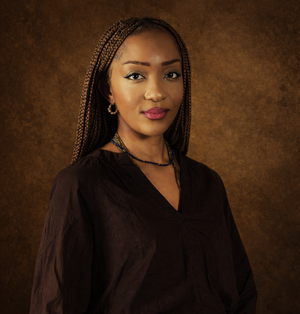
When life challenges him, he challenges it in return. Yann KWETE has a clear objective that has never really changed: to make contemporary African art shine beyond borders and expectations. From his beginnings running a nomadic gallery and his appearances at fairs such as 1-54 London, AKAA and SCOPE in Miami, the founder of KUB’ART Gallery carries a drive and dynamism that withstand every trial. Today, however, things are different: his tone is composed, his gaze thoughtful, given what is at stake — the opening of KUB’ART Gallery in Montreal’s Belgo Building, an epicentre of contemporary galleries in the Canadian city. Two days before the launch of the inaugural exhibition, Traversées, we revisit this new chapter together: between anticipation and commitment.
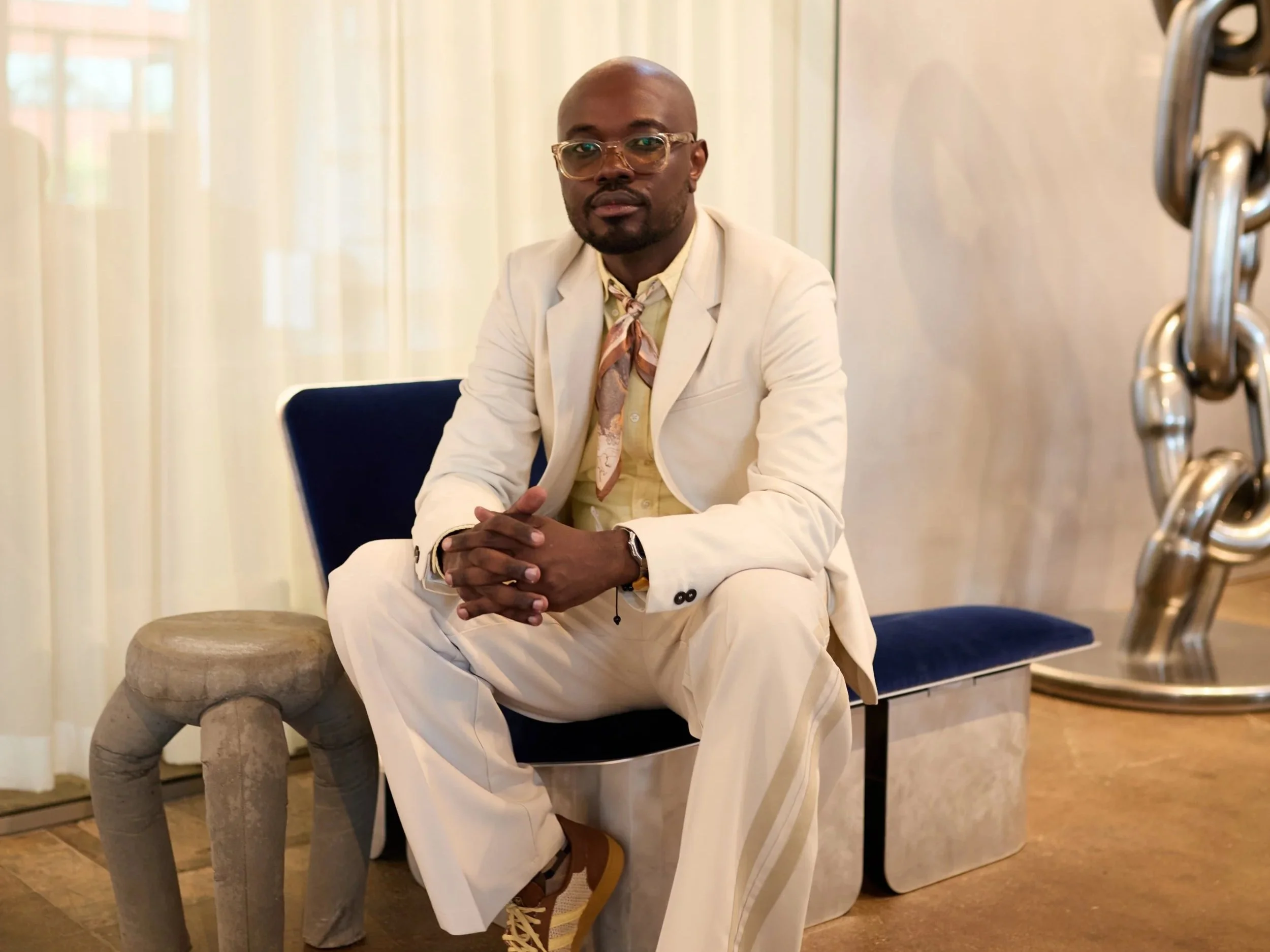
Yann KWETE ahead of the opening of KUB’ART Gallery in Montreal
We meet Yann KWETE in the midst of installing Traversées, KUB’ART Gallery’s inaugural exhibition in Montreal, as the gallery moves into the Belgo Building, a prestigious building housing the largest concentration of contemporary art galleries in Canada. Two days before the opening, and just over a year after our last conversation on MAYÌ-ARTS, the gallerist from the Democratic Republic of the Congo reflects on this major milestone in his journey.
MAYÌ-ARTS: During our first conversation, now more than two years ago, you presented KUB’ART Gallery as an invitation for Africans to reconnect with their ancestral culture in an era of globalisation. Five years on, where do you stand in that reflection?
Yann KWETE: At the genesis of KUB’ART, there was this desire to promote contemporary African creativity internationally, to highlight artists’ work. But the idea was also to consider how to shift our perspectives, how to position ourselves. Having lived in North America for around ten years now, we were participating in fairs, but as we grew, it was important for us to think about how to establish ourselves somewhere. After understanding how the market works here, I realised that what was really missing was a space dedicated to the African diasporic, Caribbean and African art scenes in Montreal.
There are galleries that represent African and African diasporic artists, but, over the course of our discussions, the question of legitimacy keeps arising for some, who sometimes let artists speak for themselves about their work or work with curators who understand their approach, their circumstances and their lived experiences. Today, being an African, a Black person representing artists here in Montreal, also means being able to offer this dedicated space without confining them to it. It means having someone who understands and can speak about their work from a reality and a lived experience they know, because they come from there. We finally had this opportunity to open the gallery in Montreal, and that is what is becoming a reality today.
MAYÌ-ARTS: You mention the importance of telling our own stories. How can these cultural inheritances be celebrated without confining contemporary African art to a folkloric reading?
Yann KWETE: For me, what matters is refusing to let heritage serve as a label. I come from the Kuba kingdom, known for its textiles, patterns and masks. This heritage is my source, but it is not a stylistic obligation for the artists who champion this African art. Contemporary African art must not remain confined to a folkloric reading. It belongs to a global artistic movement, with its debates, its ruptures and its forms. African art belongs to a global artistic movement. We have had Japonisme, the Abstract Expressionists, the Expressionists. All these movements are part of art. When we speak about contemporary African art, it is also a global artistic movement.
“This heritage is my source, but it is not a stylistic obligation for the artists who champion this African art.”
MAYÌ-ARTS: Before opening this space, you worked nomadically, particularly through fairs in North America and Europe. What did you learn about the market and the artists, and how did this influence your vision for the gallery?
Yann KWETE: We need to go back to the beginning: our first ambition was memory. The gallery was born out of an act of archiving before it became an act of commerce. In 2015, my cousin and I imagined an online inventory of works from our kingdom, intended to celebrate and raise awareness of our Kuba royal heritage. We wanted to digitise it to preserve records and ensure its transmission. The gallery then took shape in 2020, in the midst of the pandemic, with a first digital exhibition. Six years later, three lessons stand out.
The first is that the digital world gives you an address, not a relationship. A work is looked at, but it is also bought on the basis of trust, through the presence of someone you can meet. The second is that fairs offer legitimacy and an audience we would not have been able to reach on our own. They have allowed us to introduce artists to new contacts, including institutions. Seeing a work by Rachel Malaïka join the collection of the Ackland Art Museum in North Carolina, for example, is an achievement.
The third is that a fair lasts only a few days: we set up a stand, persuade people, then take it down. But this does not extend over time; we do not build a long-term conversation there.
MAYÌ-ARTS: What does a permanent space allow you to build beyond the encounters made at fairs?
Yann KWETE: At a fair, we are there for three or four days. We can persuade people, sell and form connections. But a real relationship with a collector is built over time: it needs to be maintained and nurtured. The gallery offers a place where this trust can grow. Collectors want to discover artists, see their works and return for every exhibition. For me, it was therefore important to have this space. The nomadic model is also very costly and fragile: it depends on logistics, exchange rates and invitations. The visibility gained at fairs is real, but it does not turn into lasting support on its own.
MAYÌ-ARTS: How does having a gallery space extend this work?
Yann KWETE: Everyone has their own journey. Some open a gallery first, build a collector base and then participate in fairs. I started the other way round. For three years, I took part in fairs and met many people. But sometimes collectors would call me while passing through Montreal, and I had no place to welcome them. It was a missed opportunity to continue the encounter.
Combining fairs with a permanent space helps strengthen this relationship. A collector visiting the city can come in, discover an exhibition and see the space. It reassures them and makes our commitment to the artists tangible: there is an investment, a desire to build something over time.
The nomadic model is stimulating, especially at the beginning, but it is also costly. With experience, you come to understand the logistical difficulties and the uncertainties of a market that remains unstable.
Having walls and organising exhibitions is no guarantee either. You need to do the groundwork, reach out to your community and build relationships. This can take one, two or three years. But gradually, a base forms: collectors follow the gallery, wait for an artist’s new works and sometimes join a waiting list. When you then return to fairs with this foundation, the gallery is viewed differently.
MAYÌ-ARTS: You mention the importance of relationships. What place do they occupy in your journey and in building the gallery?
Yann KWETE: We work in a deeply human profession, where sensitivities occupy an important place. It is also a very small world: in London during 1-54, in Brussels during Africa Legacy, in New York or Miami, you often find the same people. These relationships need to be preserved and cared for. But they also come up against very concrete realities. You cannot promise or do everything. Financial difficulties, in particular, can cause tensions and sometimes ruptures. When you participate in a fair in Miami, some people think that means there is money. Behind that presence, however, there are sacrifices and concessions, which can also weigh on your personal life.
Relationships remain at the heart of the profession. You introduce one person to another, who introduces them to a third. Little by little, a core forms. It is through these connections that the gallery is built.
MAYÌ-ARTS: Over the course of the projects you have presented, your curatorial approach has become more defined. What perspective would you like to develop within the gallery today?
Yann KWETE: What matters to me is telling our own story. For a long time, others did so in our place, through ethnography, colonial museums, auction houses or curators from elsewhere. The works were shown, but rarely explained in the words of those who created them or those who knew them from within.
In the gallery, I want this narrative to be carried by voices close to the work: the artists themselves, but also curators and critics from these art scenes. This involves bilingual texts and documentation. If we do not document, we leave others to write in our place. Each exhibition therefore gives rise to a curatorial text, high-quality images, interviews or a catalogue. It was also in this spirit that I conceived Traversées, with texts that embrace a personal point of view.
MAYÌ-ARTS: You define Traversées as a meeting point rather than a point of arrival. Is this also your vision for the gallery: a place where people and geographies meet?
Yann KWETE: For me, crossing is not just about going from one place to another. It also means carrying something with you: a memory, a face, a story, sometimes even a question that refuses to disappear. Traversées was born from this simple and profound idea: our identities are never still. They are built through movement, encounters, confrontation with others and those spaces in between where several worlds can coexist.
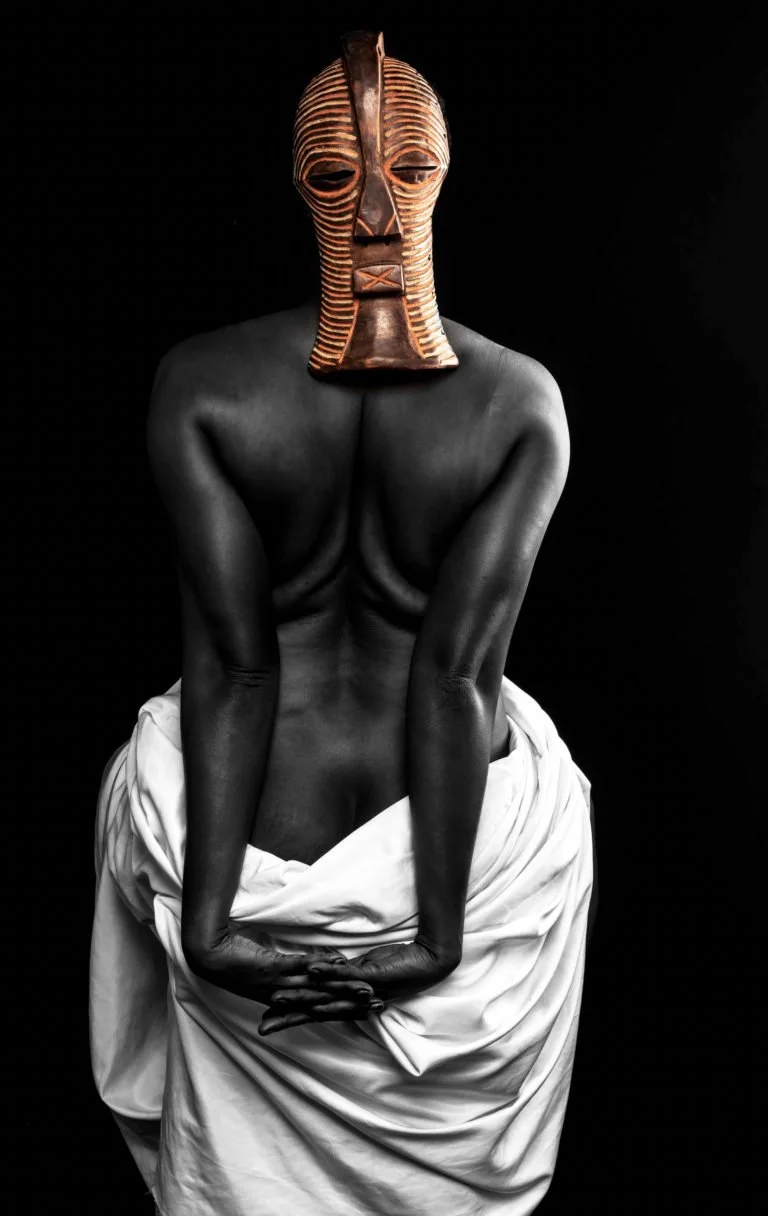
Molimo, Anastasie LANGU
MAYÌ-ARTS: What brings together the four artists in this inaugural exhibition?
Yann KWETE: We have brought together four artists, some with whom I had already worked and others with whom I am collaborating for the first time. Their practices, different in their media and trajectories, meet around the same question: what becomes of an identity when it crosses borders? Each approaches this question through a particular dimension of memory and the experience of displacement.
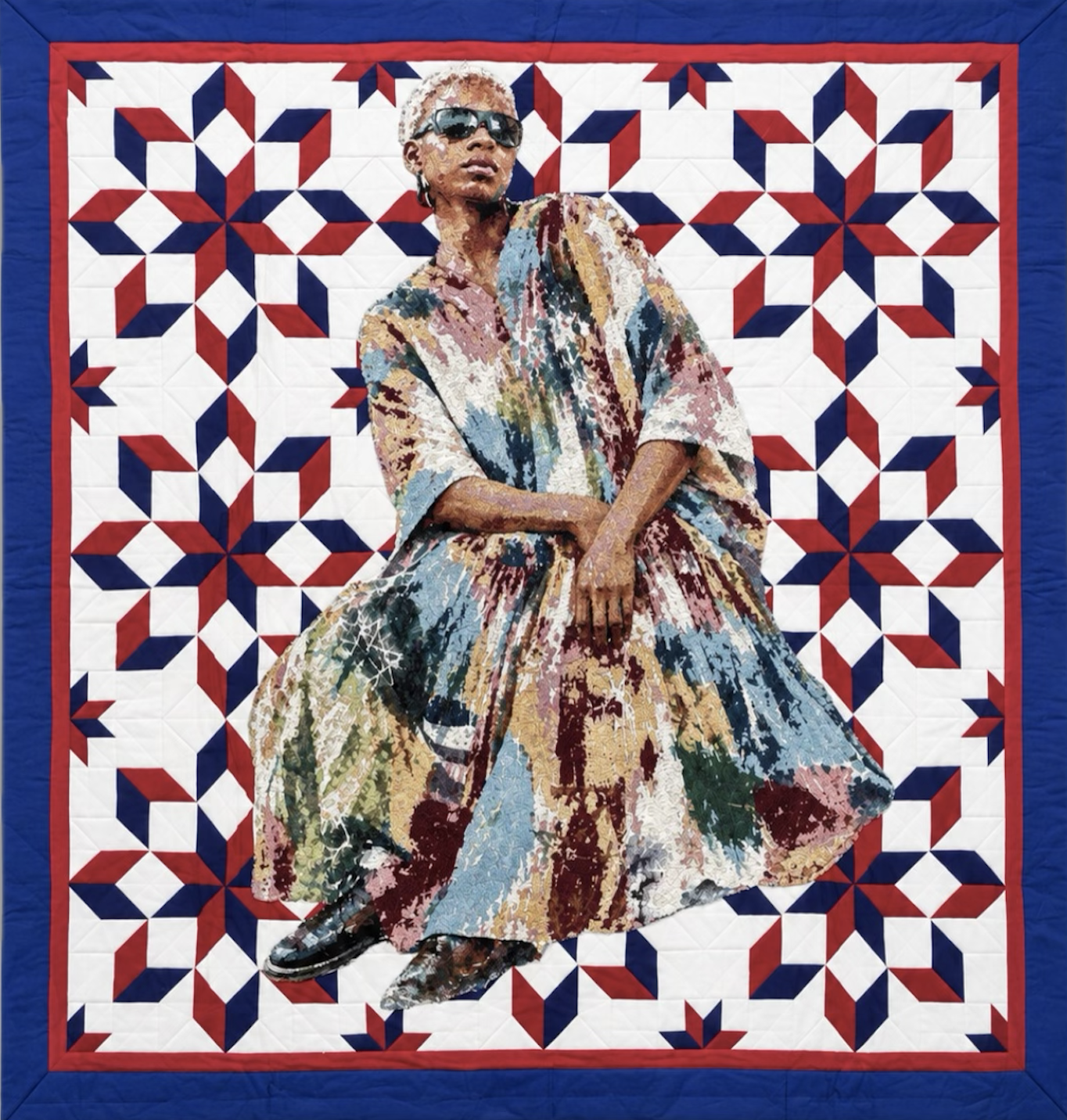
Anastasie LANGU incarnates the act of crossing by through memory. In her work, the crossing becomes intimate: it resides in gestures, bodies, objects, stories and silences. Her work explores inheritances that are not always written down, but are passed from one generation to the next. In the series we are presenting, masks form an interface between the visible and the invisible, between ancestral heritage and the present. Our first collaboration was, in fact, centred on a theme called Racines ancestrales.
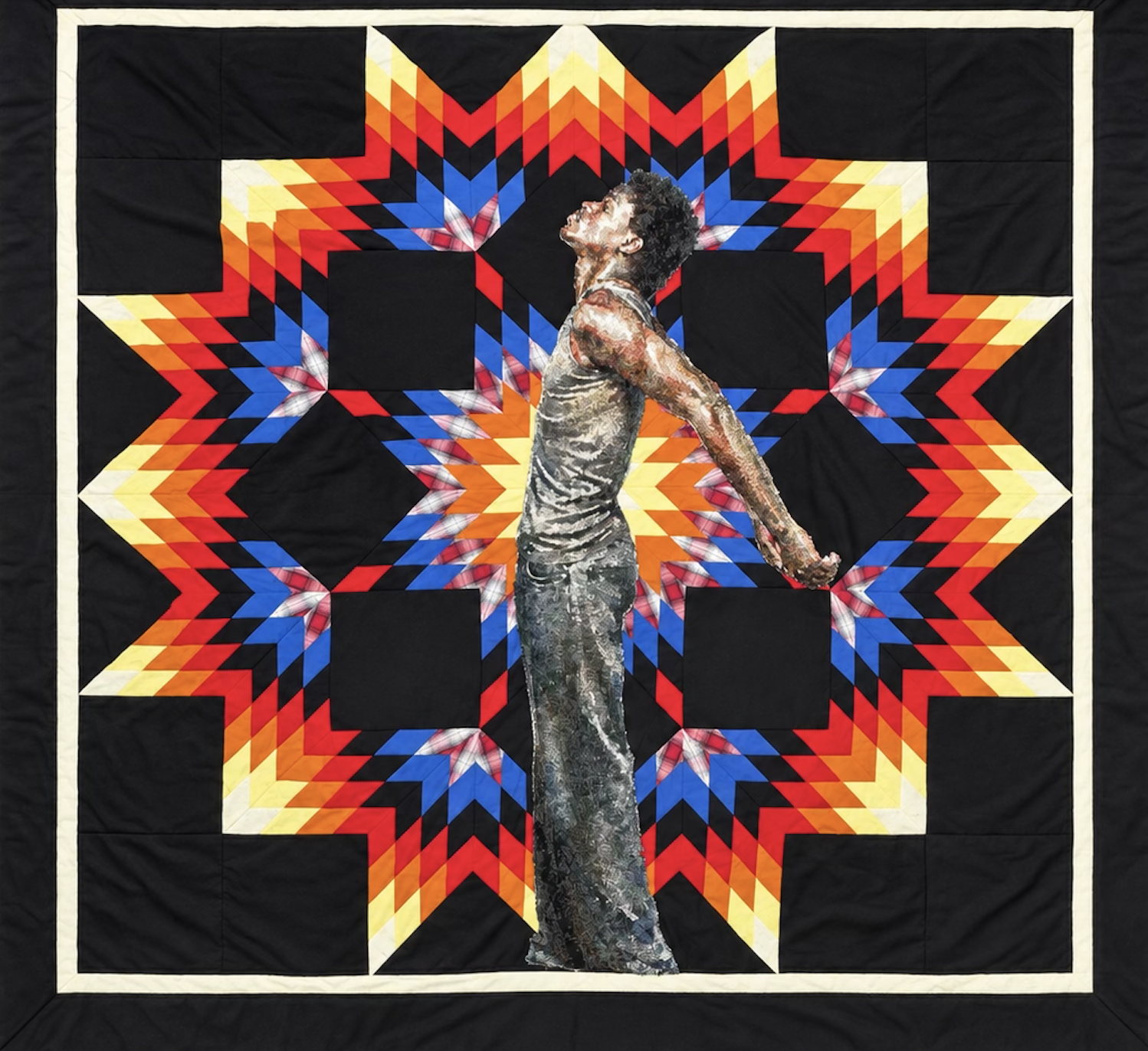
Héritier BILAKA crosses through the present. He is a Congolese artist who has been based in Canada for several years and holds a master’s degree in visual arts from the University of Ottawa. He describes painting as a journey of the mind. The traces of his journey become painterly material. His work introduces a shift in perspective within Traversées. Crossing is an experience of perception.
Armand DIANSAMBU lives and works in Quebec and explores the crossing of the “we”. His practice, which includes installation, painting and performance, carries a memory linked to Bantu philosophy: “I exist because we are.” The “I” takes on meaning within the “we”. He draws inspiration from his own experience of loneliness when he settled in North America. Like Anastasie Langu, he reactivates invisible archives and family memories to transform them into vital energy through performative gestures. For him, creating is also a way of freeing his identity, and that of African diasporic peoples, from the hold of colonialism.
Finally, I discovered Desmond BEACH’s work in Venice, during a chance visit to the European Cultural Centre, which was presenting a group exhibition during the Biennale. His approach connects with reflections that have long nourished my curatorial work: spirituality, ancestral cultures and how to maintain a connection with our values in a world shaped by modernity and globalisation. His work reaches back to an older history, that of the Atlantic crossing and the Middle Passage. An interdisciplinary artist, researcher and educator, he explores Black life in America and the violence that continues to haunt it, from the transatlantic slave trade to the Jim Crow laws.
His work thus extends the exhibition’s geography to the Black Atlantic and the North American diaspora, in direct resonance with the Congolese, Belgian and Canadian trajectories brought together in Traversées.
MAYÌ-ARTS: Beyond exhibitions, being a gallerist involves groundwork that often goes unseen. How do you intend to support the artists and develop their careers over time?
Yann KWETE: Visibility is a beginning, never an outcome in itself. An artist can be widely exhibited without receiving lasting support. That support rests on concrete things: collectors who return and follow a career beyond an initial attraction; institutional acquisitions that establish a practice over time; consistent prices from one exhibition to the next; transparent revenue sharing set out in writing; and editorial support that leaves a record.
I often return to the example of the Ackland Art Museum acquiring a work by Rachel Malaïka following a fair. It is encouraging: it shows that an encounter in the market can lead to a work entering a public collection. This is what I want to develop here in Montreal, with private collectors and institutions alike.
The African art market also experiences trends. A region or an aesthetic attracts particular interest, then attention shifts. The risk for a gallery is to ride a wave and abandon the artists when it recedes. On the contrary, I want to maintain a long-term commitment, even if it means selling more slowly. This requires a sound business model, which is why we took the time to consolidate our project.
The priority remains artistic quality, the depth of the proposition, the narrative and the perspective. It is not about encouraging an artist to work with textiles because textiles are in demand, or to repeat a form because it sells. Artists’ freedom of expression must be preserved while maintaining rigour in the work, the texts and the conceptual development of their practice.
“The priority remains artistic quality, the depth of the proposition, the narrative and the perspective. It is not about encouraging an artist to work with textiles because textiles are in demand, or to repeat a form because it sells. Artists’ freedom of expression must be preserved while maintaining rigour in the work, the texts and the conceptual development of their practice.”
MAYÌ-ARTS: Your journey reflects a desire to open new paths and bring your vision to life. What drives you to continue this adventure?
Yann KWETE: Several things. I am often seen as someone who travels a lot. People see less of the price of those journeys: the departures, the things you give up, participating in fairs with no guarantee of results.
What sustains me is, first, the memory of a time when few people understood what I was doing. In 2013, I launched a festival in Kinshasa called KIN-GRAFF. At the time, the project was difficult to explain. That experience taught me that an idea that seems incomprehensible can become obvious, provided you hold on. There is also the artists’ trust, the first works entering museum collections, the encounters, someone staying in front of a piece longer than expected. And this conviction: if we do not build these spaces, others will tell these stories in our place.
But I do not want to idealise perseverance. It has a cost: it is tiring, isolating, involves absences and can come with financial failures. People do not speak about it much. That is why it is essential to surround yourself with the right people, build a team, draw on an advisory committee, establish a viable business model and learn to say no.
I am passionate, an artist at heart. At times, I have tended to commit enthusiastically without sufficiently assessing the resources required. It takes humility to recognise that you are not ready or that a project needs to wait.
Today, I try to take more of a step back, to assess one project before starting another. Some difficult experiences have taught me to evaluate my commitments more carefully. You also have to acknowledge your own share of responsibility: sometimes a collaboration goes wrong because you did not know how to say no or face certain realities in time.
Passion must find a balance with the demands of everyday life. Hope and passion do not pay the bills. Yet what continues to drive me is building a project and seeing an artist grow. Starting to work with an artist who has never participated in a fair, whom few people have trusted, and seeing their work enter an institution a few years later. You then tell yourself that you have not sown seeds in the desert.
Even if our paths separate, I remain happy to see that artist progress. Having contributed to that journey, having been among the first people to believe in them, matters. We do not necessarily make the whole journey together, but we have shared a stage of it

Clockwise : Anastasie LANGU, Héritier BILAKA, Desmond BEACH, Armand DIANSAMBU.
MAYÌ-ARTS: As the opening approaches, what message would you like to share — a final word, or perhaps a beginning?
Yann KWETE: For several years, we have been committed to promoting contemporary African and African diasporic creativity. I also carry Congo, my country of origin, with me, and this desire to share other images of Africa: those of people who create, undertake projects, move and build. I would like to share a message of hope, encourage everyone not to give up, but also to choose something they are passionate about and take pleasure in doing.
The journey involves mistakes, disappointments, relationships that become strained and commitments we have not been able to honour. We have to be able to acknowledge this and learn from it so that we are better prepared.
This is also what Traversées carries. Crossing is not simply about going from one place to another: it means carrying a memory, a language, a wound, a face. Our identities are built through these movements. Here, crossing is as much a theme as a condition of creation.
The inaugural exhibition opens on 12 November at the Belgo Building, in the heart of Montreal, and runs until 15 January. Another exhibition is then being prepared for February, to coincide with Black History Month.
With Traversées, we bring together four trajectories, several media and no single definition of crossing. This is both the strength and the challenge of the exhibition: bringing these voices into dialogue without diluting their individual qualities. African, Caribbean and African diasporic art scenes form a constellation of voices. It is this plurality that we want to show.
KUB’ART Gallery’s inaugural exhibition opens on 12 November at the Belgo Building, 372 Sainte-Catherine Street West, Montreal, QC H3B 1A2, Canada (Suite 411).