Paris Capital, The New Geography of African Art : African art shines within and beyond the specialised market, as Paris Art Week records its first sales against a backdrop of national tensions.
As Paris Art Week unfolds against a backdrop of social tensions, African and diasporic artists are taking centre stage across the French capital, from major international galleries and institutions to specialised fairs. With Paris reaffirming its position as a place of artistic consecration, MAYÌ ARTS explores the changing geography of African contemporary art, the continuing relevance of its specialised market, and a central question: has international recognition become the new measure of an artist's success?

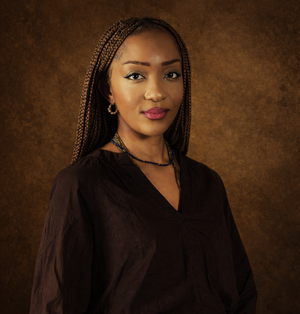
Buqaqawuli Nobakada, Artist Portrait, 2026. Photograph by Moagi Moshoane. Courtesy of the artist and Destinee Ross-Sutton.
This week, Paris Art Week opens within opens in an uncanny climate. Amid tensions involving workers and students who took to the streets on October 17, with calls for a second act on October 24, an uncomfortable question hangs over the celebrations: is there something obscene about the art, luxury handbags and private receptions continuing as though nothing were happening?
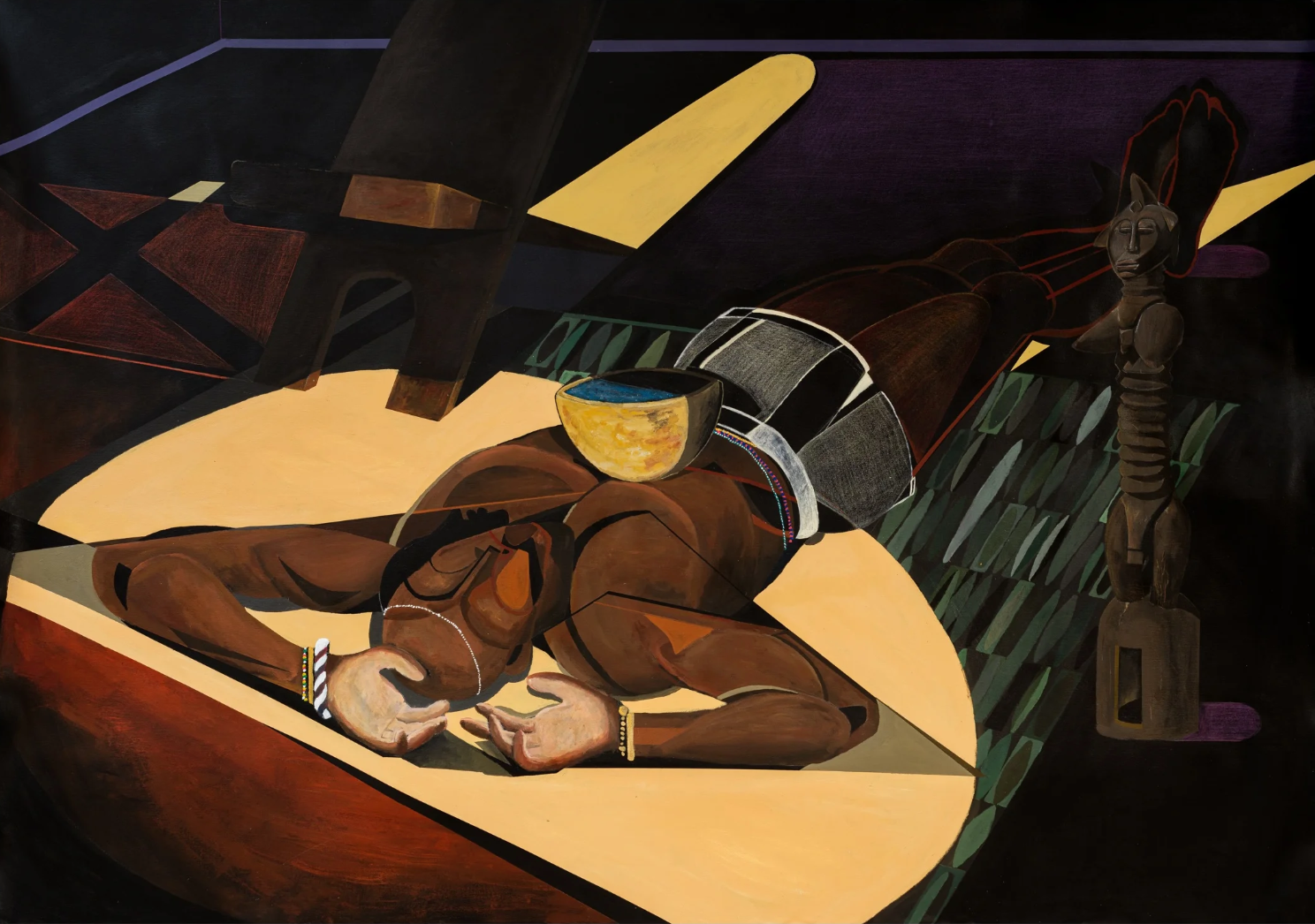
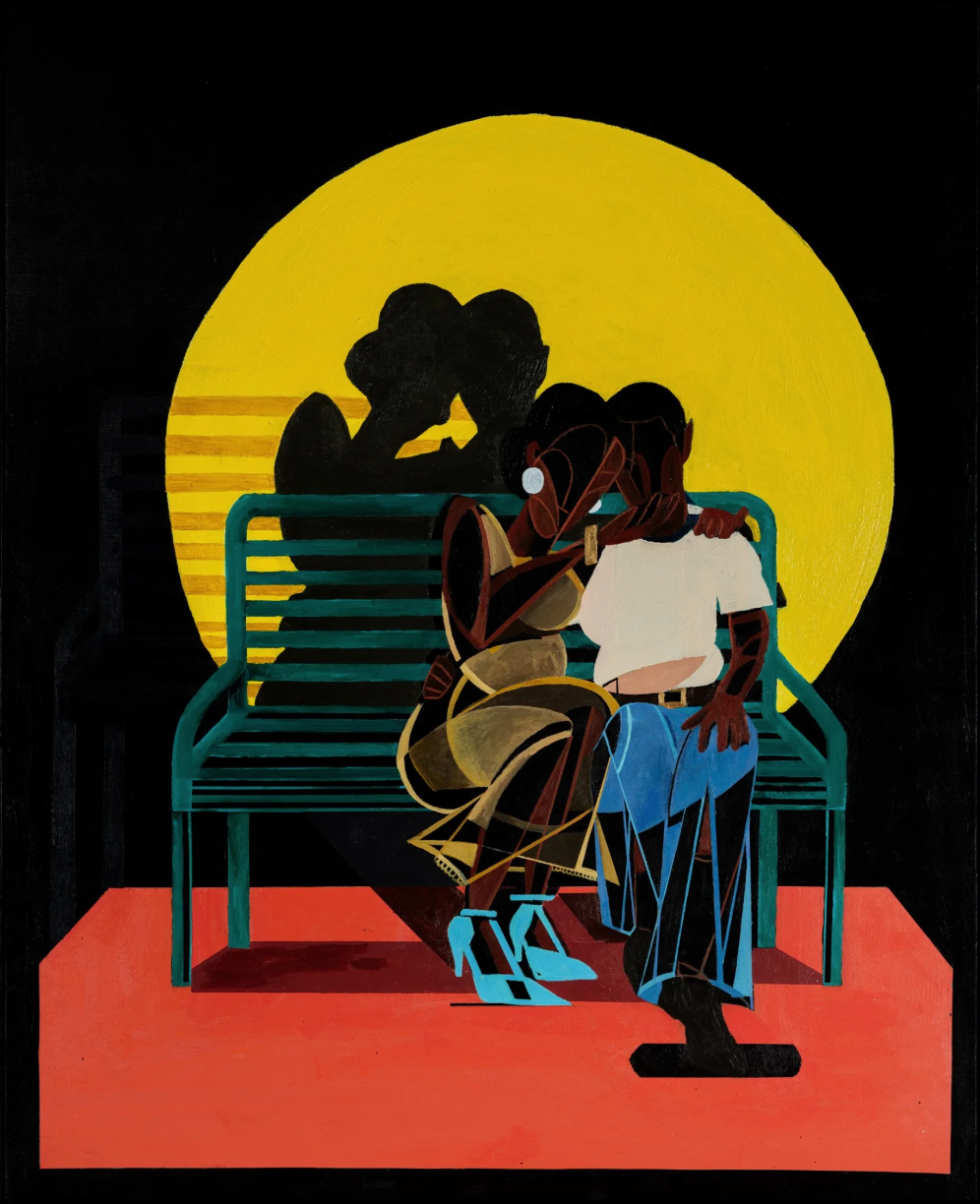
While the overall consensus appears to lean towards supporting the protests, the art world has not stopped, and is unlikely to. After all, throughout history, has art not offered solace in times of tension? And while Art Basel has set the rhythm of Paris Art Week since its arrival in the capital in 2022, much has already been unfolding across the city since Monday, starting just a few steps away from the Grand Palais. On the evening of October 19, an intimate gathering took place at 29 Avenue Franklin D. Roosevelt for the opening of Our Dreams Began Chasing Us Back, South African artist Buqaqawuli Nobakada's first solo exhibition in Paris. The show brings together six paintings depicting imaginary worlds in which women, and Black women in particular, are allowed to rest, experience leisure and exist beyond the demands of labour.
Drawing on her upbringing between South Africa's Western and Eastern Cape, Nobakada explained how womanhood, where she came from, was often defined by labour and effort. Rest, when it occurred, was painfully earned and more often than not associated with selfishness. Her paintings instead speak of abundance and manifestation, notions that are dear to the artist and deeply embedded in the way she conducts her own life. Yet, while a happy few braved the rain to attend the opening at Pierre Cornette de Saint-Cyr, where curator-turned-gallerist Destinee Ross-Sutton is presenting the exhibition, there was nothing left for sale that evening.

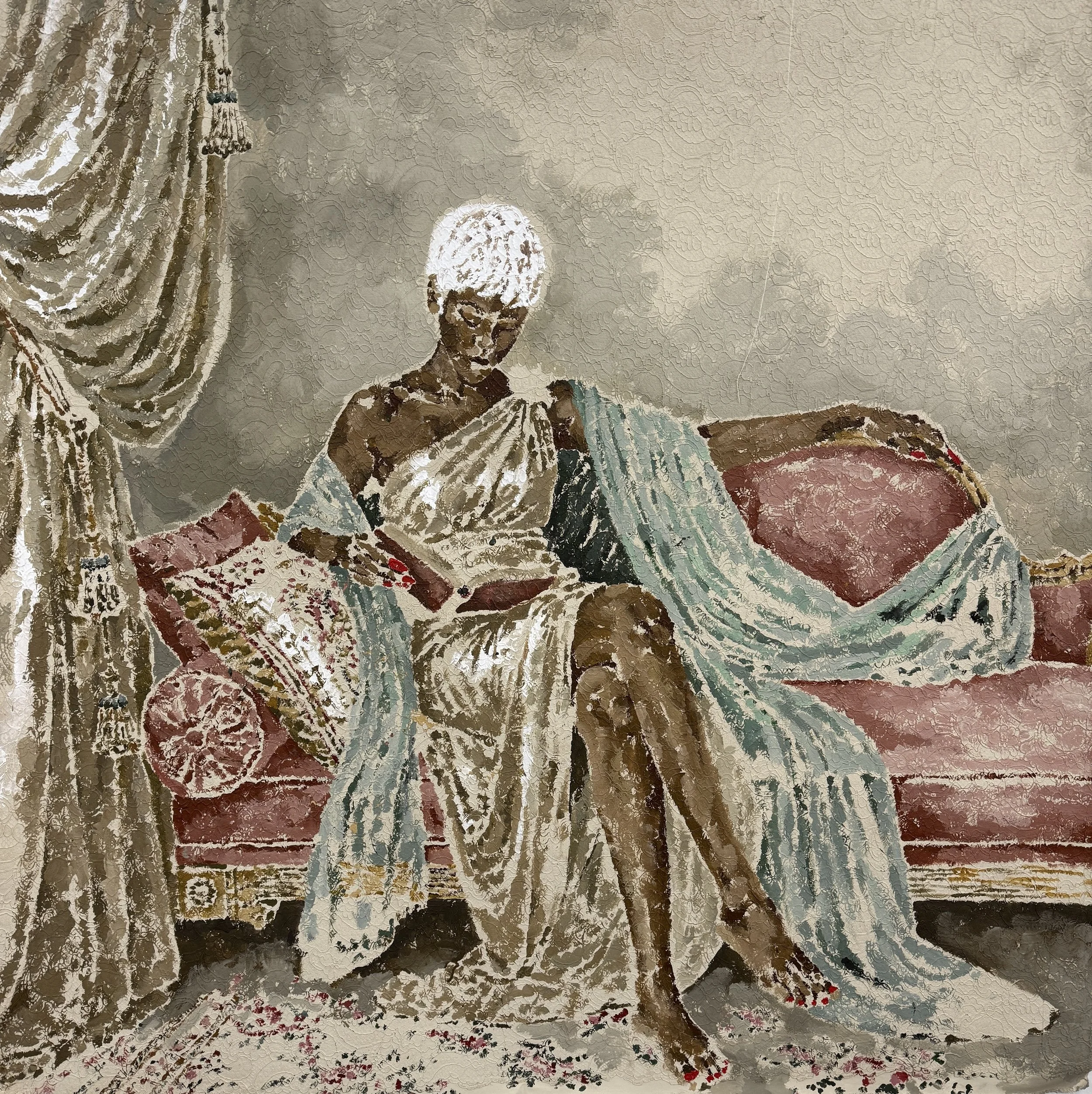
When announcing the show three weeks earlier, all works were immediately placed with major art patrons remembers Ross-Sutton. A dream for the South African artist, and a confirmation for the Harlem-native gallerist, who has spent the past decade championing African artists, supporting their careers and strengthening their positioning within the international market, from galleries to museums and institutions. For the poised gallerist, it is ultimately a question of longevity. As we sat at the gallery's desk, its windows directly facing the Grand Palais, our conversation returned to the importance of building sustainable careers and guiding artists beyond the immediate excitement of a successful exhibition.
“When announcing the show three weeks earlier, all works were immediately placed with major art patrons remembers Ross-Sutton. ”
Since then, the show has continued to garner attention and accolades, leaving both the artist and the gallerist satisfied with this Parisian escapade and, perhaps, a little more carefree for the remainder of the week while planning a first solo in New York in December.
A feeling of ease that few artists and art professionals can afford as Paris Art Week gradually unfolds across the city's hotspots. Many remain reluctant to position themselves too openly on the protests. Booths have been paid for, travel booked and artworks successfully cleared through customs. Yet an air of uncertainty hangs over the capital, accompanied by unusually cold and grey weather for the beginning of autumn.
Surely, there are legitimate reasons to protest. But will the demonstrations affect international visitors? Will the city remain accessible? As everyone offers an opinion and attempts to map out potential no-go zones, the uncertainty has done little to prevent the week's first major openings.
Among them is the highly anticipated Le Temps des Récoltes (Harvest Season) by Ghanaian artist Ibrahim Mahama, following a year of remarkable recognition and artistic consecration. Mahama's rise to international acclaim reached new heights in June 2025, when he received an Art Basel Award, followed by Gold Award recognition at the inaugural Art Basel Awards ceremony in Miami that December.
Over the past year, the art world has collectively witnessed his name being pronounced in increasingly prestigious circles, culminating this autumn in his nomination as a Chevalier de l'Ordre des Arts et des Lettres, ahead of the Fondation Cartier's grand opening. The honour was presented by H.E. Mrs Diarra Dimé-Labille, Ambassador of France to Ghana.
Le Temps des Récoltes explores environmental concerns and questions of collectivity, labour and land, themes long defended by the Cercle d'Art des Travailleurs de Plantation Congolaise (CATPC), the Congolese collective also featured among the exhibition's participating artists. Against the backdrop of the week's social tensions, these questions acquire a particular resonance. Art, labour, land and the distribution of wealth are, after all, hardly disconnected conversations.
Paris, a place of consecration
However we cannot ignore that the presence of Mahama and Nobakada in Paris this week is also symptomatic of the city's renewed claim to its title as a capital of art, new market opportunities and growing relevance in the trajectories of African and diasporic artists.
This shift is particularly noticeable among Anglophone African artists. For years, artists from countries such as Nigeria, Ghana and South Africa have largely developed their careers within their domestic markets before expanding internationally, primarily towards London and, more broadly, the Anglophone art world. Paris, by comparison, had remained a less explored territory : too cold, too stingy, not ready.
Yet, with increasing saturation and recurring visibility across established markets, combined with the emergence of new galleries and exhibition spaces in the French capital, the landscape appears to be changing. Paris seems increasingly ready to welcome this segment of the African art scene, whose artists, despite gaining international recognition, have remained relatively underrepresented in the city's cultural landscape.
If New York and London have traditionally been favoured by trailblazers for the freedom and experimentation they offer, Paris still oozes maturity. There is something about the French capital that continues to confer prestige, a form of cultural consecration rooted in its history, institutions and intellectual traditions. Its concentration of cultural institutions remains a considerable strength, particularly as London's position has been challenged by the consequences of Brexit.
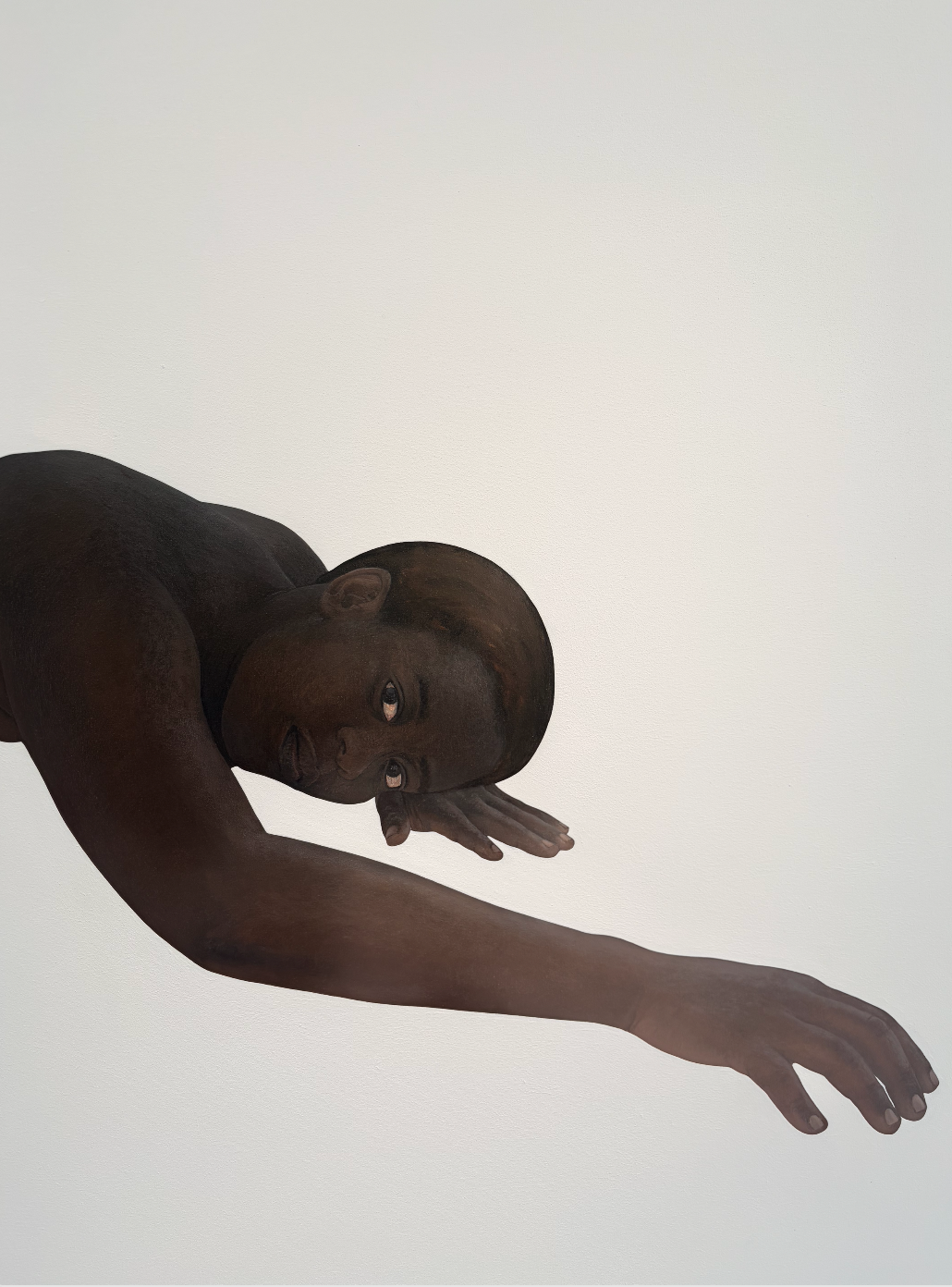
Sungi Mlengeya's Paris debut, presented by Afriart Gallery and hosted by Galerie Les Filles du Calvaire.
Across the city, we are witnessing a growing movement of Anglophone African artists being presented to Parisian audiences, sometimes for the first time, despite already having established careers and collector bases elsewhere.
One thinks of Sungi Mlengeya's Paris debut, presented by Afriart Gallery and hosted by Galerie Les Filles du Calvaire this September. Already well known and collected in Anglophone markets, the Tanzanian artist had previously exhibited in New York and at 1-54 London as early as 2020. The same week Ghanaian and Vincentian artist Emma Prempeh whose work was seen at Frieze London last year was opening her solo at Perrotin curated by Brice Yonkeu.
Meanwhile, the Paris-Luxembourg gallery Zidoun & Bossuyt continues to introduce African American, African and Black artists through its programme, including Nate Lewis this month. More recently came the announcement of a major solo exhibition by Amoako Boafo at Mariane Ibrahim, set to open on October 22.
The list could go on.
“If New York and London have traditionally been favoured by trailblazers for the freedom and experimentation they offer, Paris still oozes maturity. There is something about the French capital that continues to confer prestige, a form of cultural consecration rooted in its history, institutions and intellectual traditions.”
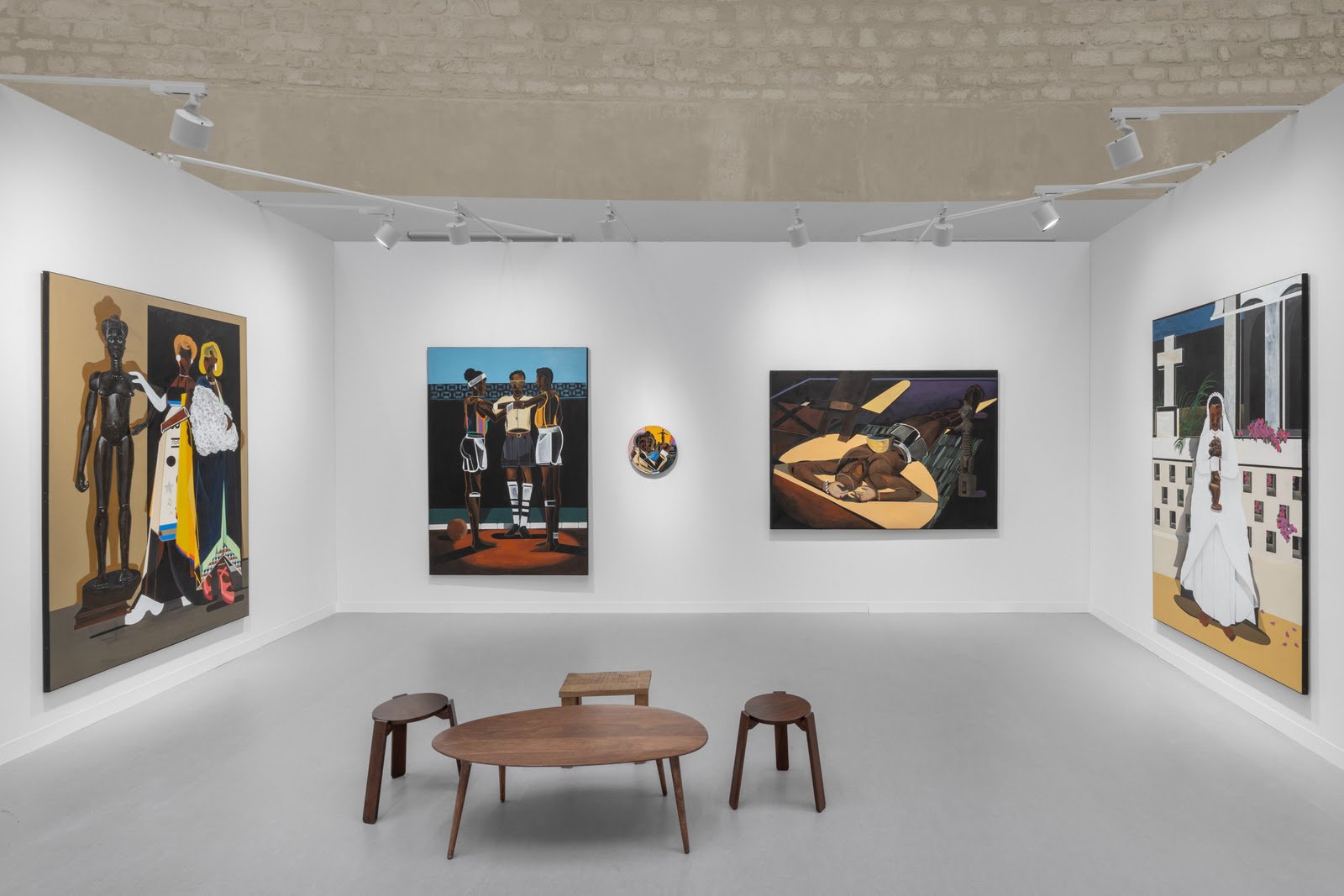
This resurgence of African art in Paris, extending beyond traditionally specialised spaces, is also evident across the city's major international art fairs this week as a similar picture emerges at Art Basel Paris, where works by Alioune Diagne at Templon and Moffat Takadiwa at Semiose are presented alongside Magnin-A's selection of twelve African artists, including Seyni Awa Camara, Romuald Hazoumè, Bodys Isek Kingelez, Chéri Samba and Billie Zangewa.
Cécile Fakhoury dedicates their booth to a solo presentation of Carl-Edouard Keïta introducing new bodies of work paying tribute to the Ivorian Miracle, a period of economic growth and transformation experienced by Ivory Coast between the 1960s and 1980s. The series immediately caught the attention of collectors. By the end of collectors' day on Wednesday, five of the ten works had already been placed under reservation, with prices ranging from €4,500 to €22,000.
Taken together, these presentations reveal a broader shift. African and diasporic artists are increasingly visible within the programmes of international galleries and major art fairs, reaching audiences and collectors beyond the specialised African art market.
Their presence is no longer necessarily framed by geographical origin alone, but increasingly by their individual practices, artistic languages and contributions to contemporary art. Yet this growing international visibility raises another question: what becomes of the specialised market that has played such an important role in supporting these artists' careers?
For all the prestige attached to major international galleries and institutions, the specialised circuit remains an essential ground for discovery, professional development and the cultivation of long-lasting relationships with collectors. It also serves as a commercial bridge, allowing artists to establish a market before entering broader international networks. This was also evident at 1-54 Contemporary African Art Fair in London last week, whose 14th edition was widely praised for the elevated quality of the works presented, alongside a rich programme of talks and complementary events. The fair also introduced a modernist perspective within the walls of Somerset House through West Winds, an exclusive presentation in collaboration with Hannah O'Leary.
The continuing relevance of the specialised market
This is precisely the challenge facing AKAA, which previews this Thursday, October 22, for its eleventh edition at the Carreau du Temple, just a short distance from Place de la République, one of the city's focal points for demonstrations.
For the fair dedicated to contemporary art from Africa and its diasporas, the ambition remains to attract a wider audience of visitors and collectors while affirming the relevance of a specialised platform within an increasingly internationalised market. This edition marks the second under the creative direction of Sitor Senghor, who brought a renewed sense of immediacy to the fair's tenth anniversary last year, notably through the introduction of curated sections.
This year, AKAA goes a step further with AKAA Photo, a dedicated section for photography. Among the presentations, Ellipse Art Projects will mark the fifth anniversary of its prize and the bicentenary of photography with a curated exhibition bringing together five finalist photographers, each representing an edition of the Ellipse Prize since its creation.
Such initiatives illustrate the role that specialised fairs continue to play, particularly for emerging artists who have yet to benefit from significant international exposure. Beyond their commercial function, these platforms provide spaces for discovery, dialogue and the development of relationships between artists, galleries and collectors who share a sustained interest in African contemporary creation.
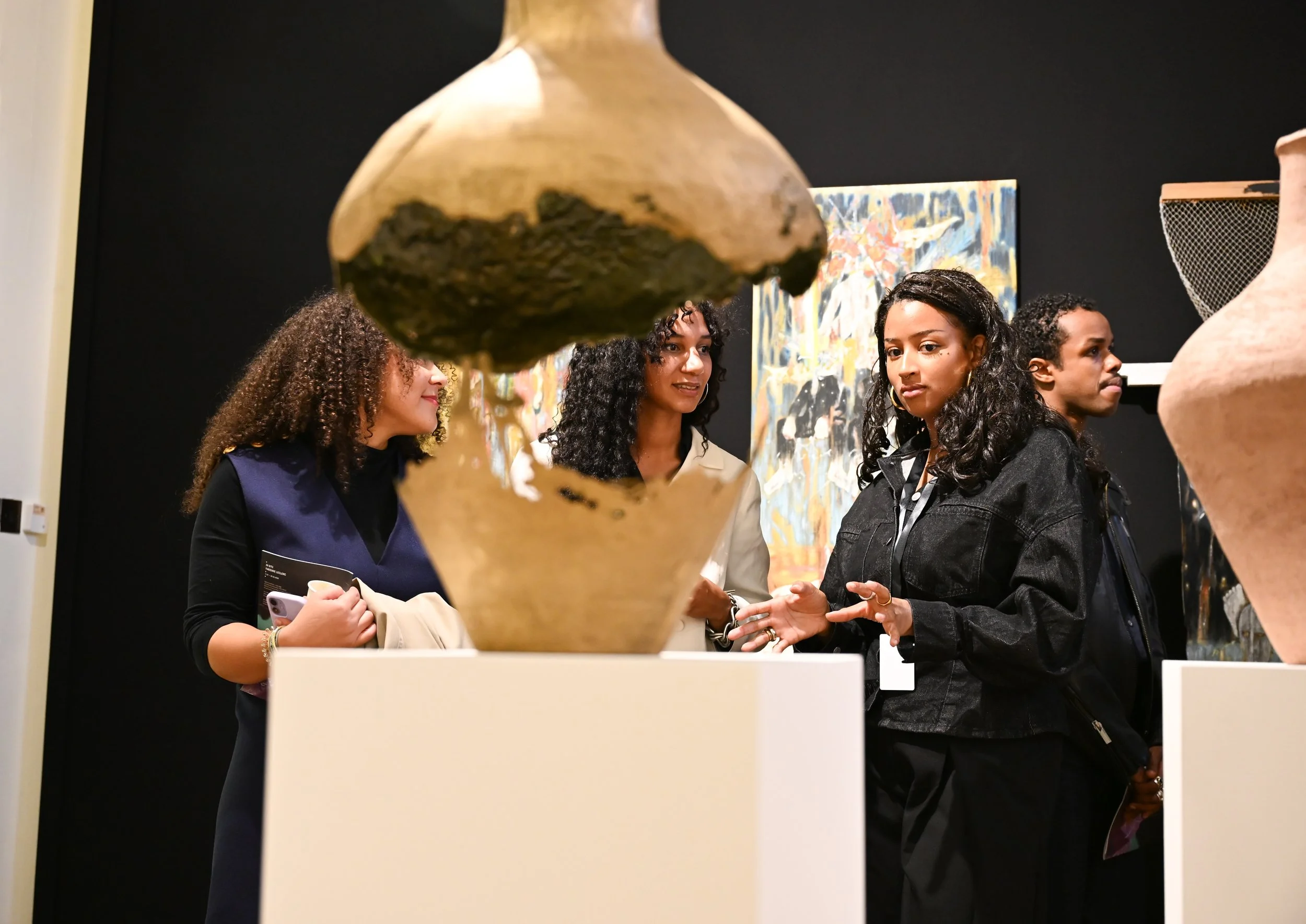
1-54 London 2026, Courtesy of The Southern Art Hub
And perhaps this is where the conversation becomes more nuanced.
As African and diasporic artists increasingly enter the programmes of major international galleries, museums and fairs, the boundaries between specialised and mainstream markets are becoming less distinct. But visibility alone does not necessarily guarantee longevity, nor does international recognition automatically translate into a sustainable career.
The specialised market and the international circuit need not be understood as opposing forces. One can nurture the foundations of an artist's practice while the other offers opportunities for wider circulation, recognition and institutional engagement.
The question, then, is not simply whether African artists are finally gaining access to the world's most prestigious platforms, but how that access reshapes the structures through which their work is discovered, valued and collected.
Is exposure to international events a sign of maturity, or has it simply become the new goalpost for African artists?