Swizz Beatz and Alicia Keys’ Deans’ Choice with Bonhams Rethinks the Economics of Resale in the US and more countries. The Deans Collection and Bonhams announce a royalty-based model, The Dean’s Choice that brings artists back into the circular economics of the secondary market. But how far can it really go?
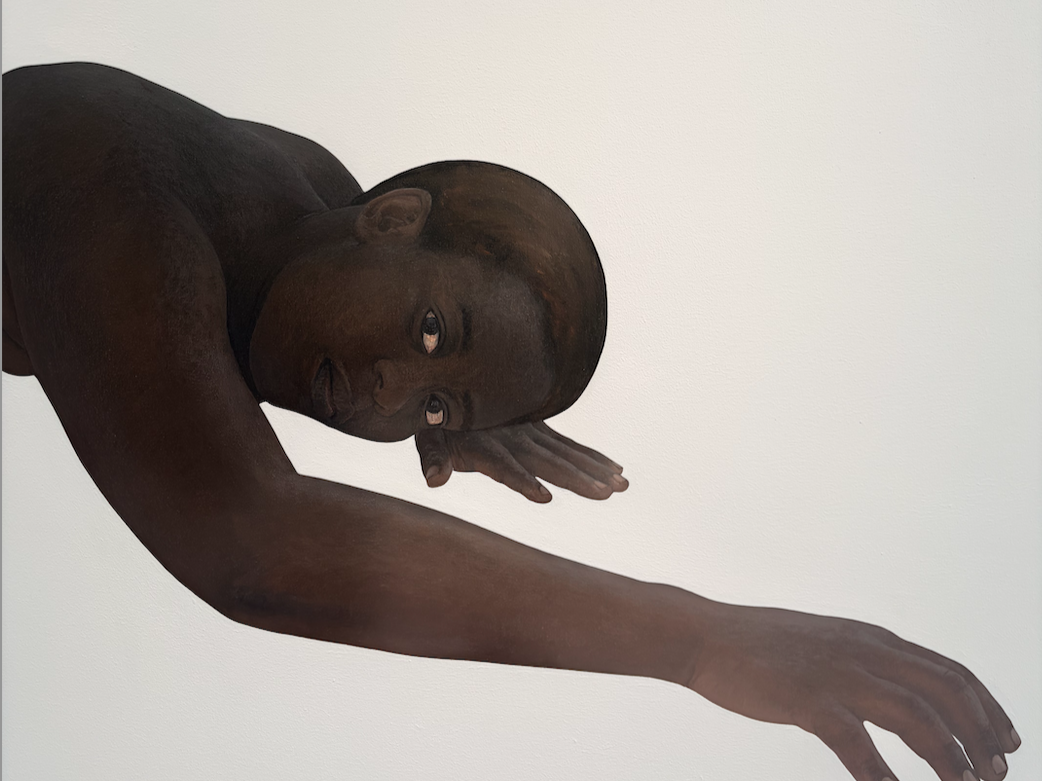
Sungi Mlengeya, Earth and Sky, 2026. Crédits : Mayi Arts
The principle is simple: upon resale, the consignor can choose to allocate a percentage of the hammer price to the artist. Bonhams then commits to matching that percentage, drawn from its own commission. In other words, both the consignor and auction house participate in returning a portion of the value generated by the resale to its original creator. Fair trade ? Historically, the primary market has placed the artist at the centre of the transaction. Yet once an artwork enters the secondary market, an entirely different circular economy takes shape between collectors, dealers and auction houses. While the value of an artwork can fluctuate considerably, generating substantial returns for the various participants in this ecosystem, the artist largely remains outside this economic equation depending on geographies.
The artist disappears, but the artwork keeps working
In a positive scenario, a collector might acquire a work for $10,000 on the primary market before bringing it to the secondary market a few years later. The circulation of said artwork then continue to expand in parallel to the artist's career development - through exhibitions, institutional acquisitions, critical attention, gallery representation and greater collector demand. Said artwork may eventually return to market at a substantially higher valuation. That appreciation is rarely accidental.
Yet when the work resell, the artist is de facto outside the economic transaction created by precisely that growth. This becomes particularly relevant for living artists whose markets are growing but whose livelihoods remain heavily dependent on primary-market sales for countries not using the droit de suite.
The current economic model can therefore create an implicit relationship between growth and production: in order to continue benefiting financially from an expanding market, the artist must continue feeding the primary market while collectors can acquire simultaneously eyeing the secondary market for their own benefits and directly reap the fruits of the game leaving the key actor of the question the artist out of the equation.
This has direct impact on primary market pricing strategy and exposes artists to a dependance towards the primary market and therefore a need to produce more. Alternative models such as licensing, brands collaborations and sponsorships have long been explored though often quickly reveal limitations and almost impossible long term sustainability.
This is particularly striking for living artists, whose ongoing production, exhibitions and career development can directly influence the value of their work on the secondary market in real time.
As a matter of fact, between 2013-2023 artists such as Marlène Dumas and El-Anatsui generated respectively $80m and $43,3m in auctions trades from which they did not benefit directly.
“Yet when the work resell, the artist is de facto outside the economic transaction created by precisely that growth. This becomes particularly relevant for living artists whose markets are growing but whose livelihoods remain heavily dependent on primary-market sales for countries not using the droit de suite. ”
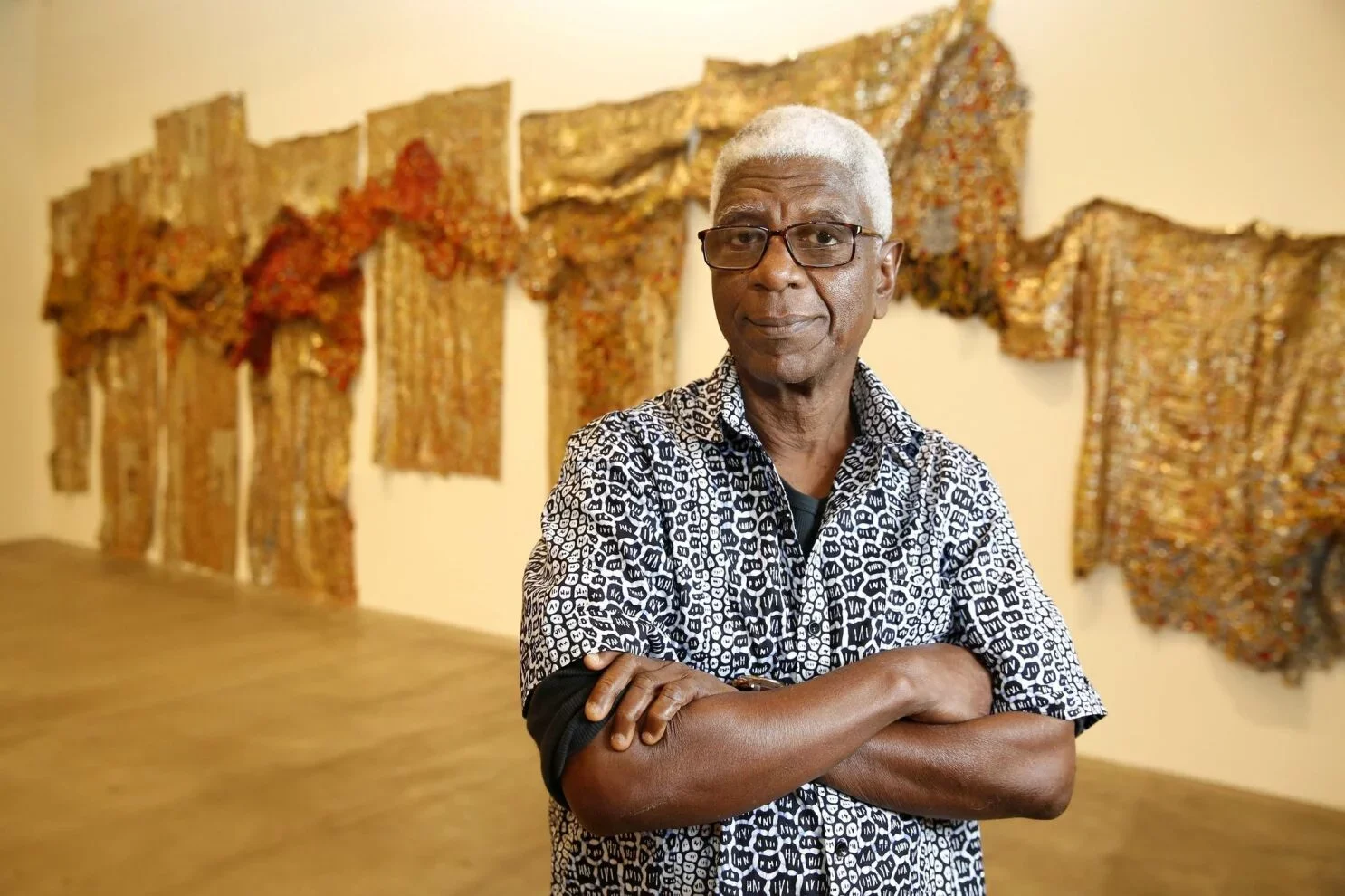
Al Anastsui
What happens for African Artists ?
The question becomes particularly complex for African artists, whose markets often operate simultaneously across local, specialist and global ecosystems. Several African countries already recognise droit de suite in their legislation — Senegal and Kenya, for example, provide for a 5% resale royalty — yet legal recognition does not necessarily translate into uniform collection, enforcement or economic impact across borders.
For an artist whose career may be built between an African primary market and galleries, collectors and auction houses in Paris, London, New York or elsewhere, participation in the secondary-market value of their work can therefore depend not only on whether a resale occurs, but on where it occurs and under which legal framework.
The issue is consequently not simply whether African artists have resale rights, but whether those rights can effectively follow artworks through an increasingly international market.
The question becomes particularly complex for African artists, whose markets often operate simultaneously across local, specialist and global ecosystems. Several African countries already recognise droit de suite in their legislation — Senegal and Kenya, for example, provide for a 5% resale royalty — yet legal recognition does not necessarily translate into uniform collection, enforcement or economic impact across borders.
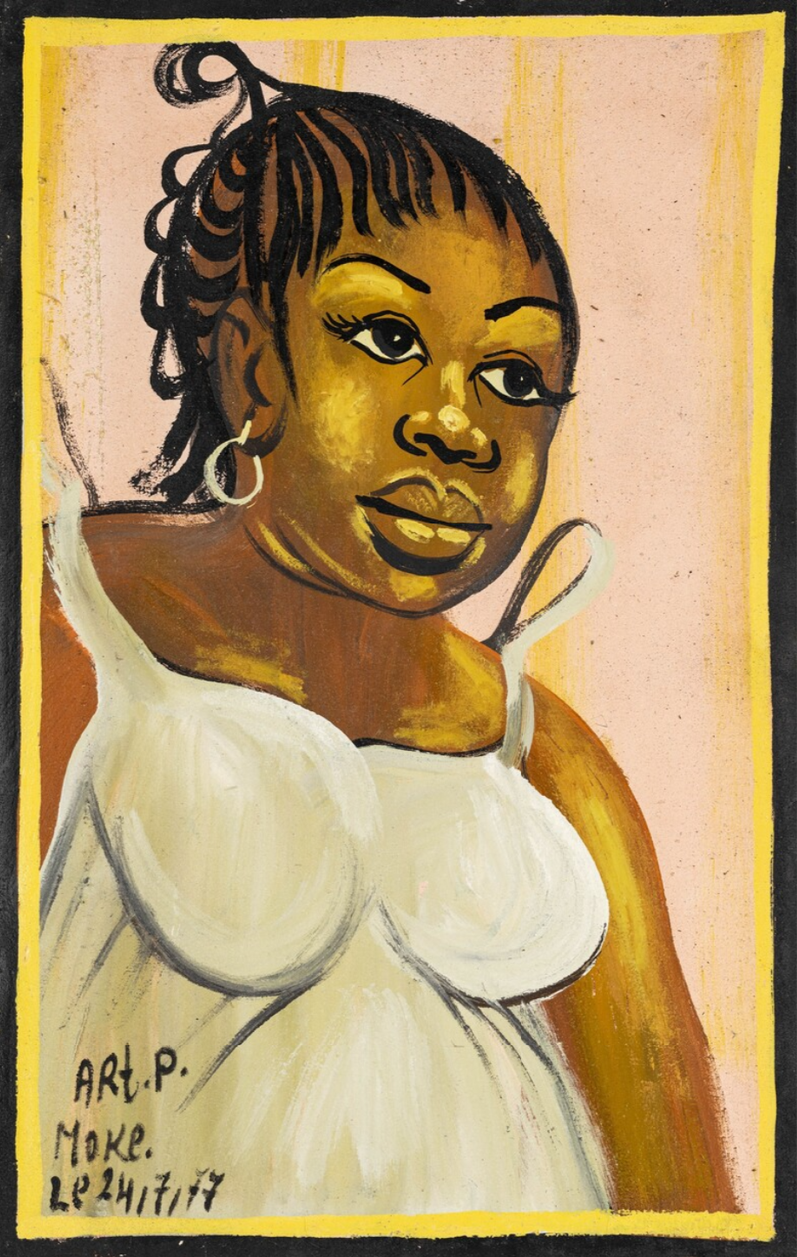
Moke, Untitled, 1977
Re-Thinking transactions
This is the structural contradiction that The Dean's Choice and Bonhams are attempting to address.
Rather than treating the initial sale as the end of the artist's economic relationship with an artwork, the model borrows something from the logic of royalty-based creative industries: value can continue returning to the creator as the work circulates. The comparison with music is imperfect. Participation in The Dean's Choice is voluntary, and artworks operate very differently from reproducible cultural assets such as recorded music. Yet the underlying principle is significant: the creator does not necessarily have to disappear from the economics of the asset they created.
Bonhams' participation makes the proposition particularly interesting. The auction house is not simply asking consignors to surrender part of their proceeds; it is committing part of its own revenue to the mechanism. As the auction house has explained: “we want this to cost us because that is a visible measure of success.”
Beyond royalties: Rethinking pricing strategy
The most interesting consequences may actually occur before an artwork reaches auction.
If artists with active secondary markets can eventually participate in the appreciation of existing works, even modestly, it introduces another source of income beyond continual primary-market production. Over time, this could influence decisions around production volume, edition sizes, scarcity and primary-market pricing strategy.
It may also encourage galleries, artists and collectors to think differently about the relationship between the two markets.
The two are often treated as fundamentally separate ecosystems. The primary market retains a certain sanctity: it is relational, carefully managed and often deliberately protected from the more transactional and speculative dynamics associated with resale. In reality, however, the two markets are deeply interconnected. Auction results affect perceptions of primary-market prices. Collector behaviour affects scarcity. Rapid resale can influence gallery placement strategies. Institutional and curatorial recognition can increase secondary-market demand.
A mechanism that returns part of the value generated on the secondary market to the artist simply makes another dimension of that interdependence visible.
For artists with sufficiently active secondary markets, recurring participation in resale value could introduce an additional revenue stream and, over time, reduce some of the pressure to monetise career growth primarily through continued production. But this is also where the model encounters its most significant limitation. A resale royalty can only redistribute value when there is a resale. And access to the secondary market remains highly unequal.
“At Strauss & Co., the ten highest-earning artists within its Modernist and Contemporary African art segment accounted for 55% of aggregated sales in 2025, generating $15.3 million across 493 lots. ”
According to ArtTactic, global auction sales of Modern and Contemporary African artists reached $62.8 million in 2025, up 42.6% year-on-year. Yet headline growth masks considerable concentration. The number of lots sold reached 4,785, its highest level since 2016, with an average price of $13,133. At Strauss & Co., the ten highest-earning artists within its Modernist and Contemporary African art segment accounted for 55% of aggregated sales in 2025, generating $15.3 million across 493 lots. The group included William Kentridge, Gerard Sekoto, Irma Stern, Alexis Preller and Vladimir Tretchikoff, among others. This exposes the paradox of resale royalties: the artists who might benefit most from reducing their dependence on constant primary-market production are not necessarily those with sufficiently liquid secondary markets to generate meaningful royalty income.
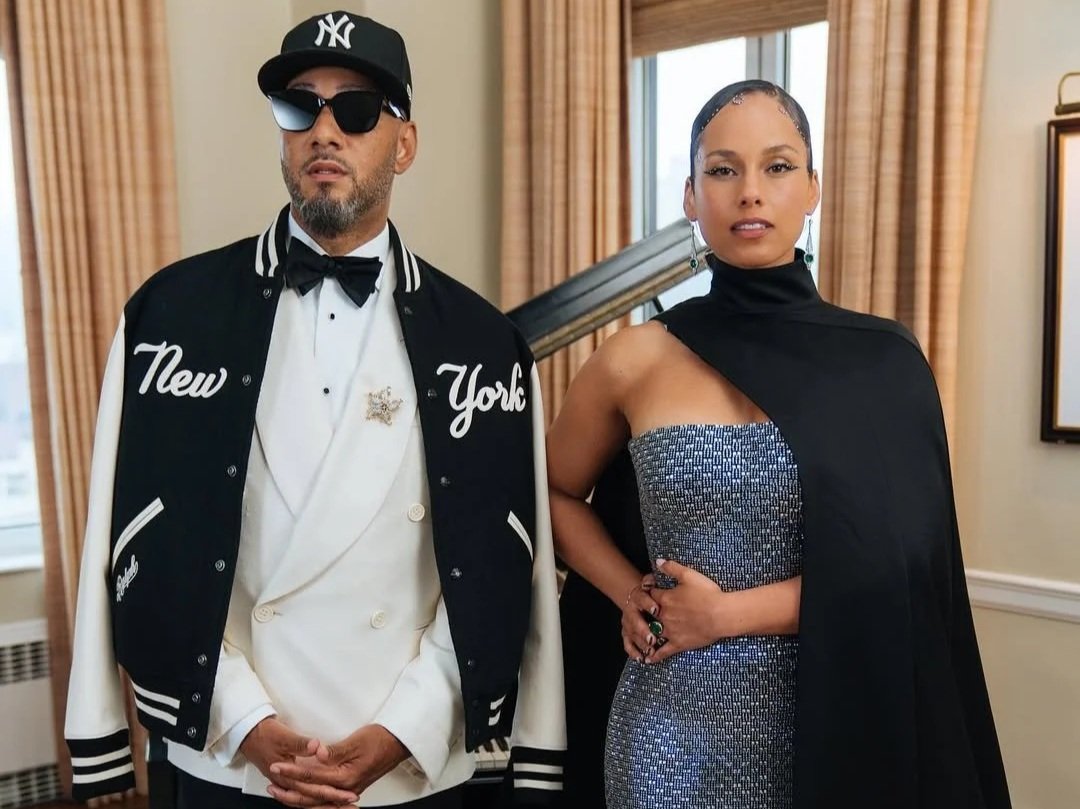
Swizz Beatz and Alicia Keys, announce The Deans Choice with Bonhams
There are still important questions. Little has yet been said about how percentages will be determined, whether Bonhams will establish a cap, or how the mechanism might evolve if participation grows. And, perhaps most importantly, how many collectors will voluntarily participate once meaningful sums are at stake? Adoption will ultimately determine whether The Dean's Choice remains an experiment in responsible collecting or develops into a model capable of influencing wider market practice — including whether other auction houses eventually follow.
The initiative does not resolve the structural inequalities of the secondary market. Nor does it guarantee that the artists who most need alternative sources of income will be those who benefit most. What it does is intervene at a very specific point in the value chain where the artist has historically been largely absent.
Reintroducing the artist changes the way we understand the transaction. An artwork becomes not simply an object whose economic relationship with its maker ends at first sale, but an asset whose subsequent circulation can continue contributing to the ecosystem from which its value originated.
The Dean's Choice does not democratise the secondary market. But it asks an important question about who should participate in the value that market creates ?