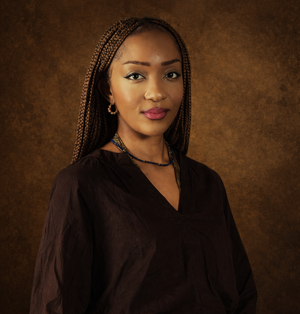
Inside ELFREDA DALI’s fascinating threads of identity
In the world of Elfreda DALI (b.1995), apparent stitches mirror the layers that make each one of us unique. Her works function like living talismans-objects holding memory and awakening. Through these fascinating mental maps of leather and stitches, Dali explores the complexities of layered identity, tracing mental and emotional cartographies that resonate with diaspora, belonging, and the quiet courage of becoming.
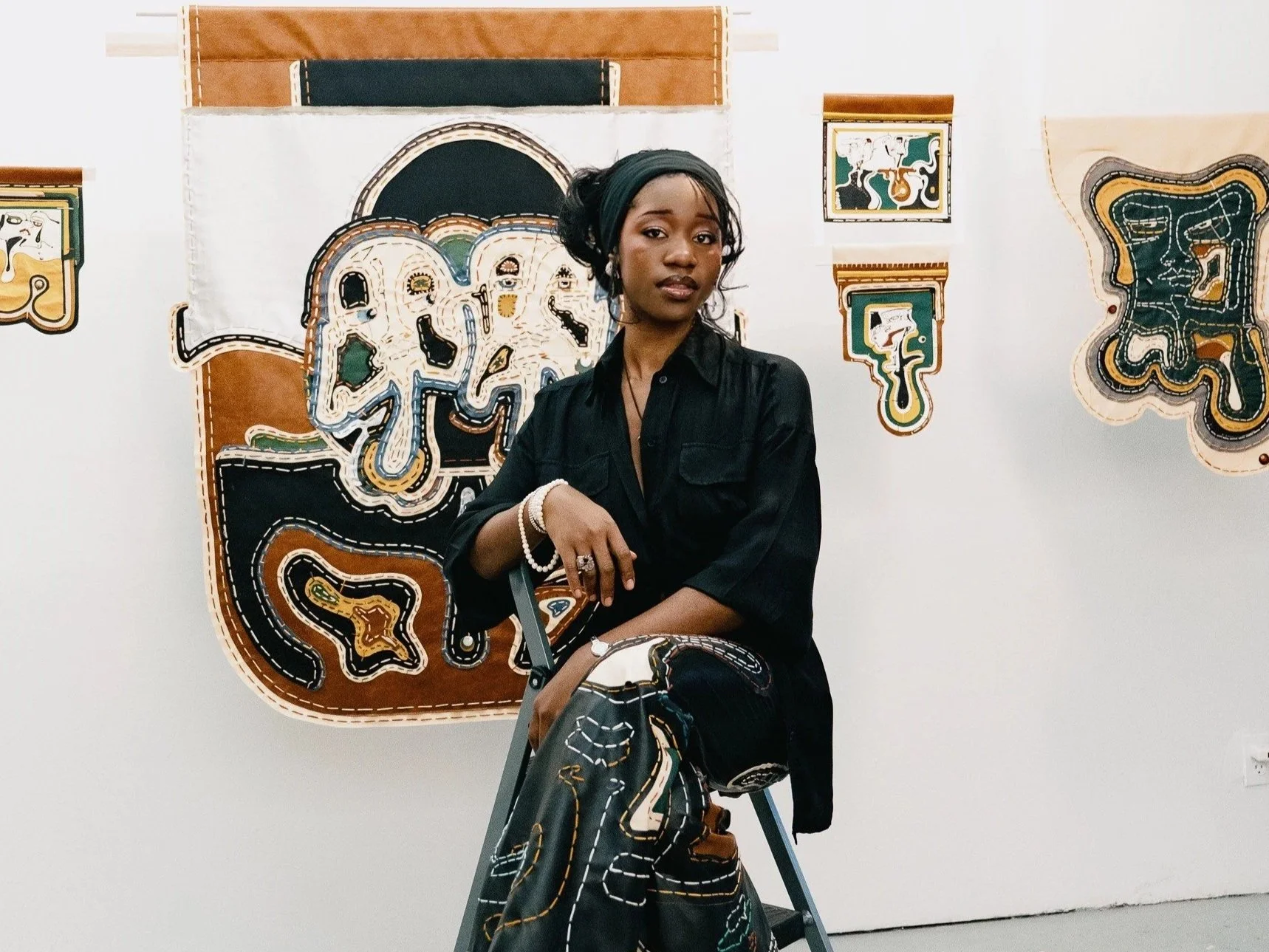
Elfrida DALI in her studio while in New York residency
In this interview, we meet with artist Elfreda DALI while in residency in New York. The Nigerian artist based in the UK reflects on her journey while also exploring her creative process as she releases her collection Second Spring rooted in inner transformation and growth.
Ngalula MAFWATA : Where does your attraction to the arts come from ?
Elfreda DALI : I think it goes back further than I can remember. My artistic journey has always felt like a natural progression. I was obsessed with creating from a very young age, I would paint instead of doing my homework, and I used to cut up my clothes, much to my mother’s horror. Ever since I discovered making, I never really looked back or paid much attention to anything else.
Ngalula MAFWATA : Did you grow up in an artistic family, or was art something new for you ?
Elfreda DALI : Yes and no. There’s a history of women making clothes in my family, so that aspect felt organic. I learned only much later that my dad used to draw, once he realised I was serious about my practice. But there was never a professional artistic pipeline in front of me—quite the opposite. I was simply encouraged against pursuing it professionally and to simply enjoy making.
I took art classes, but I didn’t see myself as an artist until COVID-19. Academically, I was on a fashion and design path for a long time. I was always drawn to art; I just didn’t understand how artists survived—laughs—though fashion isn’t much safer. In fashion you at least know the job you want and the steps to get there, and I didn’t see that with art. I never imagined I would become an artist.
Ngalula MAFWATA : What felt like the pivotal moment when you finally decided to embody the identity of an artist ?
Elfreda DALI : During the lockdown, I was stuck at home with fabrics meant for clothing. All my clothing-related jobs were suddenly cancelled, so I started making art with those fabrics. Those were ideas always had but never practiced nor conceptualised. That moment was the beginning of a real shift in my work. But even then, accepting that I would work as an artist professionally took another two and a half years.
Ngalula MAFWATA : Textiles appear central in your work. Why this medium ?
Elfreda DALI : I have always been drawn to the use of fabrics as a way of telling stories, considering it as a kind of canvas. Even when I was making clothes, I was interested in how we communicate through the language of dress. So working with textiles never felt like a pivot; my muscle memory was already there.
I am particularly drawn to leather for multiple reasons. It represents skin and identity for me. So much of my work is rooted in the diasporic identity : mine and that of the people around me. We evolve in a society of diversity ; everyone is from somewhere else, and that creates cultural fusion. Leather is universal, you find it everywhere in the world, and it carries different rituals, uses, and styles.
“We evolve in a society of diversity ; everyone is from somewhere else, and that creates cultural fusion. Leather is universal, you find it everywhere in the world, and it carries different rituals, uses, and styles.”
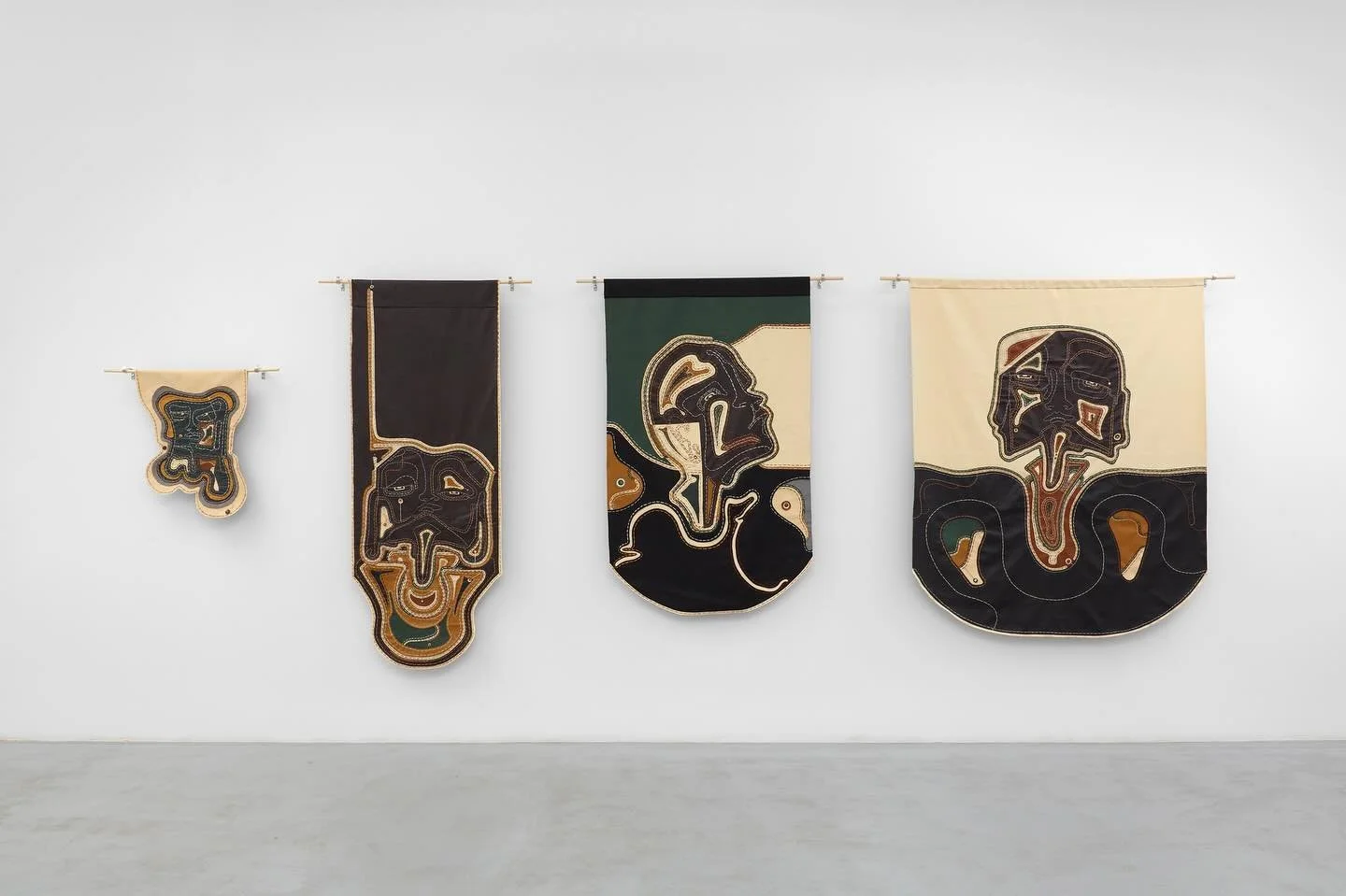
Elfreda DALI, Installation views, "Woven Sanctuaries", Rele, Los Angeles, May 3 - June 15, 2024.
Ngalula MAFWATA : Being from the diaspora, we often wear patches of identity, how has your experience shaped your practice ?
Elfreda DALI : This was not something I was particularly aware of during the first half of my life. Growing up in the UK and travelling to Nigeria every year, for a long time,I had to adjust who I was depending on where I was. The context of who you are is very different in different countries. In the UK a black African woman, or a black Nigerian woman. In Nigeria, I am simply a woman—and being a woman in Nigeria means so many different things. As I got older, I started using my practice to take back parts of my identity. To choose the cultural elements that truly resonate with my core. That’s where the maps in my work come from: the mental and physical journeys. I source leather in both see. Every piece I make sure contains fabric sourced in Europe and acros the continent, specifically in Nigeria. That blending is part of my story. My suitcases are always heavy—laughs
“You never really think how much your work touches people until you see it happening. It pushed me to be braver—and I’m still working on becoming braver every day.”
Ngalula MAFWATA : Can you walk us through your creative process ?
Elfreda DALI : The process is a very interesting one. I never really plan the work before I make it. I have sketches then I come to the fabric and it goes in a totally different direction which in many ways I embrace - and makes commission very scary laughs. Making the Adidas logo, for example, was excruciating because the fabrics had to be so precise. I usually begin with a storyline or subject, which influences the colours and textures I choose. The final piece often looks different from what I had in mind, but it usually embodies the message I want to convey.

August, Elfreda Dali, 2025
Ngalula MAFWATA : How do you know a piece is done ?
Elfrida DALI : This is an issue I have had forever. I layer a lot ! I feel a piece is done when there’s nothing left to take out. Sometimes I keep layering and I will add things or manipulate the work and I then step away and readjust. It is quite instinctual. Working with stitching, you can tell when a work is not fully done. The way a piece is sewn determines its durability and longevity. There are certain aspects you have to do and some others that are more fluid.
Ngalula MAFWATA : Are there works that hold special meaning for you ?
Elfrida DALI : I always say, I don’t like the word done. I prefer satisfied. There are two pieces that make me feel that way. One was mounted on curved wood; it was the first time I focused more on the creation than the sewing.
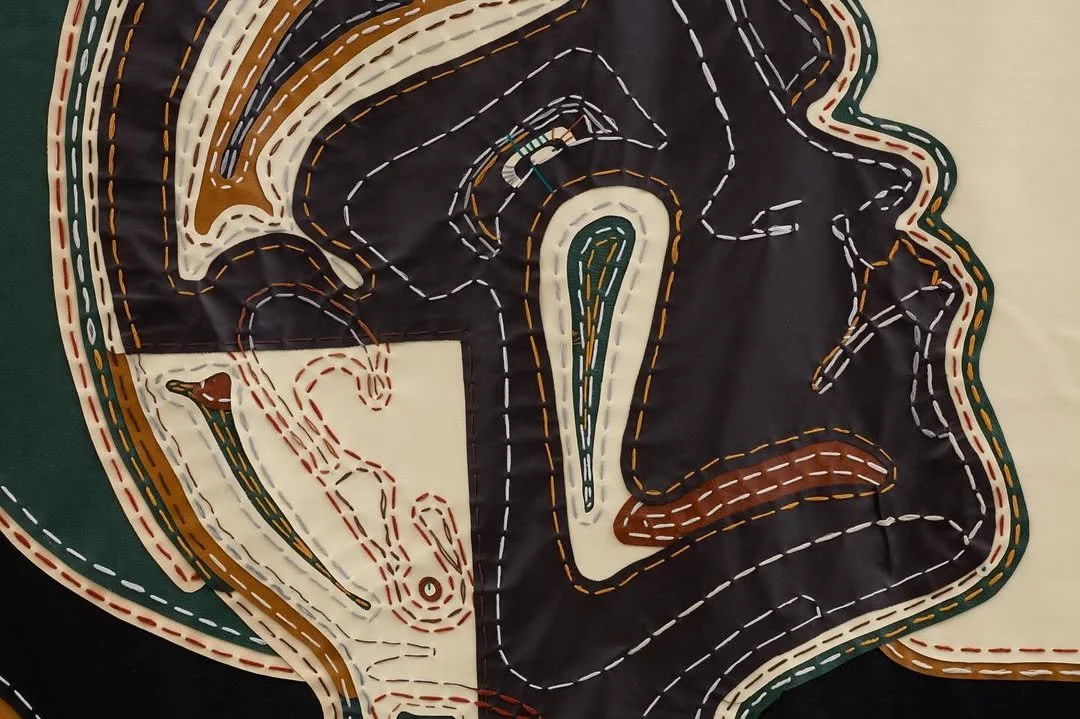
The second is Sprouting Souls. Most of my pieces show faces head-on, but this was my first profile. The face seems to grow out of the ground into the sky, it is a metaphor for seeds growing in the darkness and coming through.
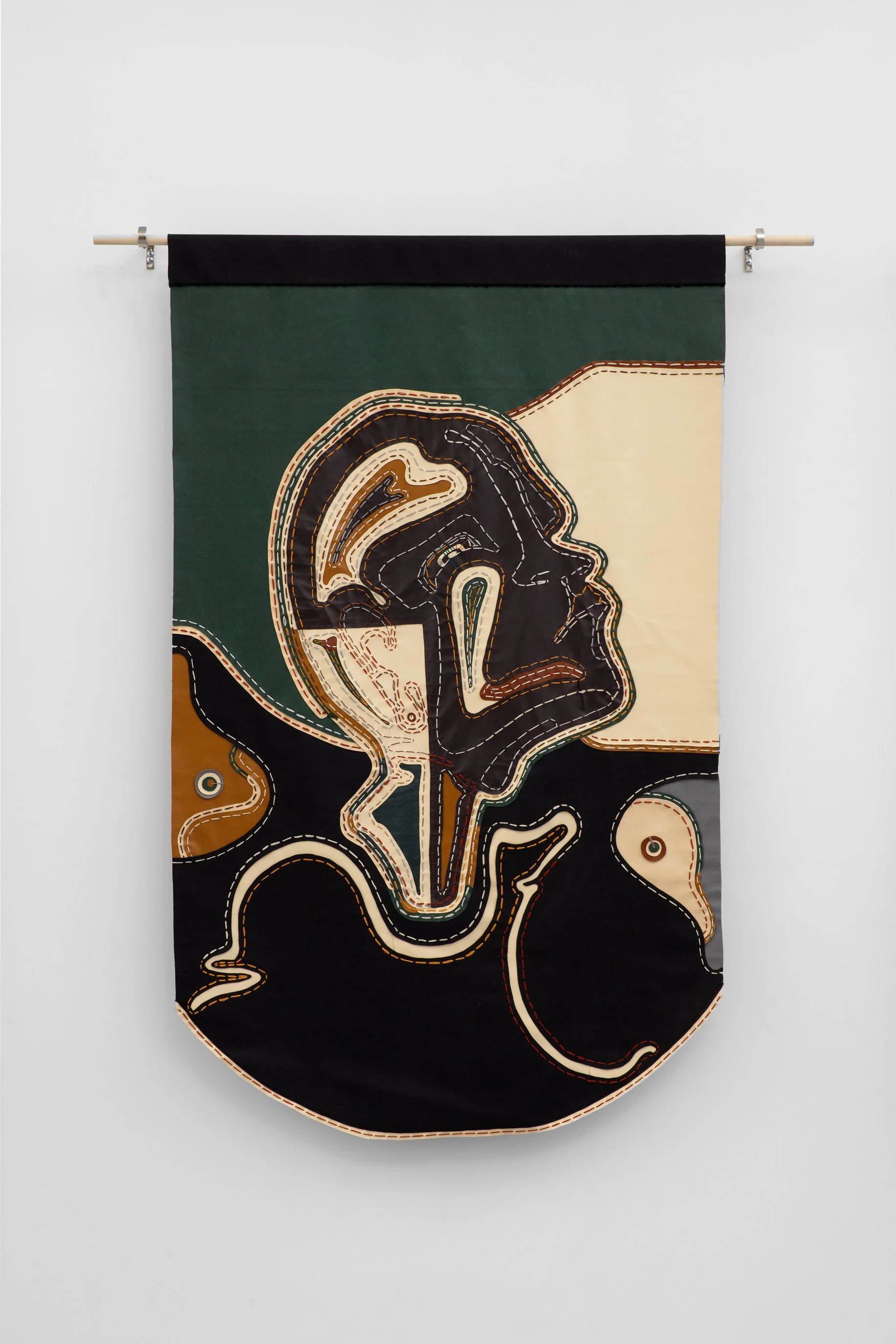
Sprouting Souls, Leather, cotton and PVC, 162.5x99 cm, Elfreda DALI (2023)
Ngalula MAFWATA : What inspires you the most, what keeps feeding your practice ?
Elfrida DALI : People. People are my main inspiration. I love watching them—in airports, especially—and imagining their stories. The other aspect is cultural expression. I like the fact that the way people interact and behave is pretty much dependant on which part of the world they are from. I am drawn to history, travelling to new places and immersing myself in other people’s culture : music, colours, food. Growing up in Nigeria’s vibrant culture where there are so many tribes shaped my interaction with the world.
Ngalula MAFWATA : You are currently in residency in New York. What has that experience been like ?
Elfrida DALI :New York has such an incredible energy, I am still digesting it. Laughs. It has something to do with living in metropolitan cities just like in Lagos is where everybody converges in Nigeria or London in the UK. Being un New York feels like being home, but with a completely different cultural landscape. The diasporic communities that settled here are very different from those in the UK, and I love that intersection.
I am here as the recipient of the 2025 Chizi Wigwe Prize for African Futurism through the 1952 Africa Foundation. It means a lot. The foundation tells African stories on a global scale, by Africans. They do this through arts and education, in partnership with EFA ( Elizabeth Foundation for the Arts), where I’m currently based. On the other side, Chizi Wigwe, after whom the foundation is named, passed away. Much of his work focused on futurism and the narratives Nigerian artists bring to the world.
Ngalula MAFWATA : Tell us a bit more about Second Spring Collection you are unveiling with Lofty Spot ?
Elfrida DALI : Second Spring is a collection which came through the process of rewiring who I am. The name reflects the cyclical rhythm of nature, and each piece is named after a month of the year. It is a physical form of tracking my emotional landscape throughout the year. Entering this year with many mental shifts that comes with age prompted me to want to change certain things about myself.
Another important aspect is that the whole collection is made from waste, materials from previous works. This is the first time I make entire bodies of work from past fabrics. On a deeper level, it reflects the process of editing myself: deciding what to keep and what to let go of. Who I am now is built from who I have been.
Ngalula MAFWATA : This appear particularly personal, is it difficult to let go of them ?
This is actually the opposite. When I finish a piece, it is like I am done with that version of myself. I enjoy the idea of my work being re-contextualised within the world of a collector.
My favourite part about being able to create things is having a physical manifestation of something I have imagined. I can’t really describe what that feeling is, even when I dislike a piece, there’s always a sense of satisfaction.
I think it is the joy of creation and the wonder of intent. I have always known this is who I was going to be : generating ideas and executing them. The execution is not always fun however I would rather be doing the labour of hand stitching because I am desperate to tell these stories. It is a very slow and intentional process, it pushes me to be present and mindful. I am neurodivergent so my mind is hyperactive anyway, sewing it balances it in a way.
“I enjoy the idea of my work being re-contextualised within the world of a collector.”
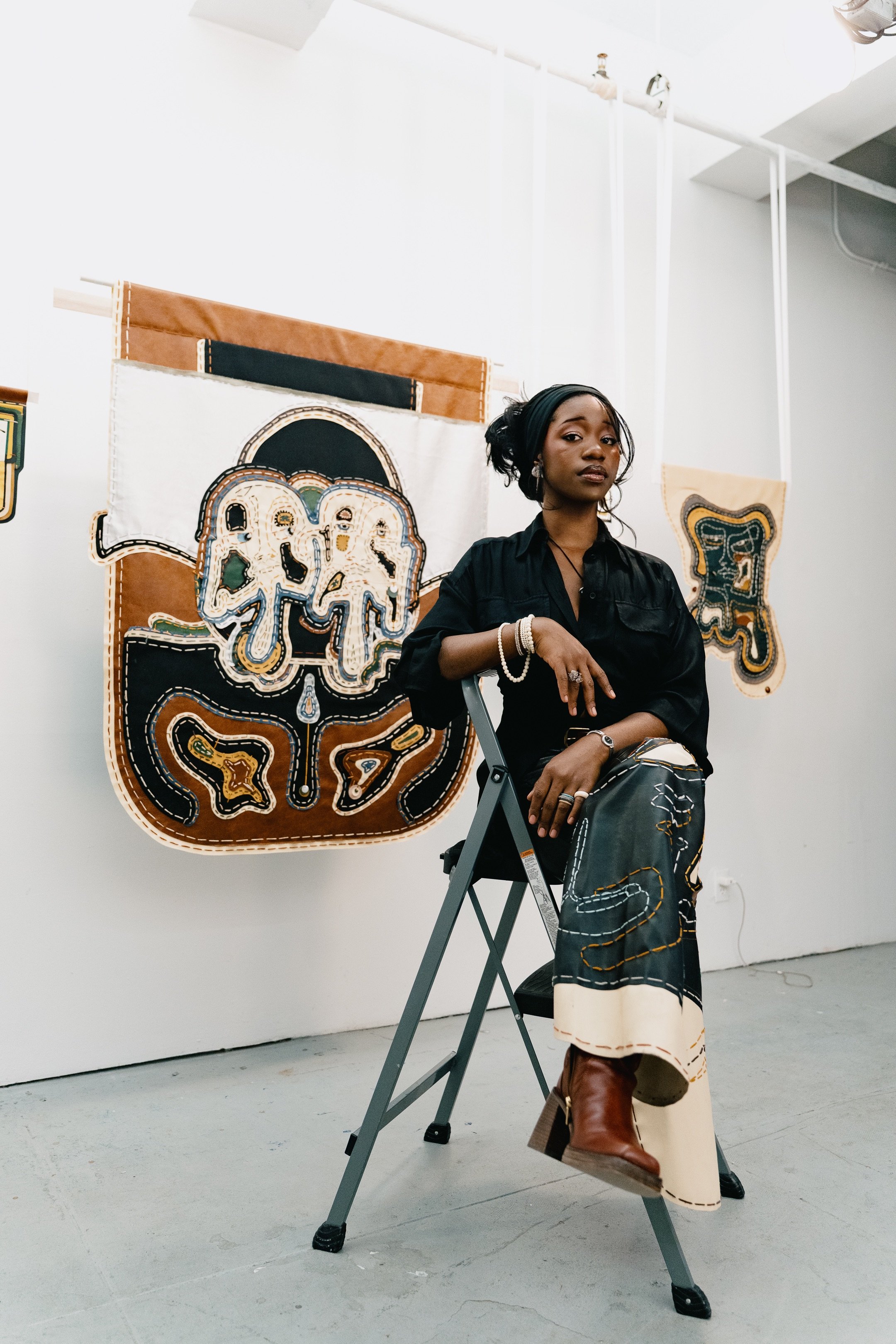
Elreda DALI in New York
Ngalula MAFWATA : Being an artist requires courage, do you agree ?
Elfrida DALI : Being an artist requires courage. Making the work is safe but so much of being a professional artist comes with putting yourself out there. Even being honest about what inspires your work can be daunting - This is something I can’t really think about when I am doing it. Early in my career, I panicked during a residency because so much of my work comes from personal experiences. You ask yourself: Do I really want to share this much?
But I’ve learned that honesty creates the right platform for the work and attracts the right people. One of my early pieces I shown at a gallery was inspired by grief after my mother passed. The conversations I had with viewers were profound. You never really think how much your work touches people until you see it happening. It pushed me to be braver—and I’m still working on becoming braver every day.
Ngalula MAFWATA : What are your expectations for the next years ?
Elfrida DALI : I am really grateful that my practice has been able to grow quickly and organically. I see my work evolving from flat to more sculptural pieces, 3D forms you can see from all angles.
I’m thinking a lot about how the work interacts with the human body: could you hang it one day and wear it the next?
In the coming years, I hope not only to create but also to show the work in spaces that are tailored for it.
Explore the work of Elfreda DALI on her personal spaces and discover her latest collection Second Spring on LOFTY SPOT.